Home / Glossary / DCAA vs DCMA
GlossaryDCAA and DCMA
do different jobs
Contractors mix these two up constantly, and the confusion is expensive because it sends the wrong team to prepare for the wrong examination. One audits your numbers. The other administers your contracts and reviews how you purchase.
The Defense Contract Audit Agency audits contractor costs, rates and accounting systems, and issues reports and advice to contracting officers. The Defense Contract Management Agency administers contracts and reviews contractor business systems, including how you purchase. In short, your accounting system answers to DCAA and your purchasing system answers to DCMA.
The distinction in one table
Both agencies sit within the Department of Defense and both examine contractors, which is where the confusion starts. What they examine is quite different.
The distinction in one table
Both agencies sit within the Department of Defense and both examine contractors, which is where the confusion starts. What they examine is quite different.
- DCAA audits costs, rates and accounting systems
- DCMA administers contracts and reviews business systems
- Only the administrative contracting officer decides
| DCAA | DCMA | |
|---|---|---|
| Full name | Defense Contract Audit Agency | Defense Contract Management Agency |
| Primary function | Audit | Contract administration |
| What it examines | Costs claimed, indirect rates, accounting system adequacy, and cost or pricing data | Contract performance, and contractor business systems including purchasing |
| Typical examinations | Incurred cost audits, forward pricing rate proposals, accounting system reviews | Contractor Purchasing System Reviews, property management, contract administration |
| What it produces | Audit reports and recommendations to the contracting officer | Administration decisions, including approval of a purchasing system |
| Decision authority | Advisory. DCAA recommends rather than decides | The administrative contracting officer decides, informed by review findings |
Preparing for the wrong examination
The practical damage is not academic. Teams routinely prepare accounting evidence for a review that will actually test purchase files, or the reverse.
Preparing for the wrong examination
The practical damage is not academic. Teams routinely prepare accounting evidence for a review that will actually test purchase files, or the reverse.
- Establish which body and which examination first
- Procurement leads a purchasing review; finance supports
- One purchase record can serve both examinations
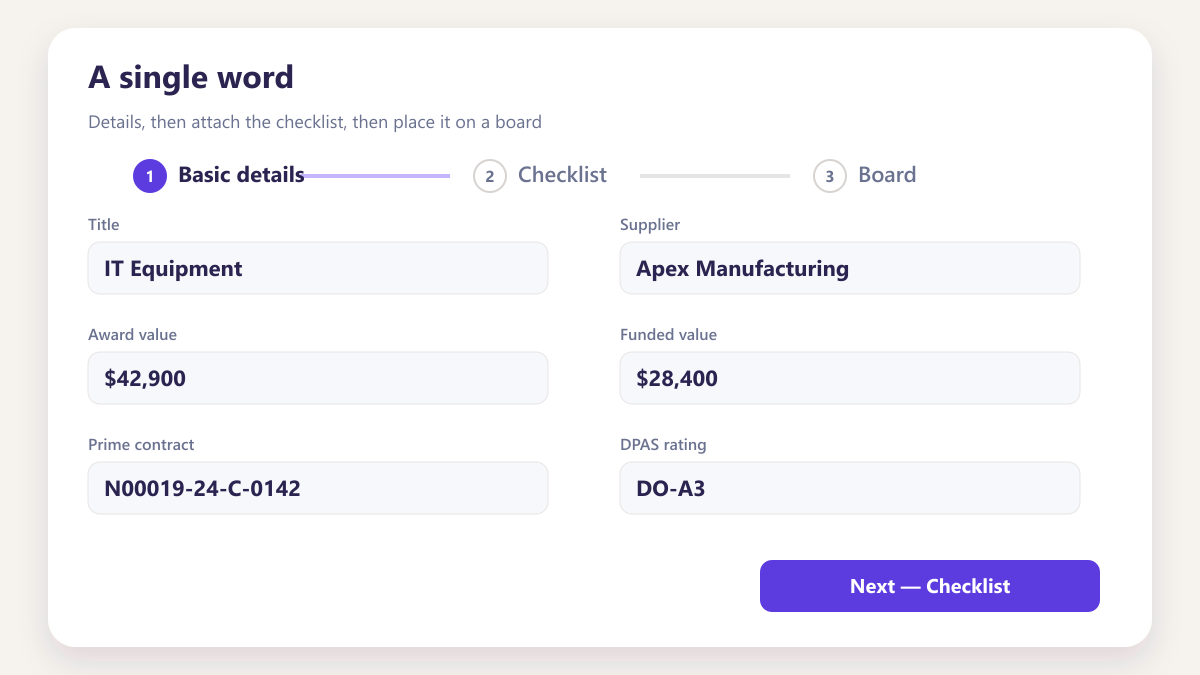
A single word
Somebody says the auditors are coming, and the finance team starts assembling cost records while the procurement team assumes it does not concern them.
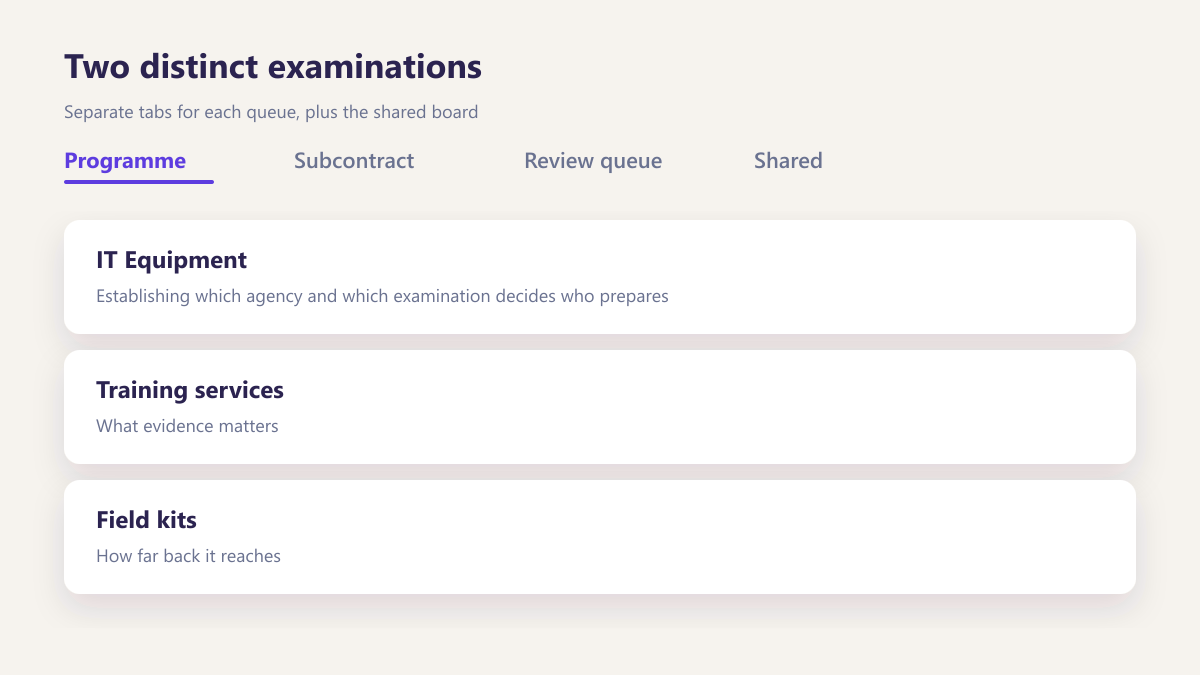
Two distinct examinations
Establishing which agency and which examination decides who prepares, what evidence matters and how far back it reaches.
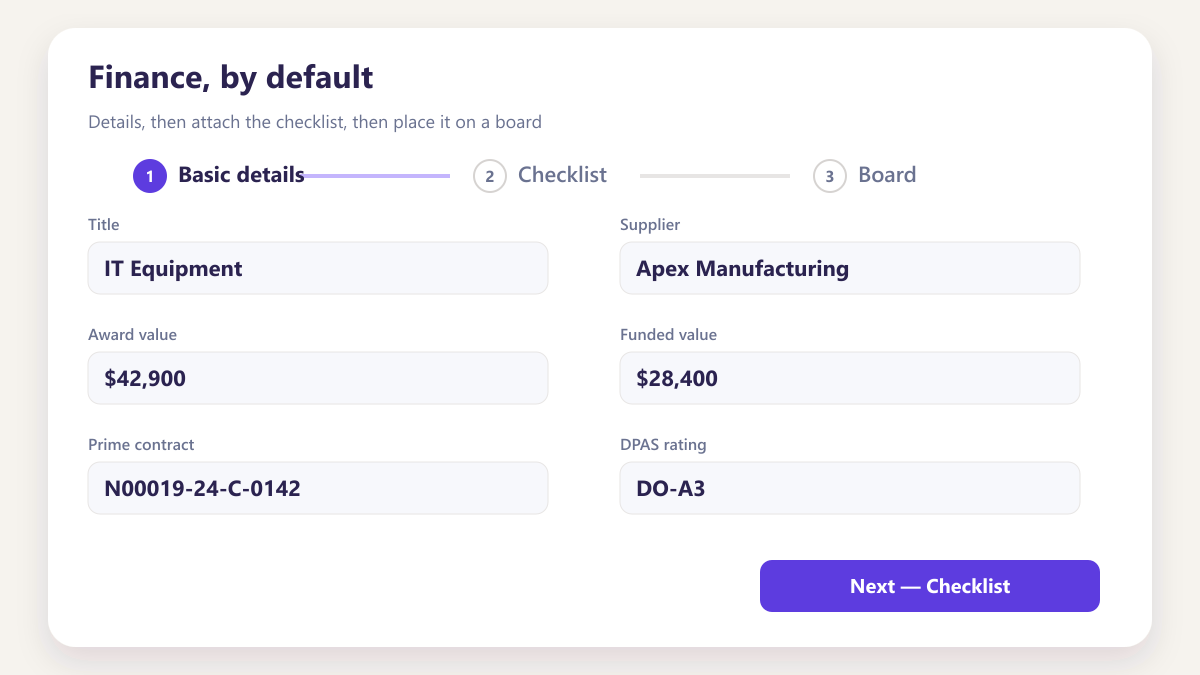
Finance, by default
Because the word audit suggests numbers, finance leads and procurement is looped in late, often after the sample has already been requested.
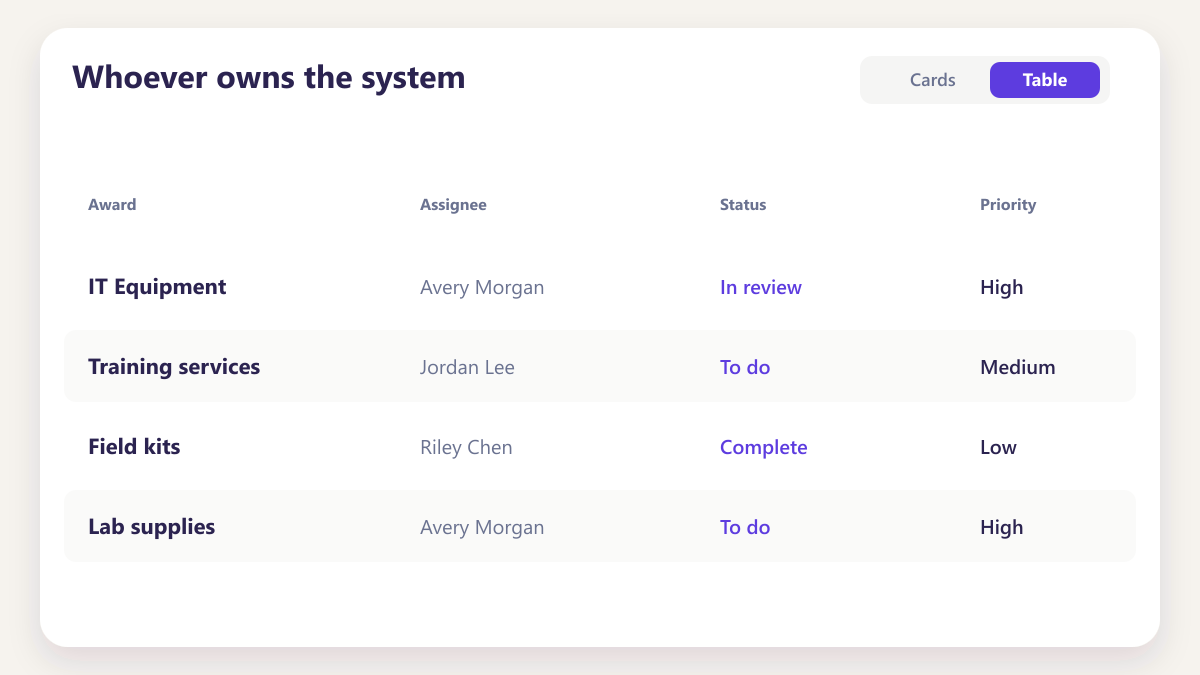
Whoever owns the system
A purchasing system review is led by the people who own purchasing, with finance supporting on the phases where value is the question.
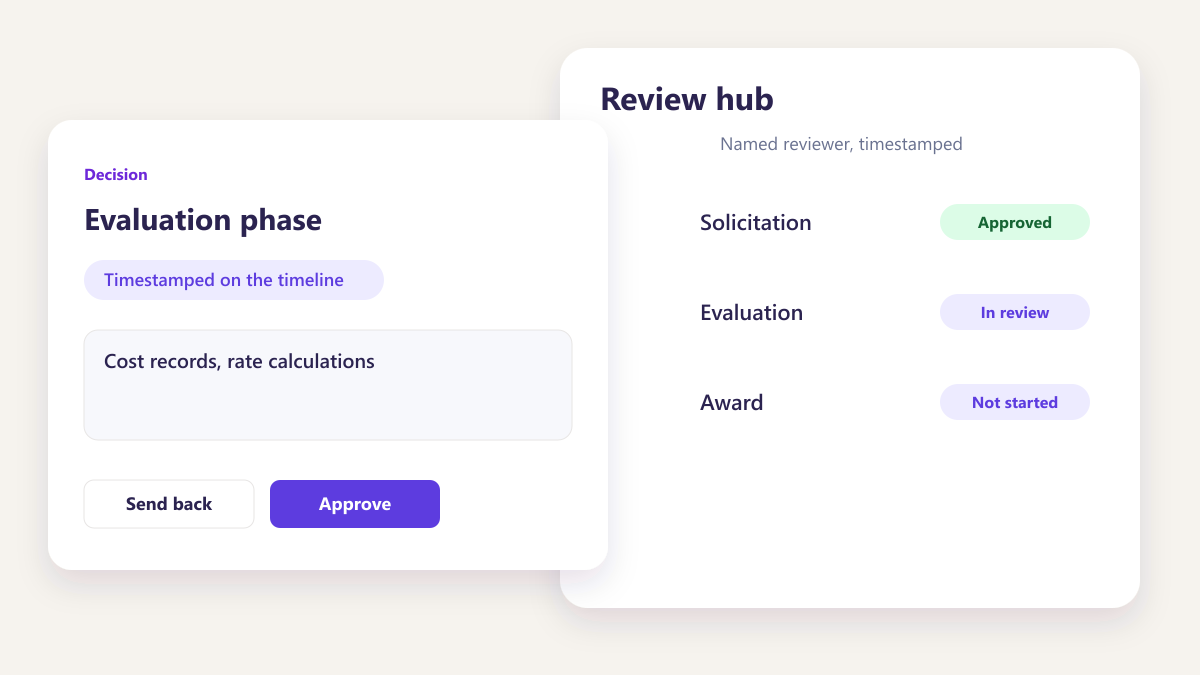
Ledger records
Cost records, rate calculations and accounting treatment, which are the right evidence for an audit and largely the wrong evidence for a purchasing review.
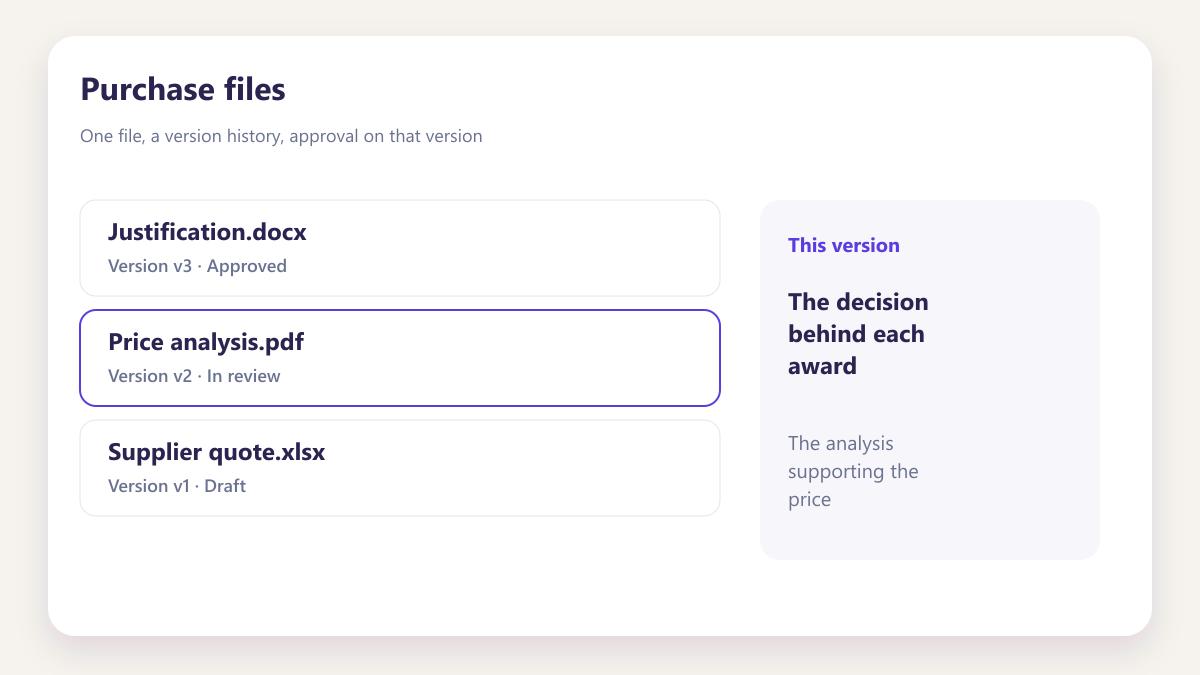
Purchase files
The decision behind each award, the analysis supporting the price, the approvals and the flow downs, tested file by file against your own policy.
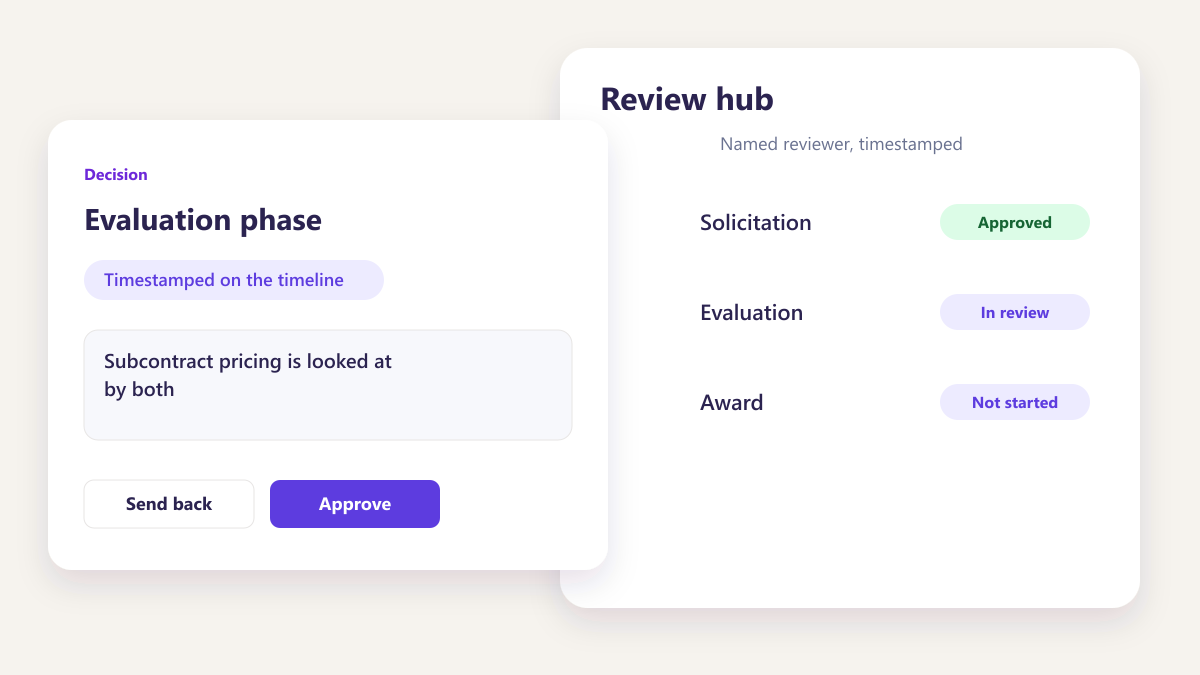
Treated as separate
Subcontract pricing is looked at by both, from different angles, and teams that treat the two as unrelated end up producing the same material twice.
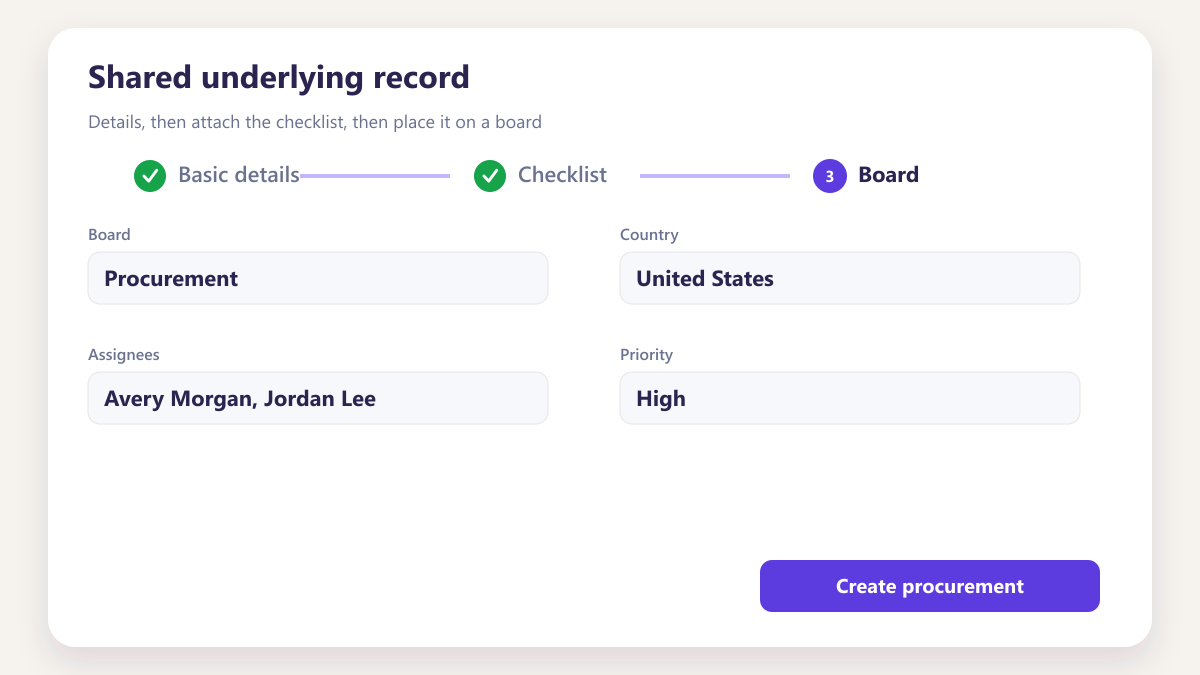
Shared underlying record
One purchase record holding the analysis, approvals and reasoning serves both examinations, because both are asking questions about the same transaction.
Four questions, four answers
| If the question is about | Then it is usually |
|---|---|
| How costs were recorded, allocated or claimed | DCAA territory, examined through an audit of your accounting records |
| How you selected a supplier and justified the price | DCMA territory, examined through a purchasing system review |
| Whether your indirect rates are supportable | DCAA, through forward pricing or incurred cost work |
| Whether you can place subcontracts without seeking consent | DCMA, through the approval status of your purchasing system |
Four things worth doing before either arrives
Establish which examination it is
Before anybody prepares anything, because the two need almost entirely different evidence from different teams.
Learn moreKeep purchase reasoning in the purchase file
Accounting records show what a thing cost. They do not show why that supplier was chosen, which is the purchasing question.
Learn moreInvolve procurement early
A purchasing system review tests files that procurement built, so finance leading the preparation alone tends to surface gaps late.
Learn moreBuild one record that serves both
The same award record can hold the cost analysis and the purchasing reasoning, which avoids producing the material twice.
Learn moreCommon questions about the two agencies
What is the difference between DCAA and DCMA?
Which one runs a purchasing system review?
Does DCAA approve our purchasing system?
Can both examine the same subcontract?
Which agency should we prepare for first?
Do civilian agency contractors deal with DCMA?
Does one record work for both?
Other explainers and the pages they connect to
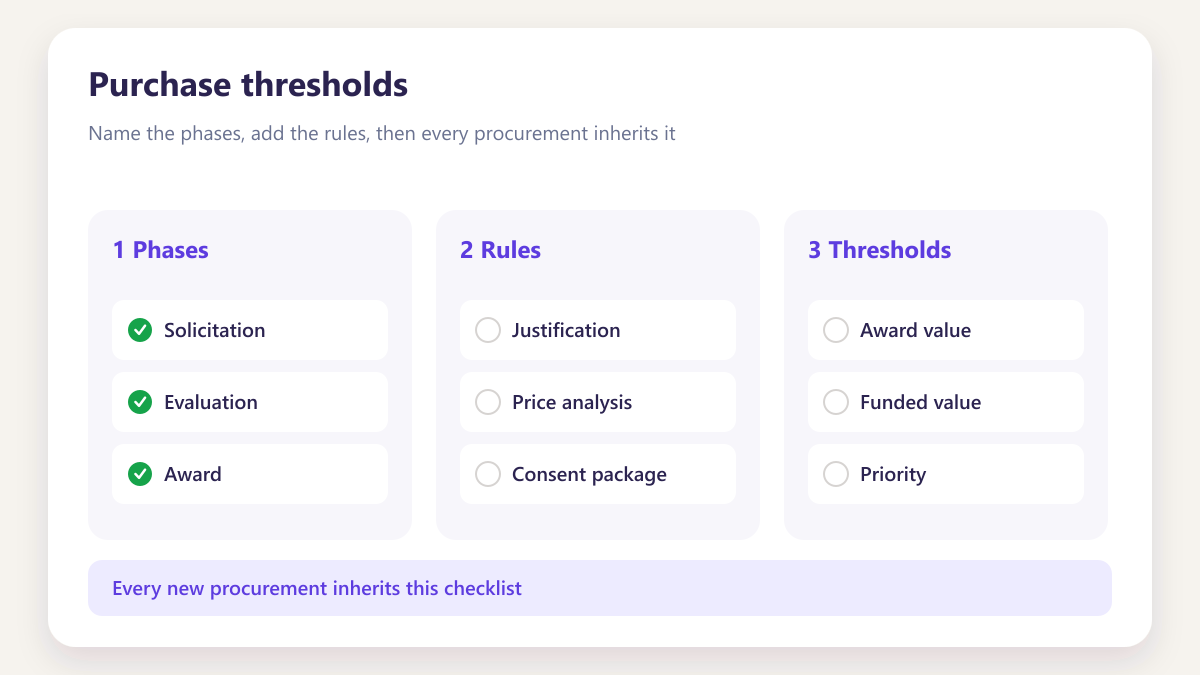
Purchase thresholds
The figures that decide how much documentation a purchase needs.
Learn more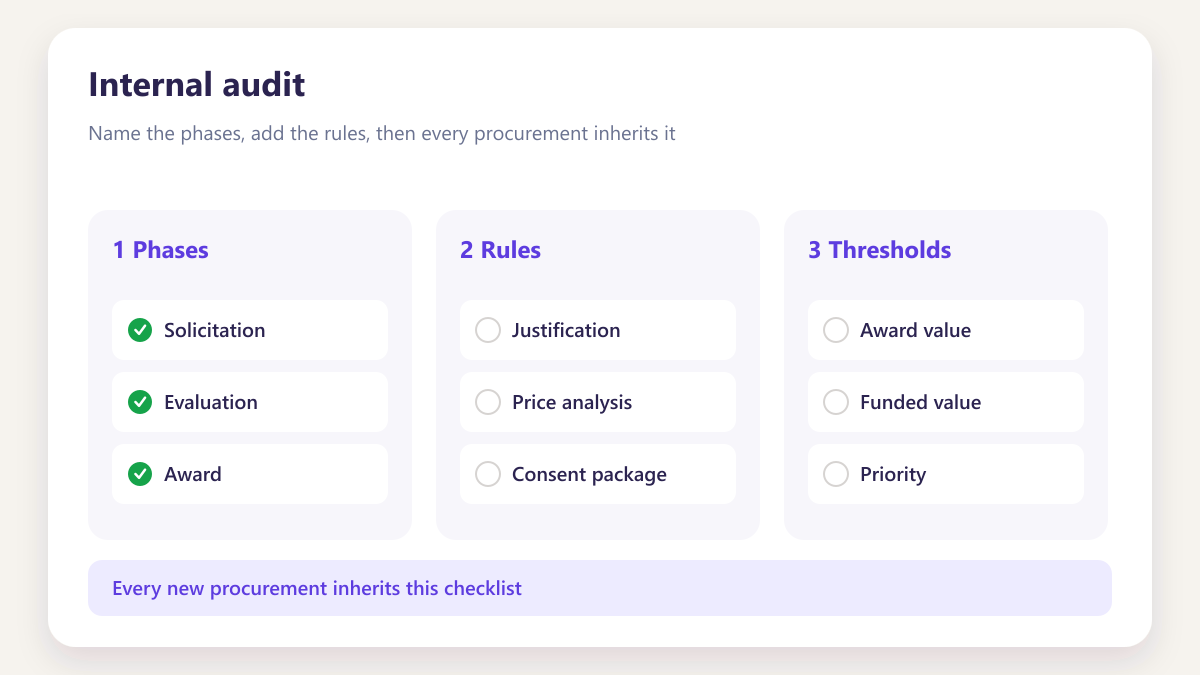
Internal audit
Sampling a population and getting the support without a collection exercise.
Learn moreBring the letter you received
If an examination has been announced and it is not obvious which one it is, we will help you read it before you prepare anything.
Book a demo