Home / Solutions / Construction and engineering
IndustryDocuments that expire
while nobody is watching
Construction purchasing happens away from a desk, and the documents that matter most lapse silently. A certificate that expired in March becomes extremely relevant the day something goes wrong on site.
Work starts before the paperwork settles
Site programmes do not wait for documentation, which is exactly why the documentation has to look after itself rather than depending on somebody having time.
Insurance and qualification records expire on dates nobody is watching. Tracking each to its own expiry and chasing the subcontractor before it lapses removes a genuine exposure without adding a task to anybody's week.
- Every document carries its own expiry date
- The subcontractor is reminded before it lapses
- Escalation when there is no response
- No spreadsheet of who owes what
Extra scope agreed on site has a habit of disappearing into the original award. Recording it as a modification keeps the amount, the approval and the evidence attached to the change itself.
- Each variation with its own award amount
- Approval routed rather than assumed
- Documents filed against the variation
- Readable two years after the project closed
Project managers move between projects, and when the record lives in their email it moves with them or disappears entirely.
- Reasoning and approvals on the award record
- Documents in the drive rather than an inbox
- Handover becomes an introduction
- The record survives the project team
What usually goes wrong on a site
These are the four failures construction teams describe most often, and none of them is about carelessness.
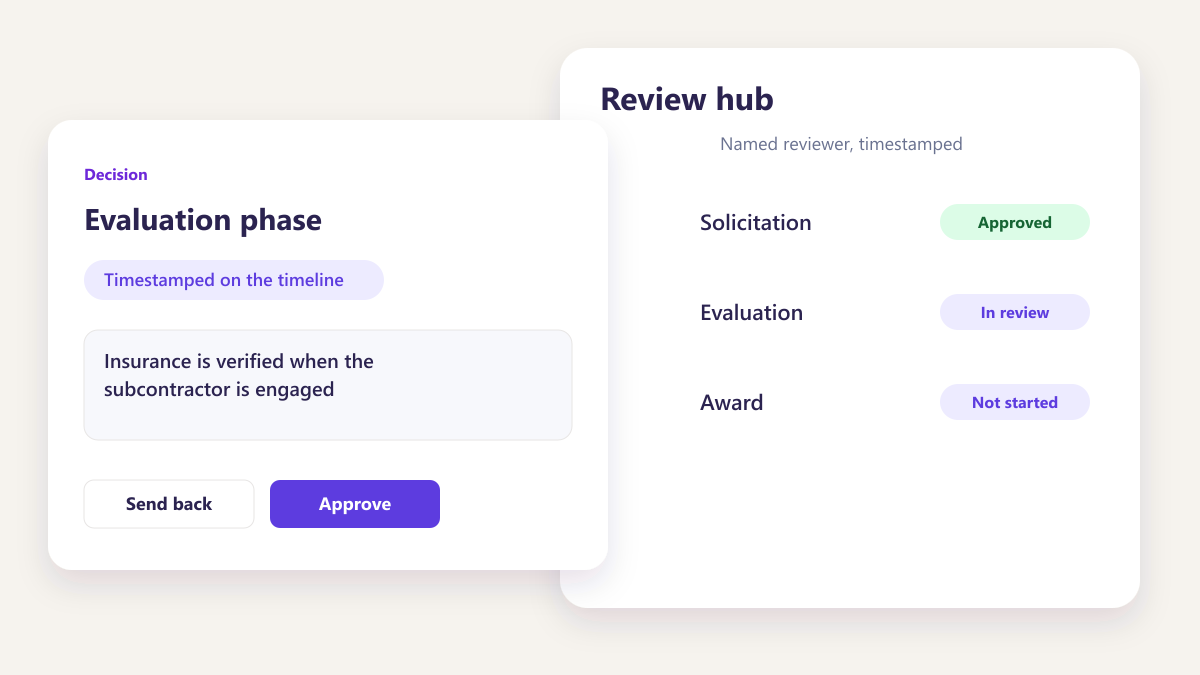
Checked once at onboarding
Insurance is verified when the subcontractor is engaged and never checked again, so a lapse in month eight goes unnoticed until an incident makes it relevant.
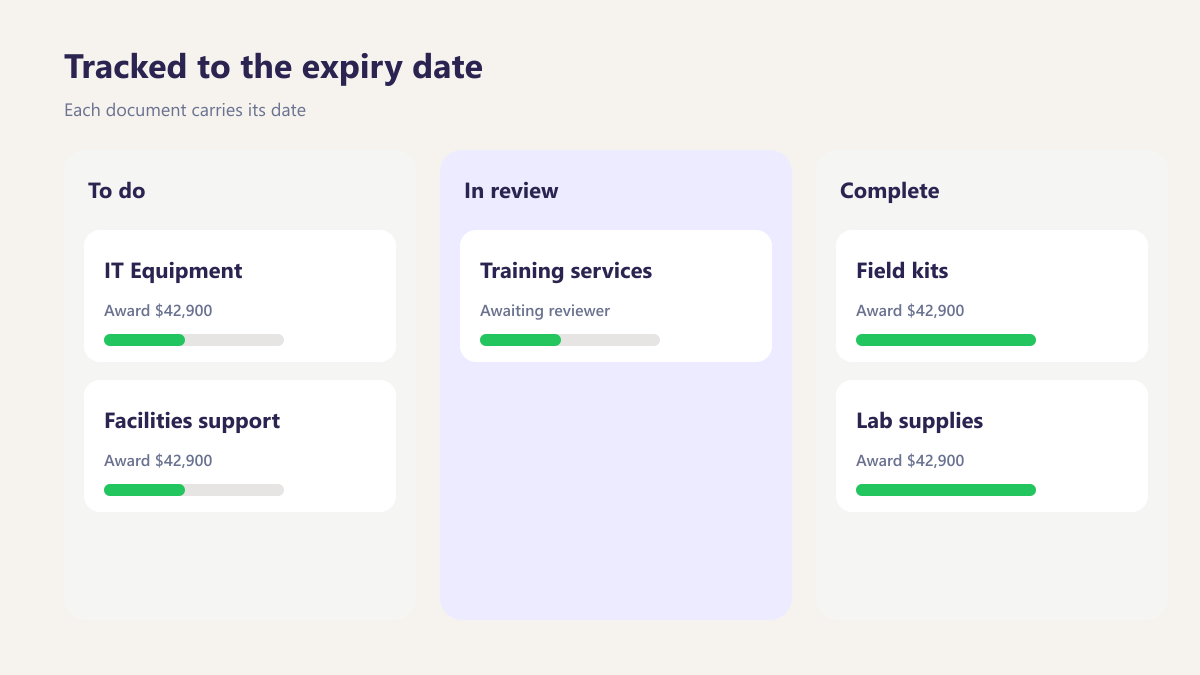
Tracked to the expiry date
Each document carries its date, the subcontractor is chased before it lapses, and escalation happens if they stay quiet.
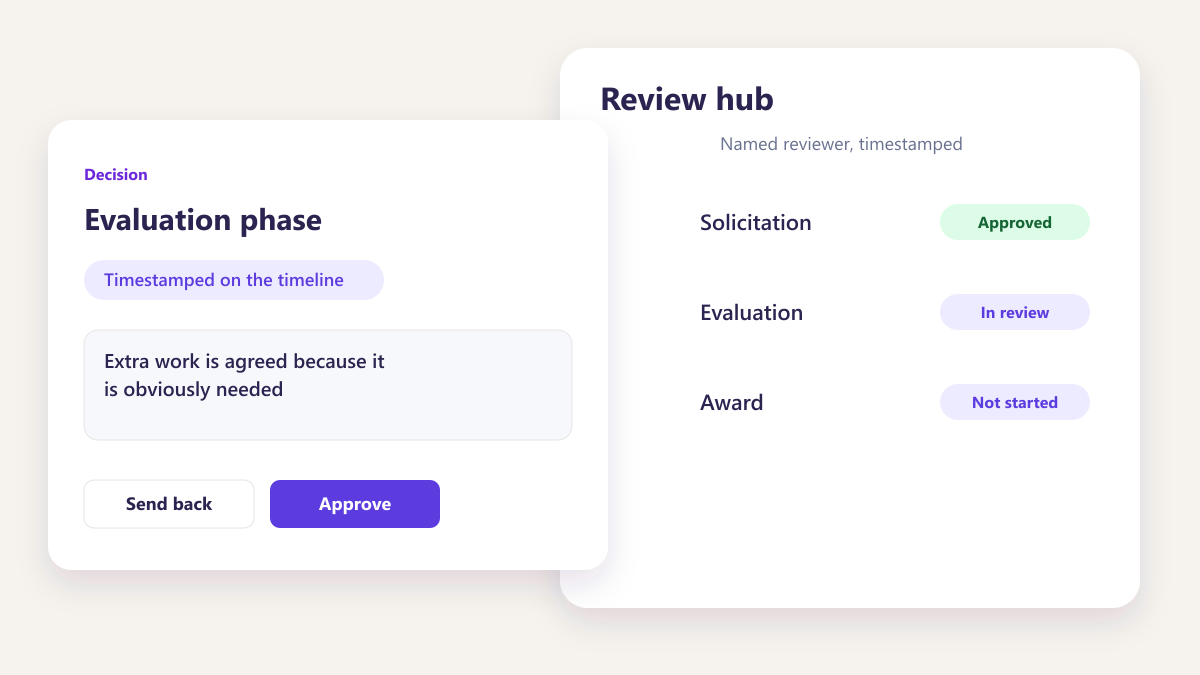
Agreed verbally on site
Extra work is agreed because it is obviously needed, and by final account there is no document establishing what was agreed or at what value.
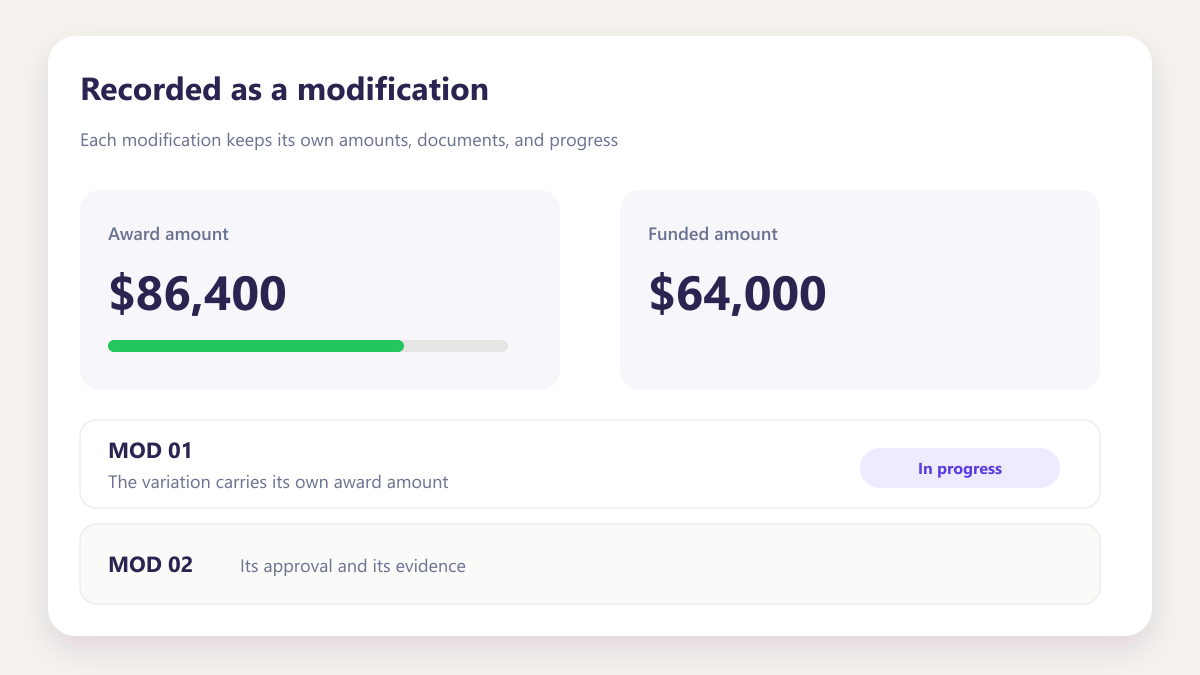
Recorded as a modification
The variation carries its own award amount, its approval and its evidence, so it stays separable from the original scope.
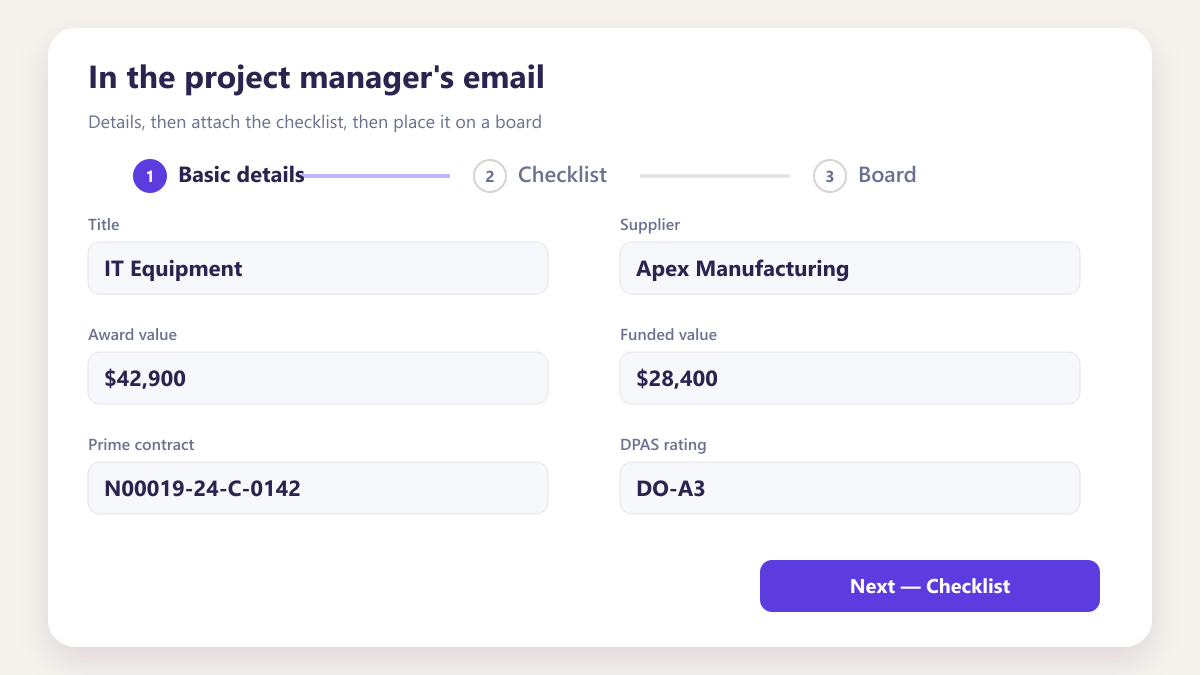
In the project manager's email
Approvals, agreements and supplier correspondence all live in one person's inbox, which becomes a problem the moment they move to another project.
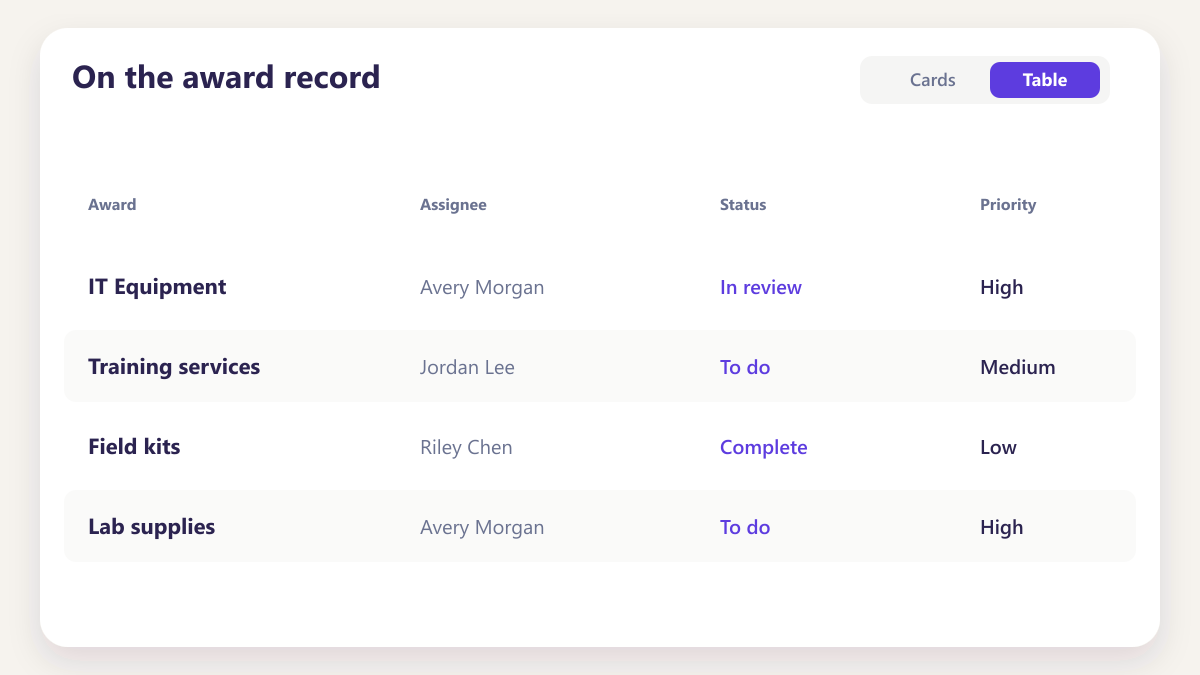
On the award record
Everything attaches to the award, so a handover is an introduction rather than an attempt to transfer everything somebody remembered.
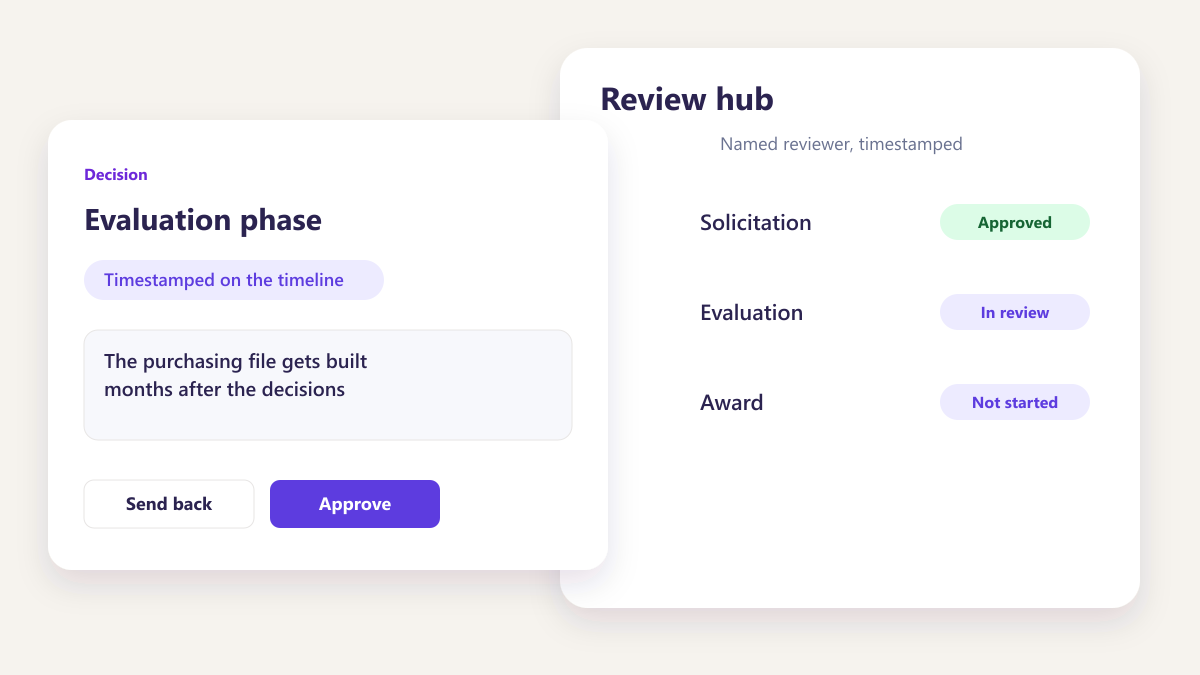
Assembled at the end
The purchasing file gets built months after the decisions, from whatever survived, which is when gaps are discovered rather than fixed.
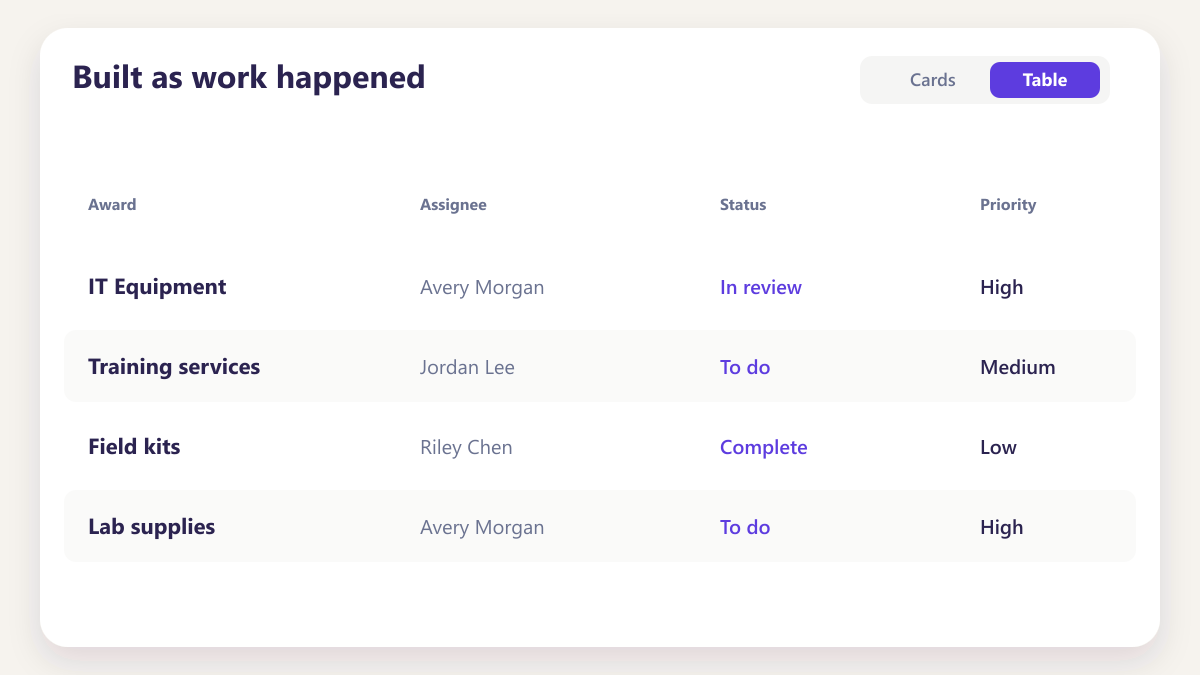
Built as work happened
Evidence was captured in the phase that produced it, so closeout is a check rather than a construction exercise.
Six documents that cause problems when they lapse
Six documents that cause problems when they lapse
Public and employer liability, the exposure everybody knows about and most often finds out of date.
- Insurance
- Qualification records
- Method statements
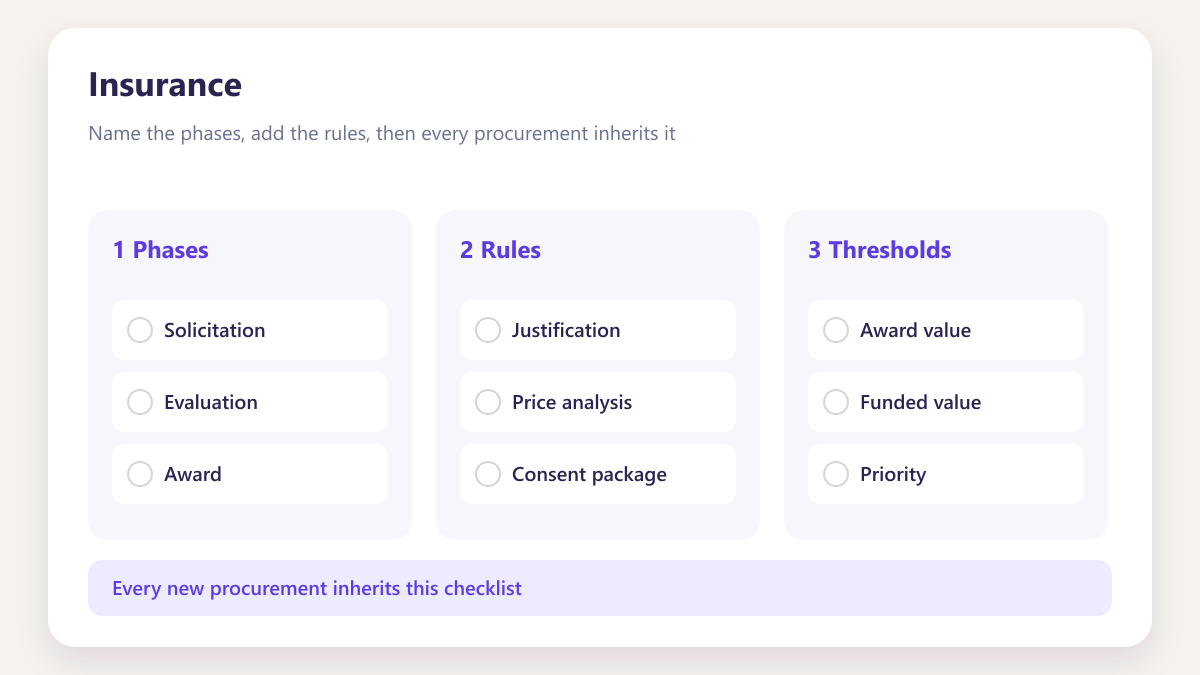
Insurance
Public and employer liability, the exposure everybody knows about and most often finds out of date.
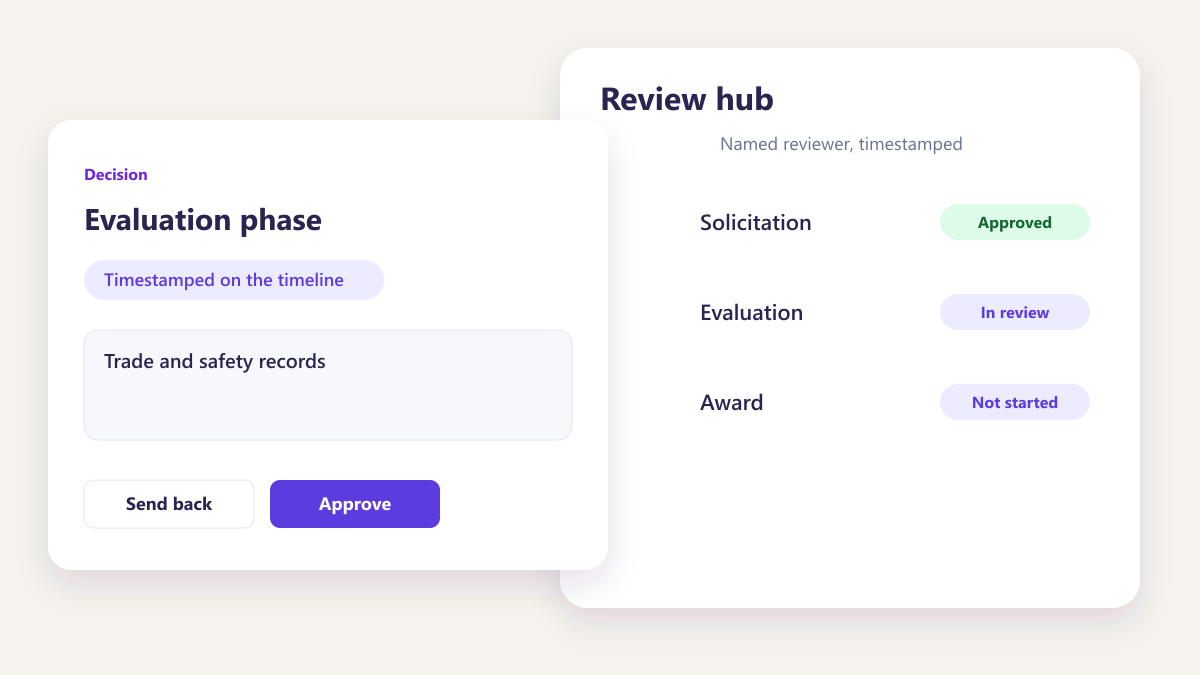
Qualification records
Trade and safety records, contractual as much as legal, rarely re-checked after onboarding.
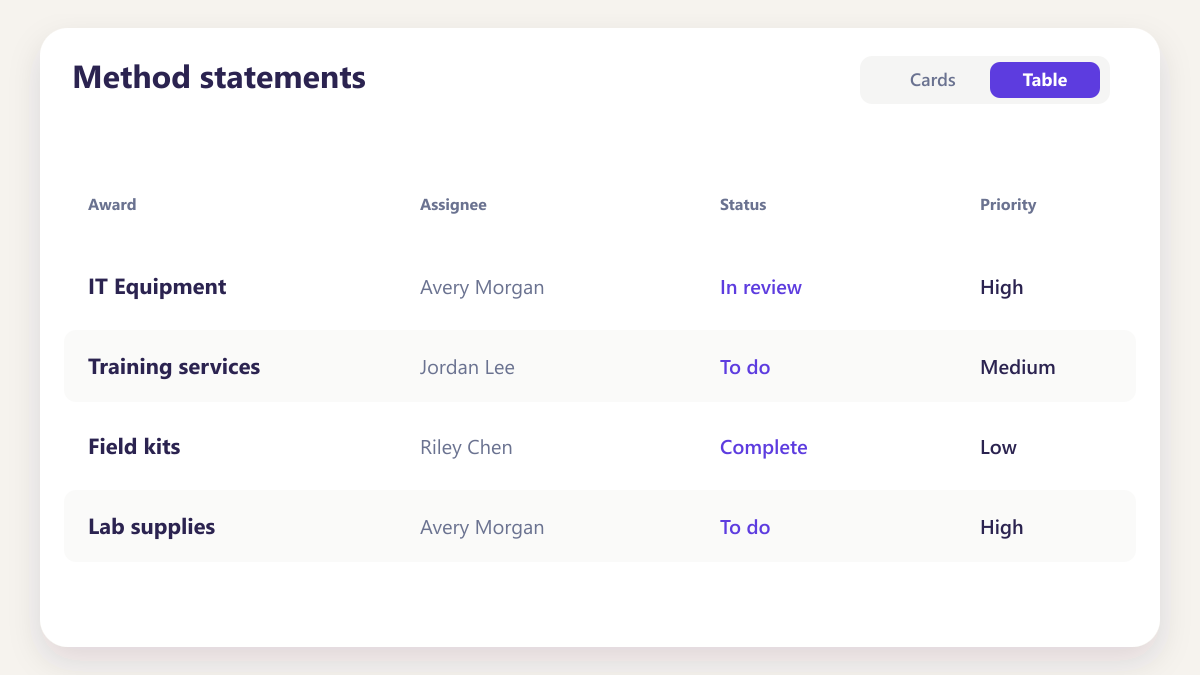
Method statements
Documents required per job, attached to the award rather than chased during mobilisation.
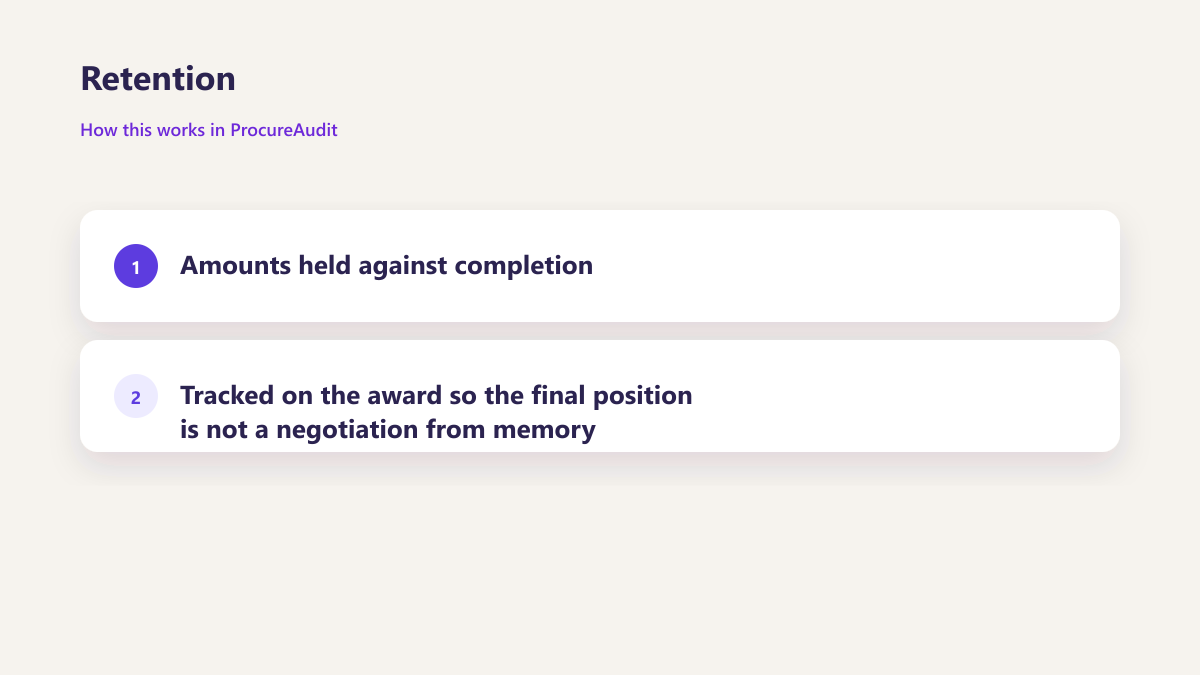
Retention
Amounts held against completion, tracked on the award so the final position is not a negotiation from memory.
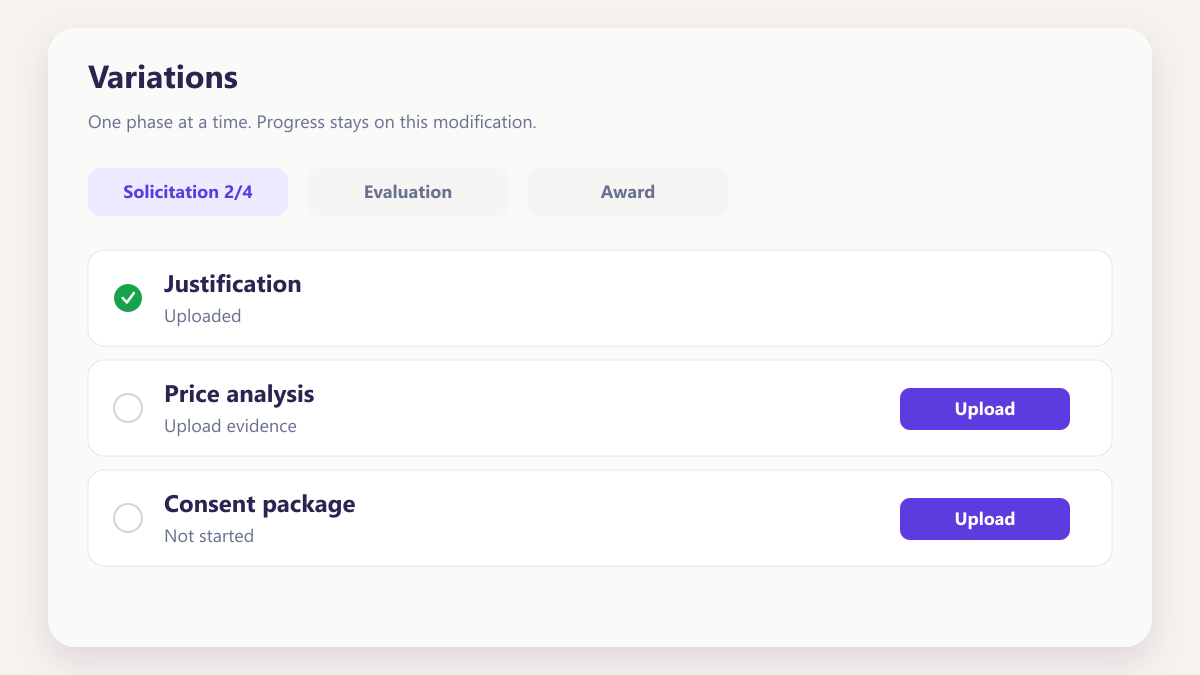
Variations
Extra scope routed for approval rather than absorbed into the original award.
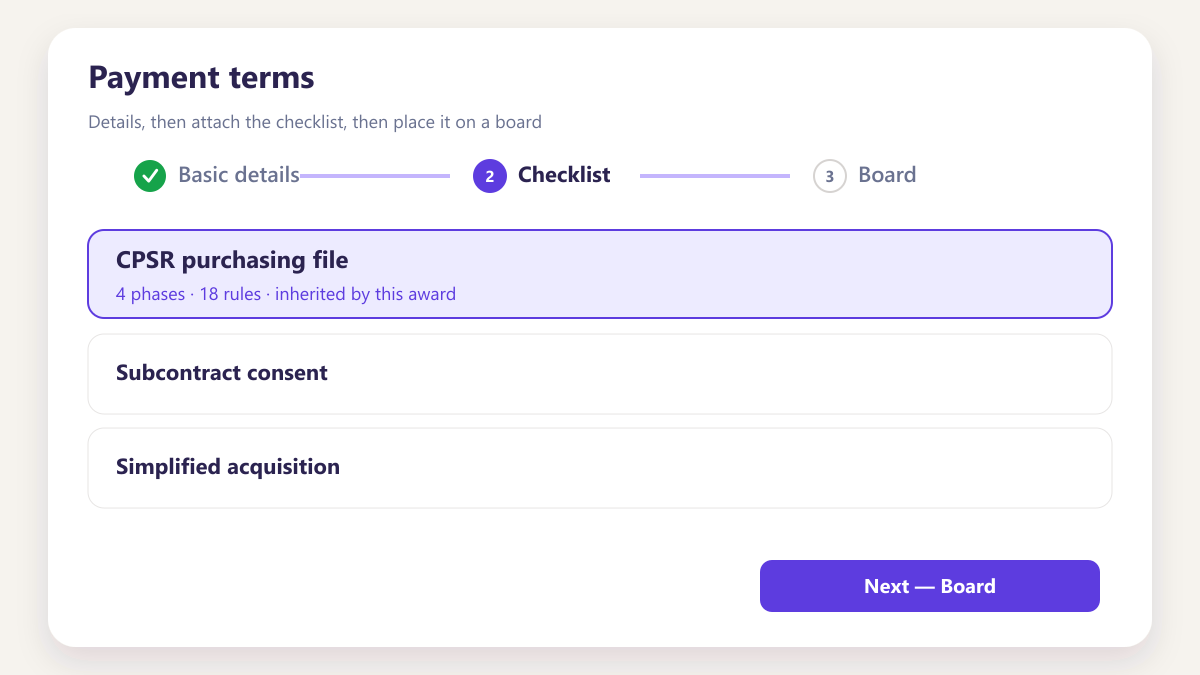
Payment terms
Often different for subcontractors, held on the record and applied rather than remembered.
The three that cause most trouble
The three that cause most trouble
Documents verified as current rather than assumed from an onboarding check months earlier.
- Before a subcontractor mobilises
- Extra scope agreed on site
- Final account approaches
Before a subcontractor mobilises
Documents verified as current rather than assumed from an onboarding check months earlier.
Learn moreExtra scope agreed on site
Recorded as a modification with its own value while everybody still agrees what it was.
Learn moreFinal account approaches
Variations and their approvals already on record rather than reconstructed from correspondence.
Learn moreQuestions from construction and engineering firms
How are subcontractor documents kept current?
Can we record variations properly?
Does this work for a site based team?
What happens when a project manager leaves?
How long is the record retained?
Can each project carry its own checklist?
What about retention amounts?
Other sectors and roles worth reading
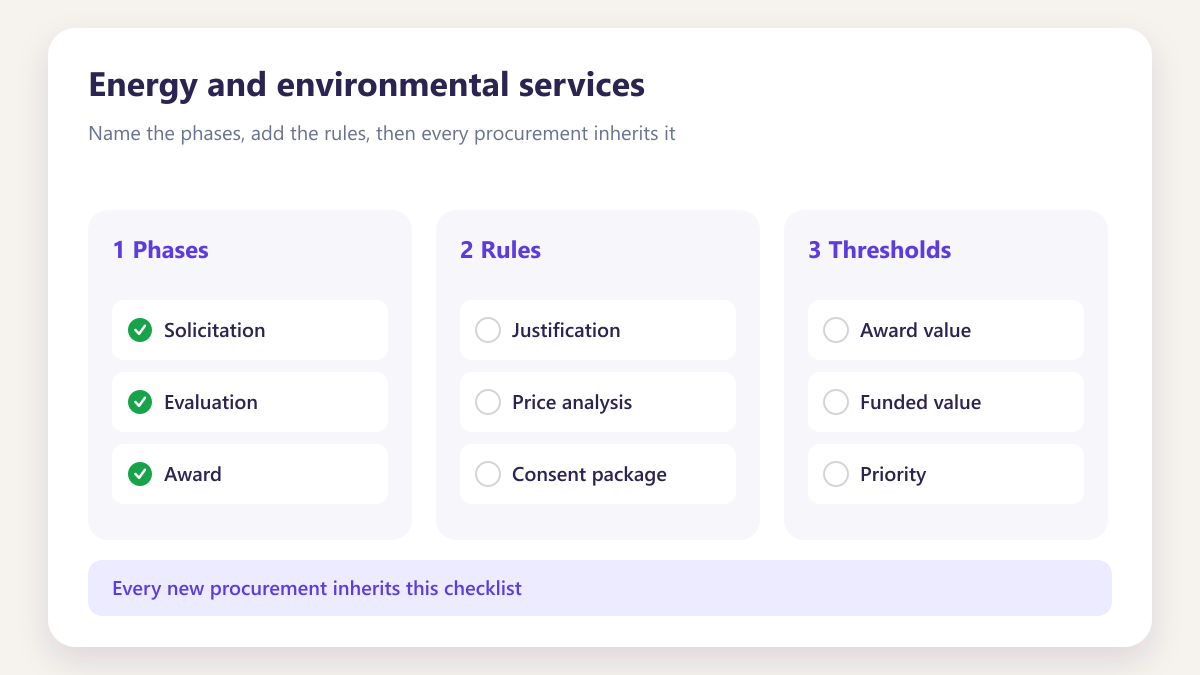
Energy and environmental services
Field and remediation work where purchasing happens away from any desk.
Learn more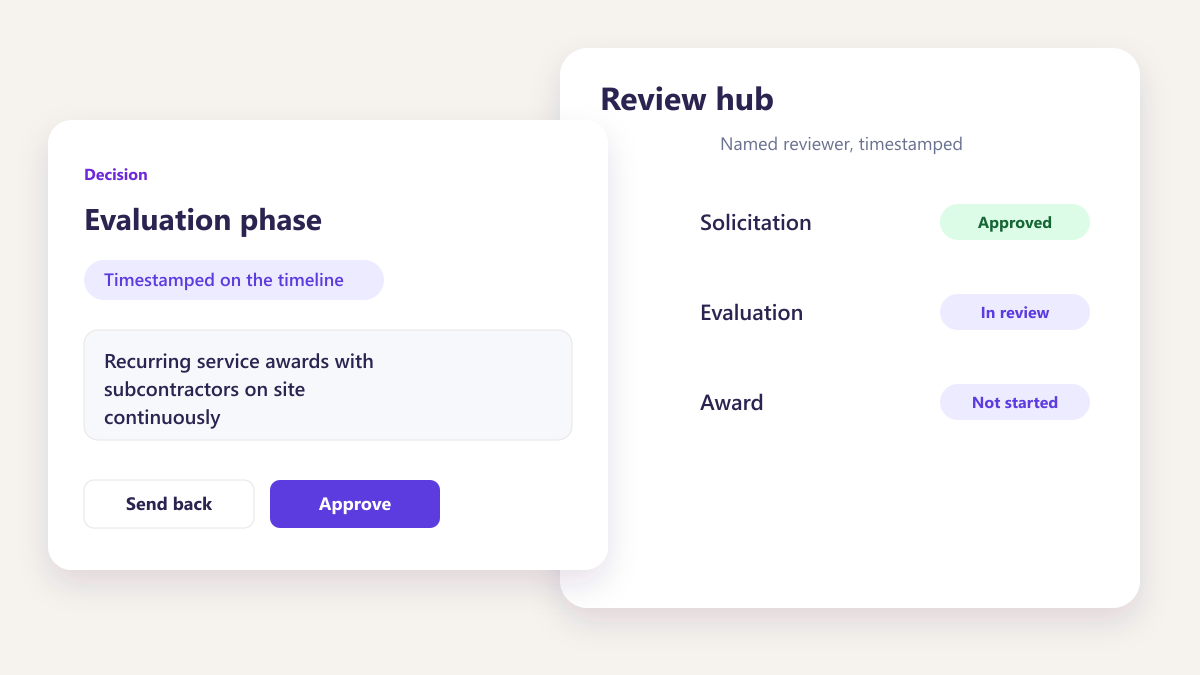
Facilities and base operations
Recurring service awards with subcontractors on site continuously.
Learn more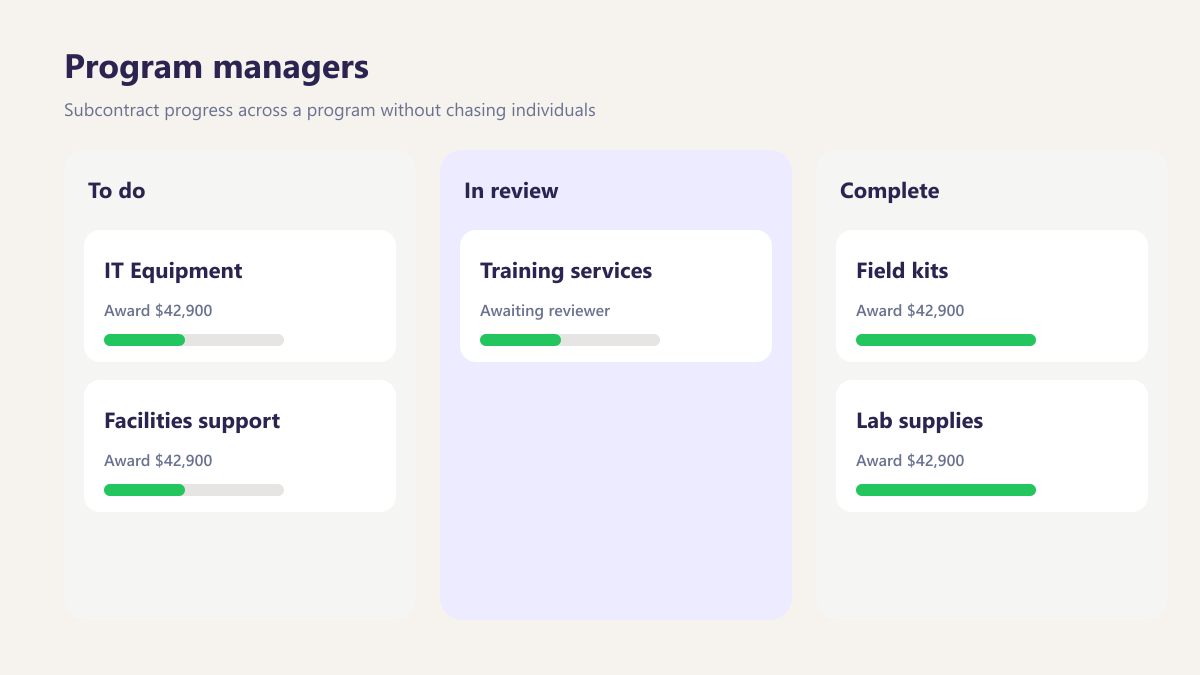
Program managers
Subcontract progress across a program without chasing individuals.
Learn moreBring a package with a disputed variation
We will show what the record would have contained if the variation had been logged as a modification at the time.
Book a demo