Home / Solutions / Research and universities
IndustryEvery purchase belongs
to a specific award
Research purchasing is rarely funded from one place. Costs split across grants and awards that each permit different things over different periods, and the allocation has to be right at the point of purchase.
Money from several places, each with rules
A research institution can hold dozens of live awards at once, each permitting different purchases over different periods. The difficulty is not buying, it is attribution.
Money from several places, each with rules
A research institution can hold dozens of live awards at once, each permitting different purchases over different periods. The difficulty is not buying, it is attribution.
- Allocation is done by the person who knows
- Ineligible spend is caught while it can change
- Funder reporting becomes an export
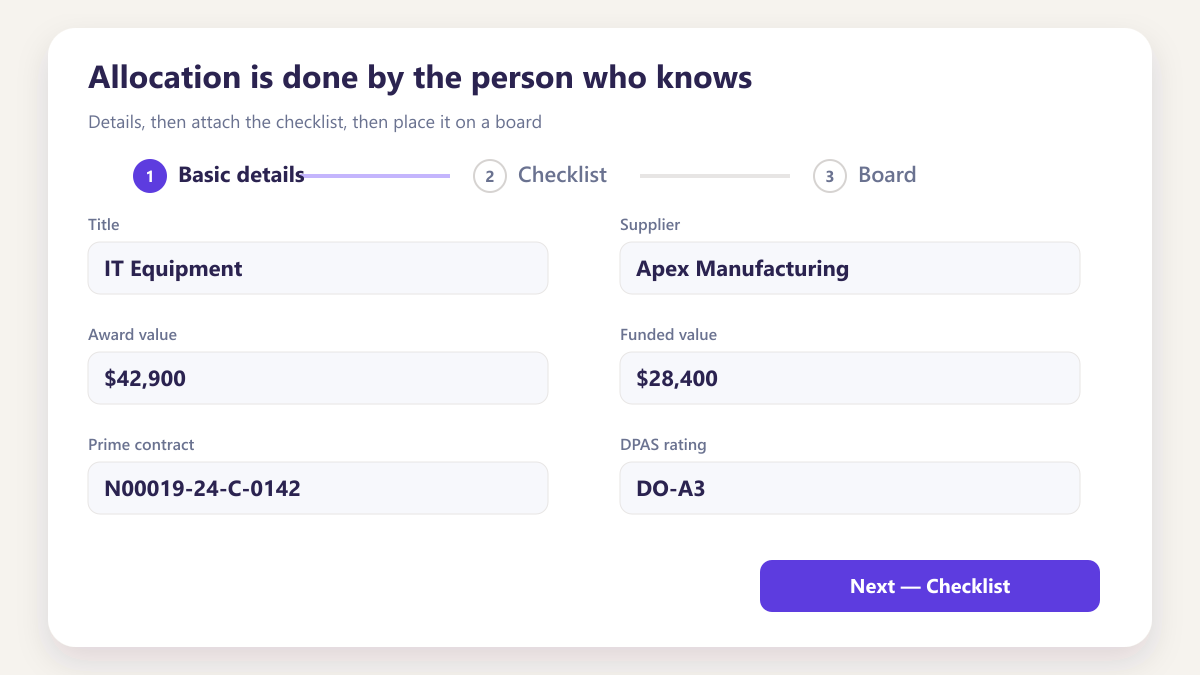
Allocation is done by the person who knows
The researcher raising a purchase knows which award it belongs to with certainty at that moment. Finance reconstructing it later from a supplier and a date is guessing.
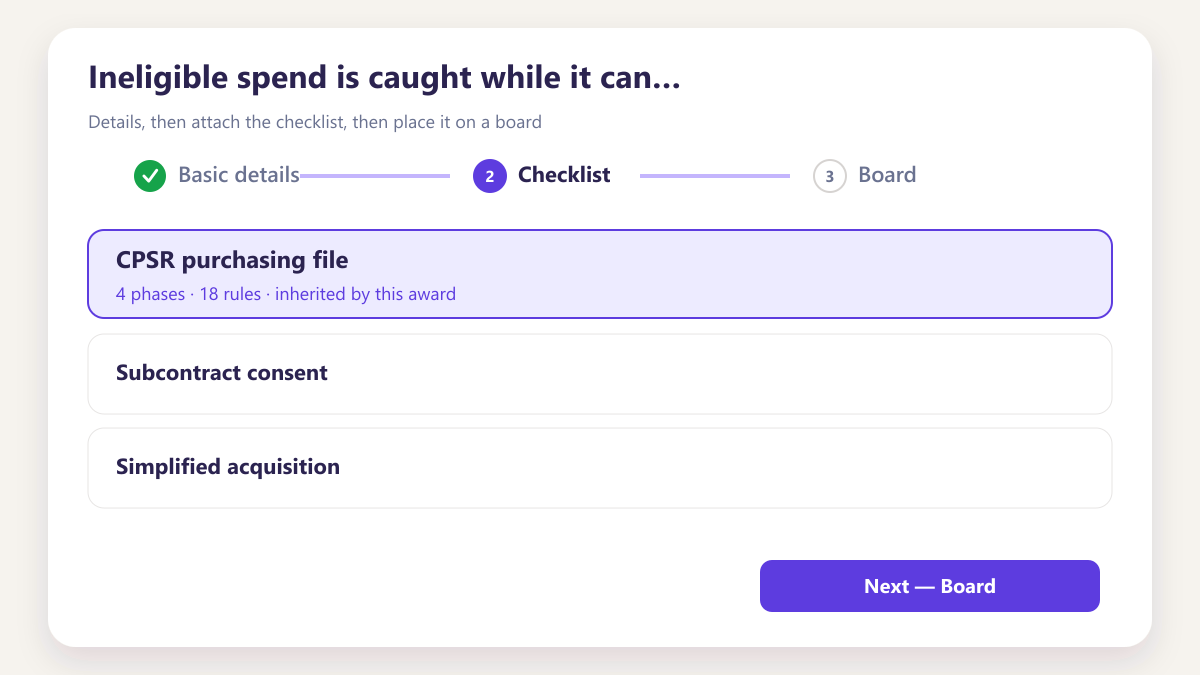
Ineligible spend is caught while it can change
Permitted use and eligible period are both knowable when the purchase is raised, which is the only point at which the answer still alters the outcome.
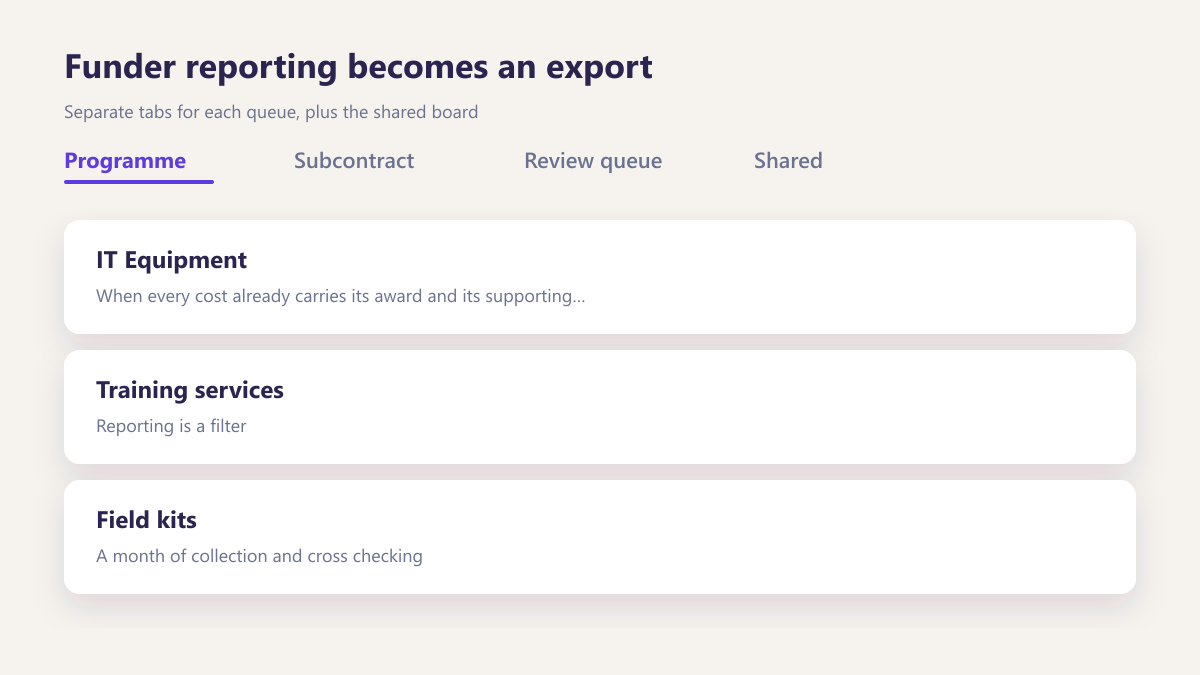
Funder reporting becomes an export
When every cost already carries its award and its supporting document, reporting is a filter rather than a month of collection and cross checking.
How research purchasing usually goes wrong
The failures are almost never about buying badly. They are about the link between a cost and the award that funded it.
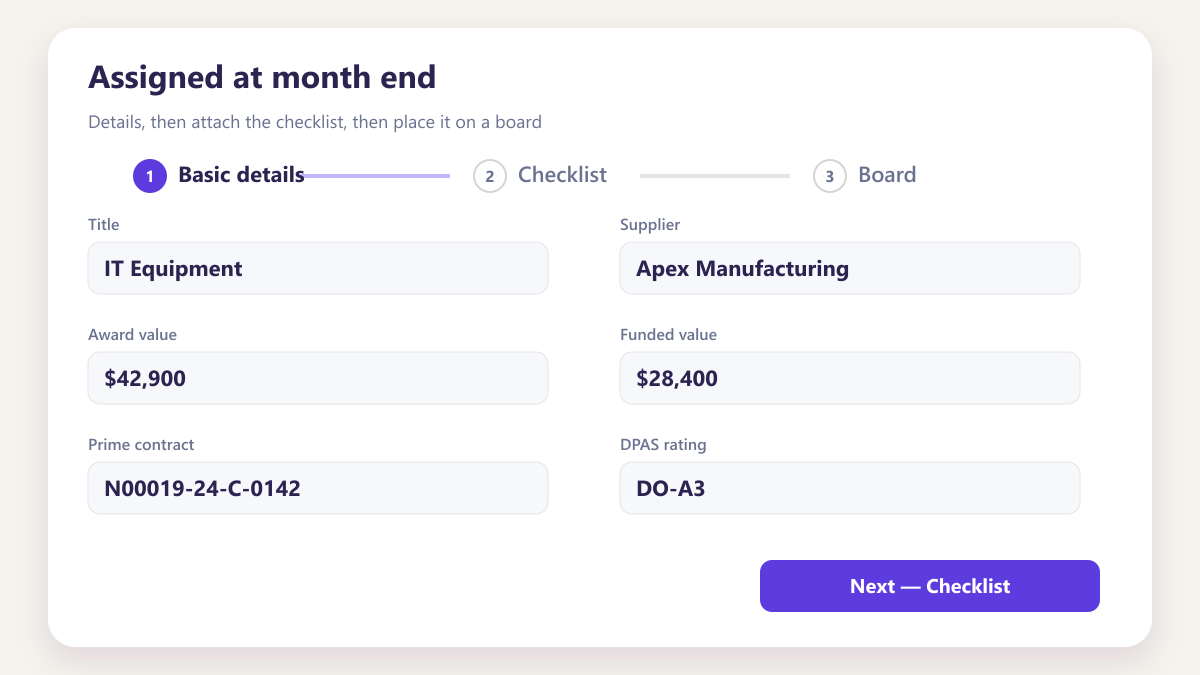
Assigned at month end
Finance allocates costs to awards afterwards using the supplier, the date and a conversation, which produces wrong answers nobody detects until a funder looks.
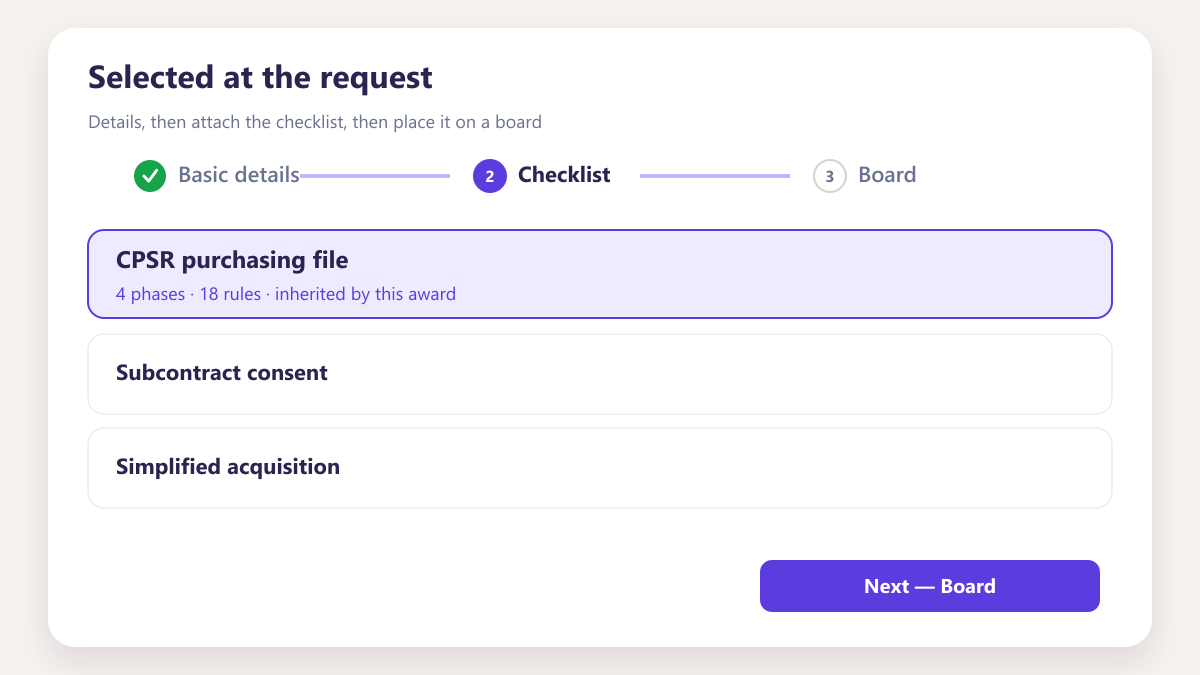
Selected at the request
The researcher selects the award when raising the purchase, because they are the only one who knows and they know it now.
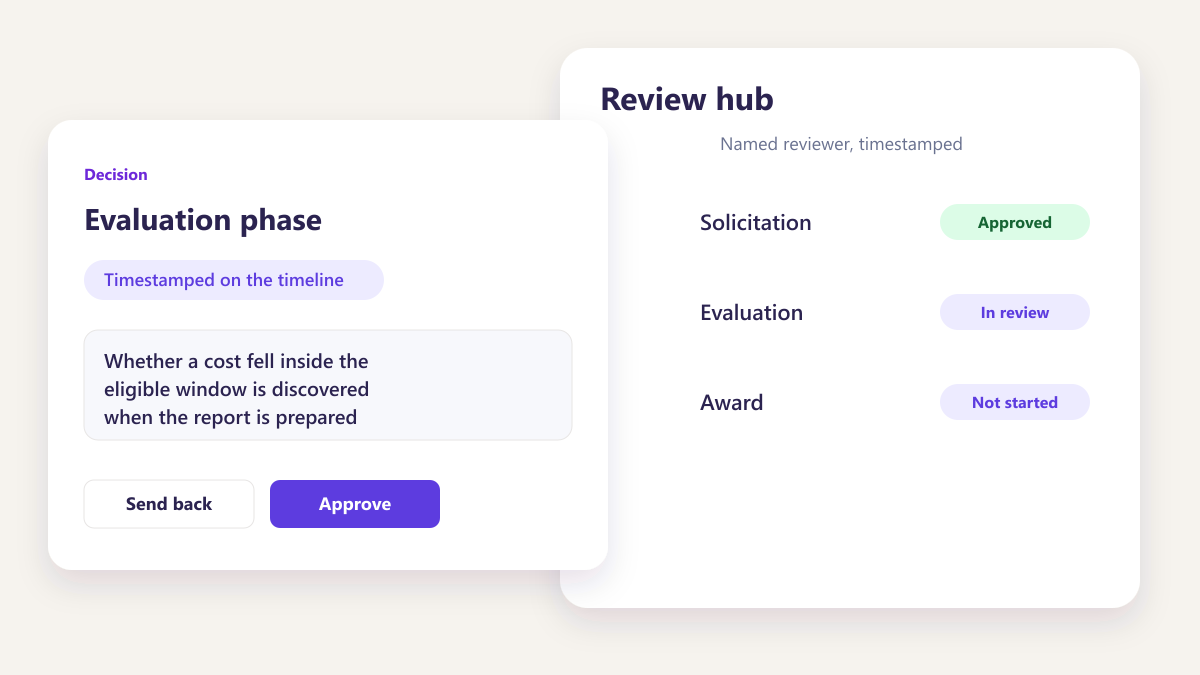
Checked at reporting
Whether a cost fell inside the eligible window is discovered when the report is prepared, long after the money was spent.
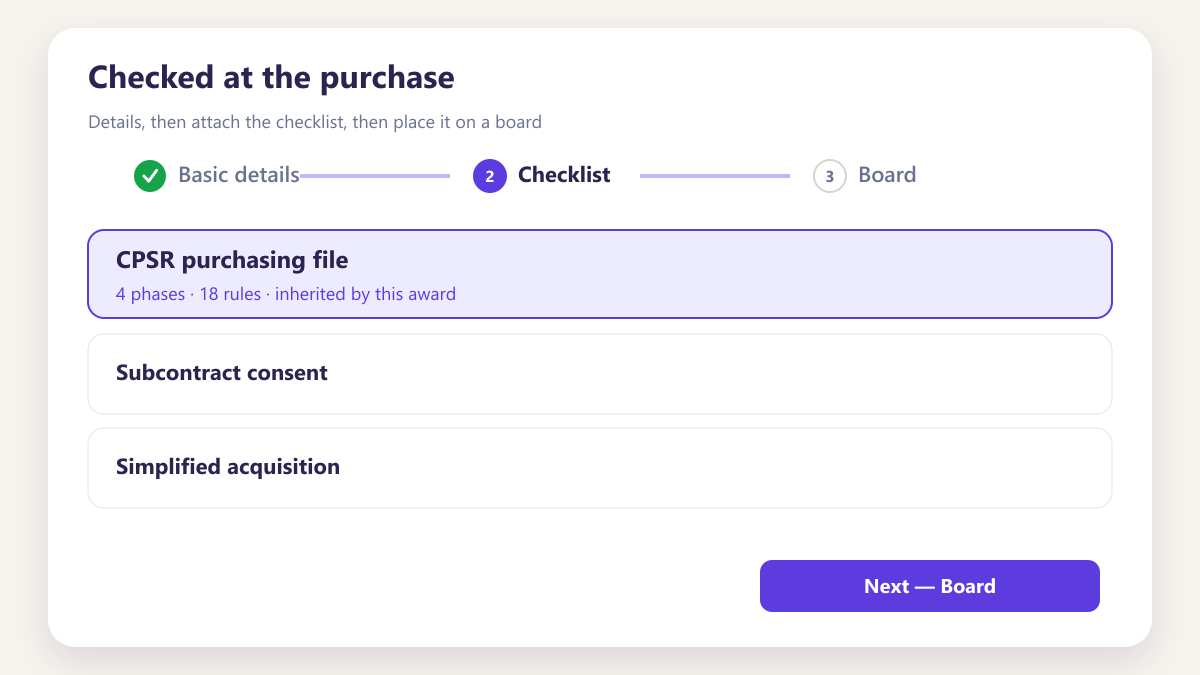
Checked at the purchase
The date is compared against the award window before approval, so a purchase outside it is caught as a proposal.
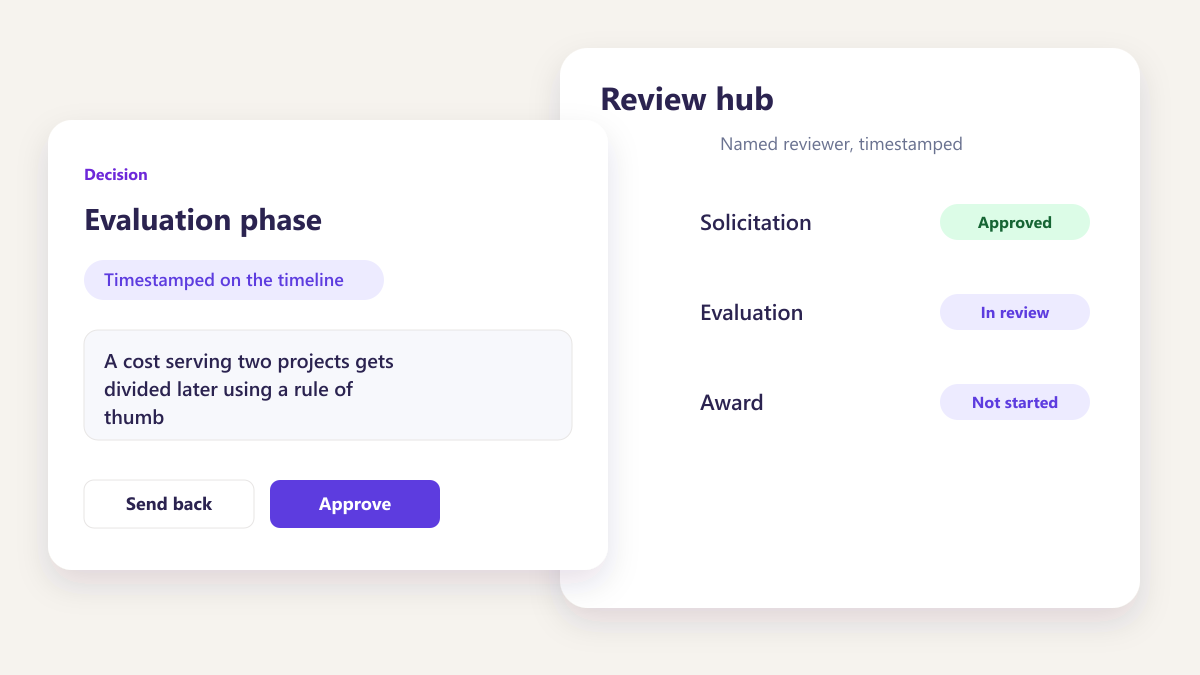
Apportioned by estimate
A cost serving two projects gets divided later using a rule of thumb, and the basis is rarely written down anywhere at all.
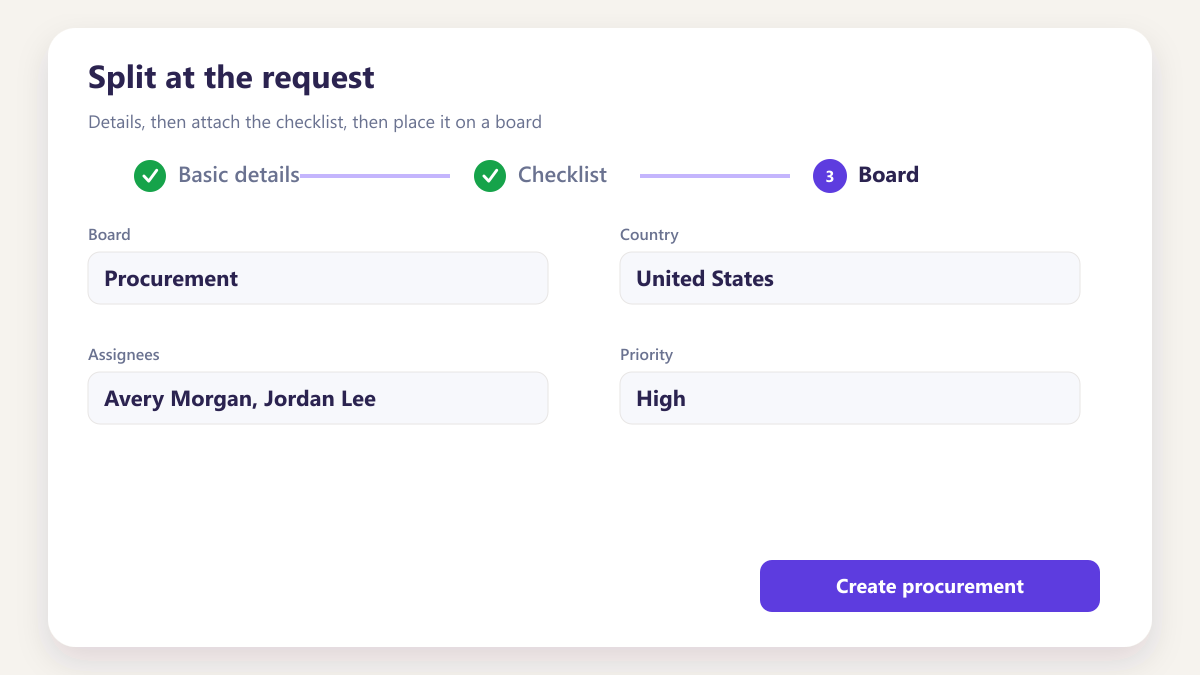
Split at the request
The division is set when the purchase is raised with the basis recorded alongside it.
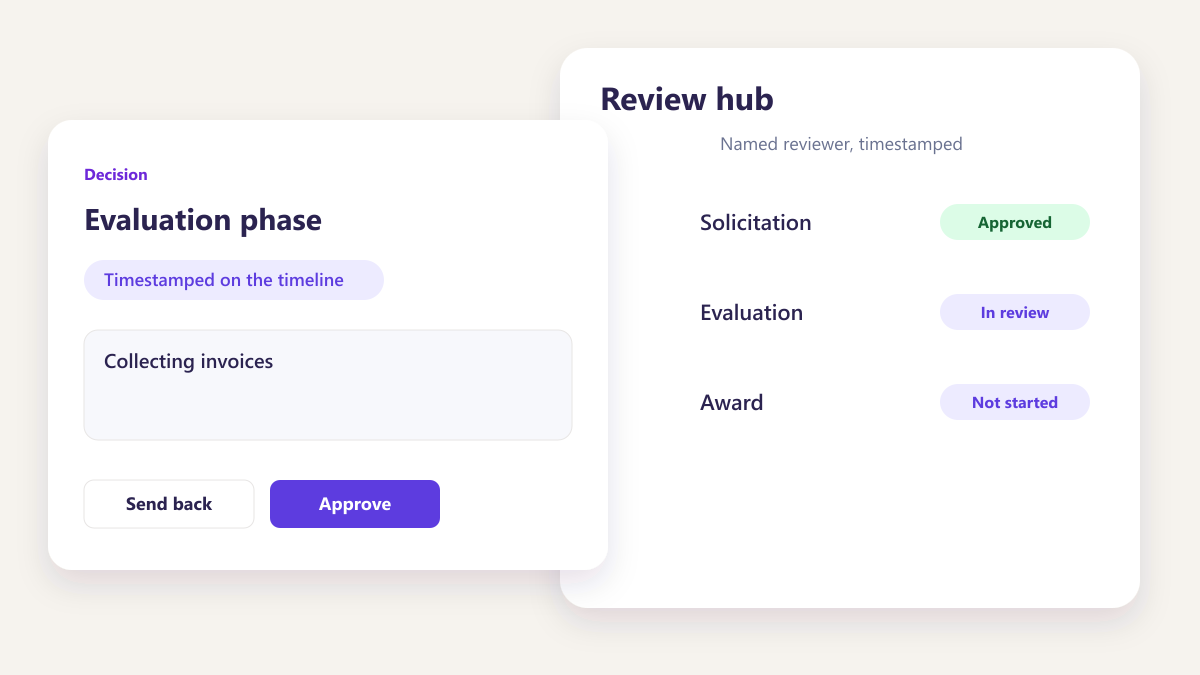
A month of assembly
Collecting invoices, allocating them, finding supporting documents and explaining exceptions, most of which is assembly rather than reporting.
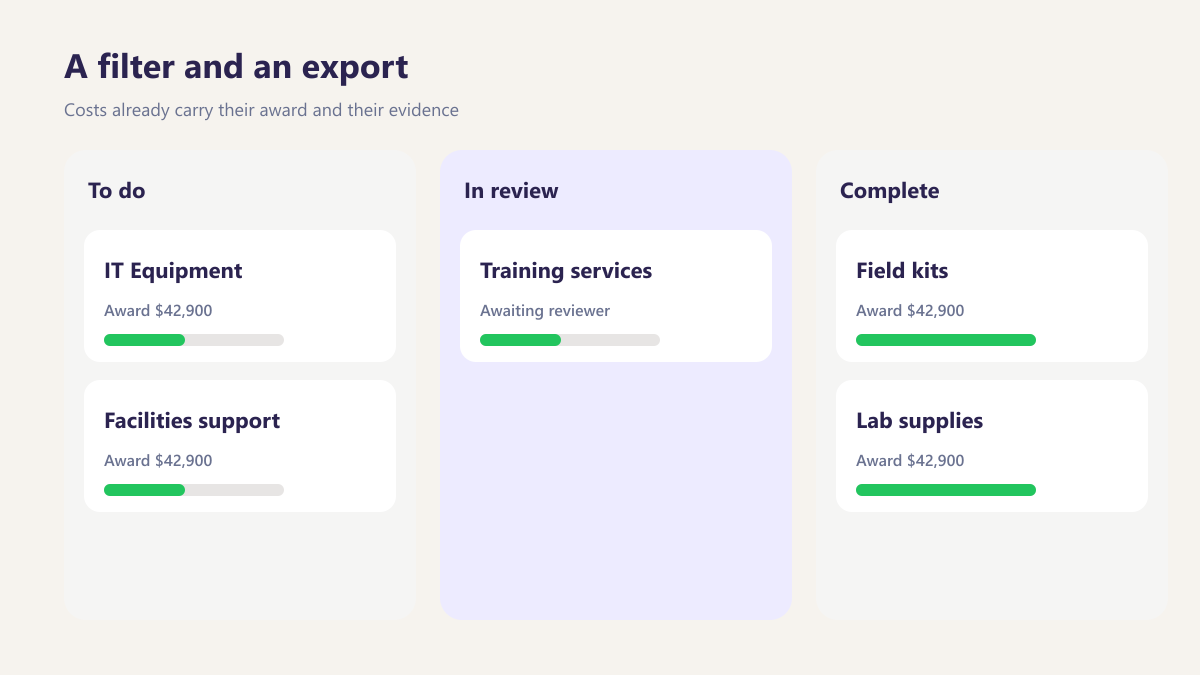
A filter and an export
Costs already carry their award and their evidence, so producing the report is extraction rather than construction.
Where attribution goes wrong
Where attribution goes wrong
Split at the request with the basis recorded rather than divided later by estimate.
- A purchase spanning two grants
- An award period ending
- A funder queries a cost
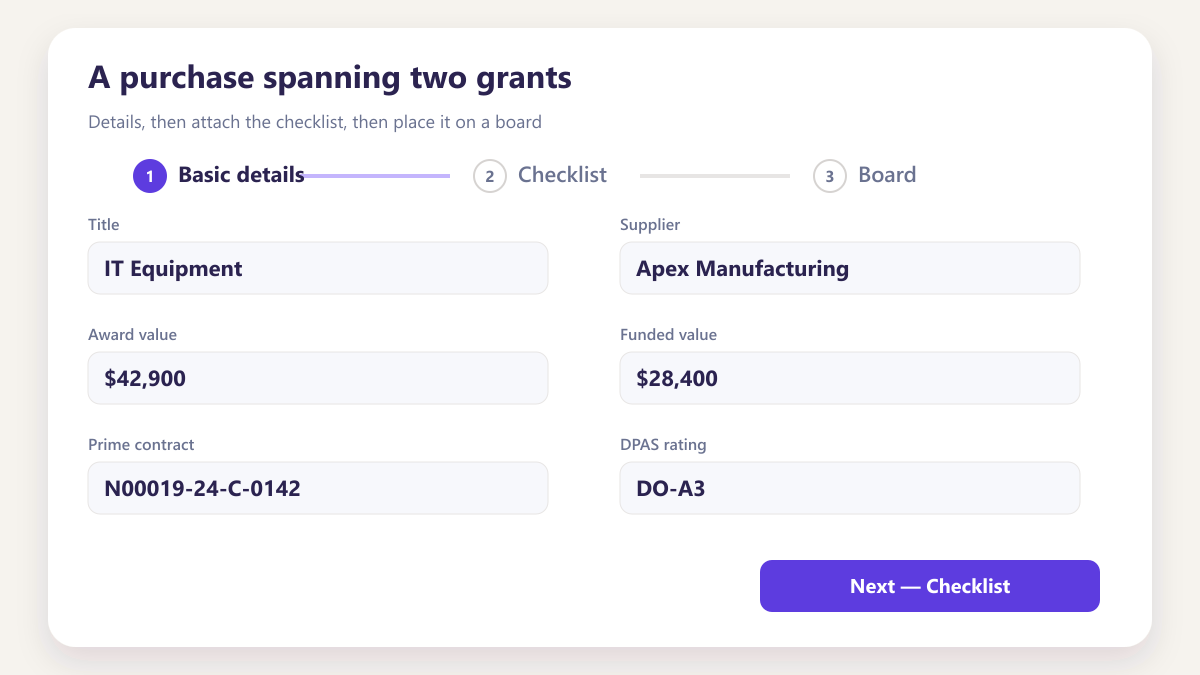
A purchase spanning two grants
Split at the request with the basis recorded rather than divided later by estimate.
Learn more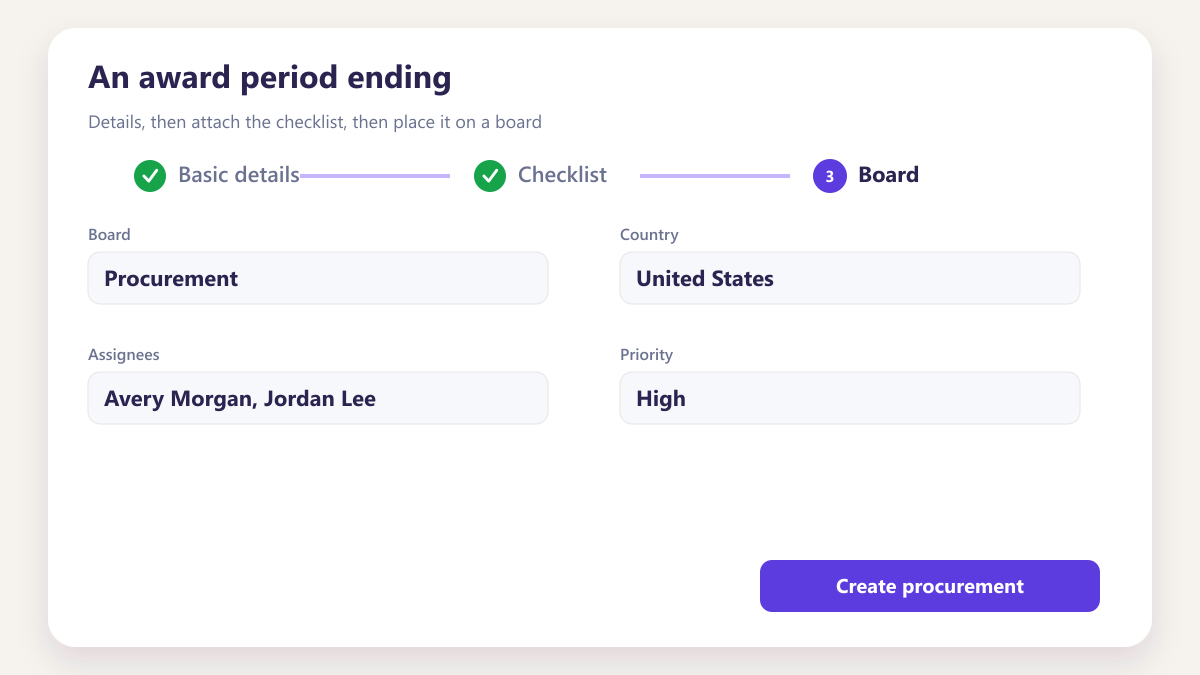
An award period ending
The eligible window checked when the purchase is raised rather than at reporting.
Learn more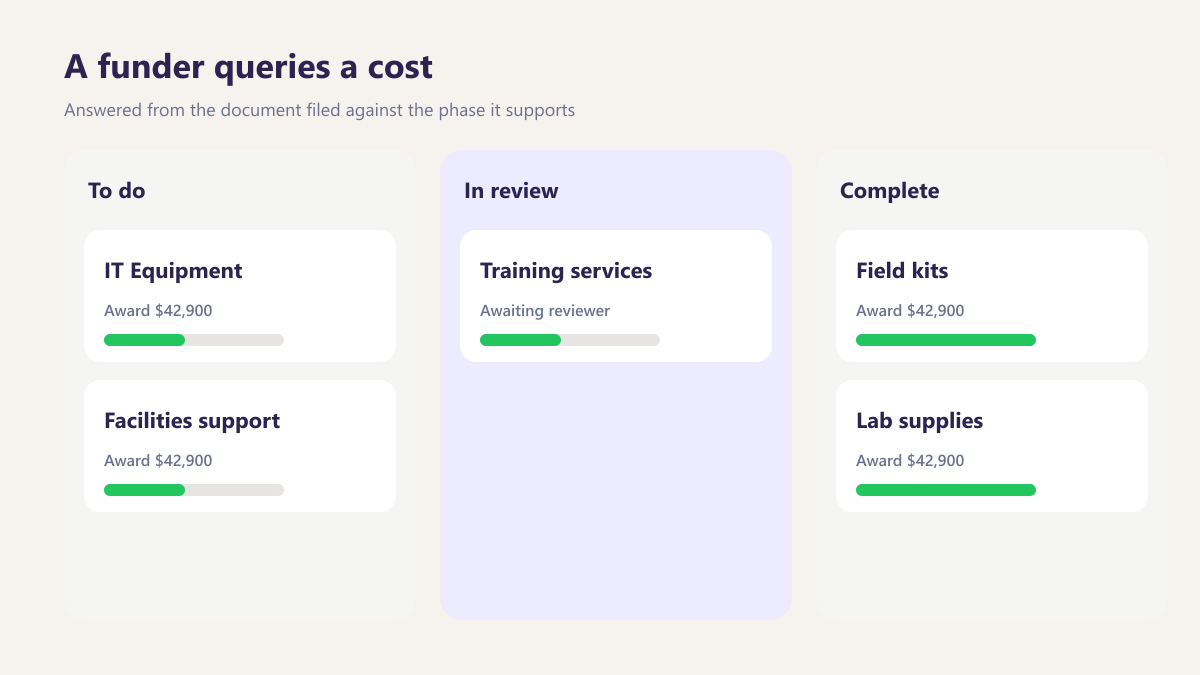
Six things captured at the request
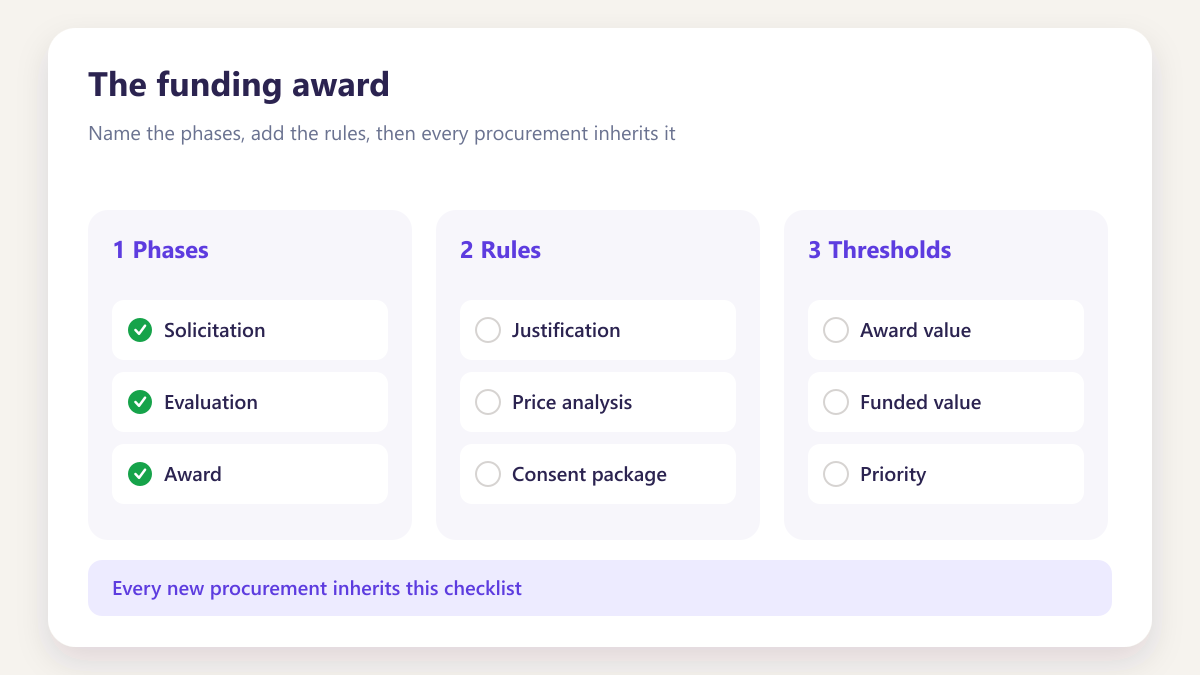
The funding award
Selected by the person raising it rather than allocated afterwards.
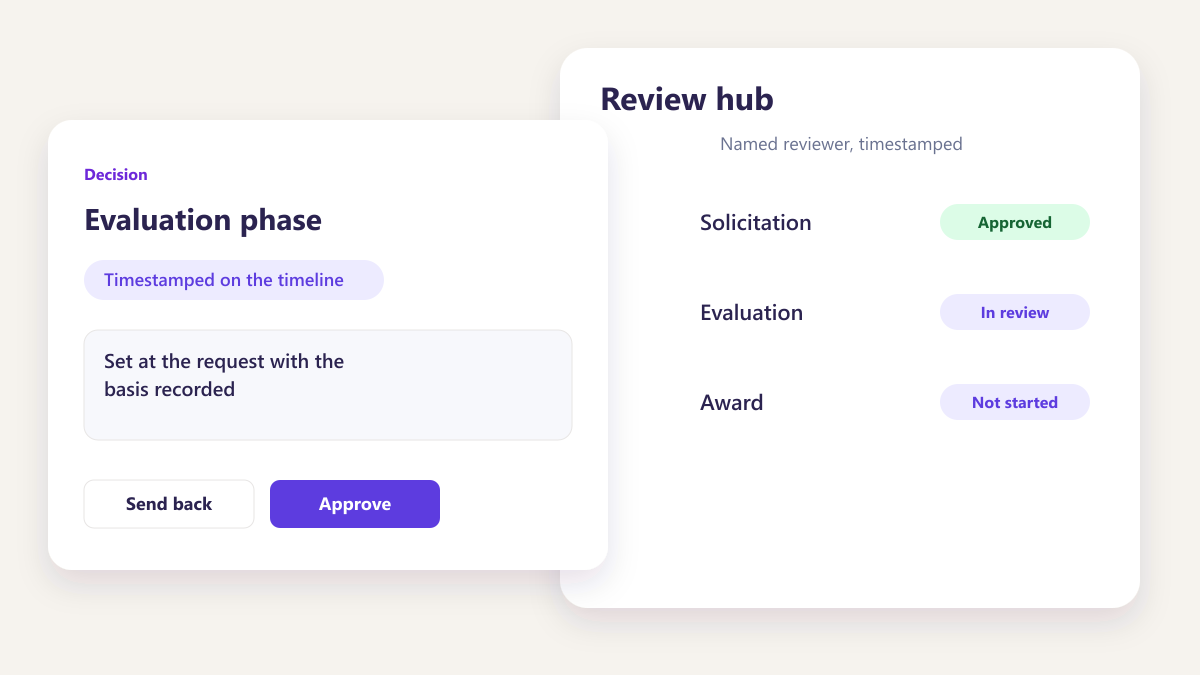
The split, where relevant
Set at the request with the basis recorded rather than apportioned by estimate.
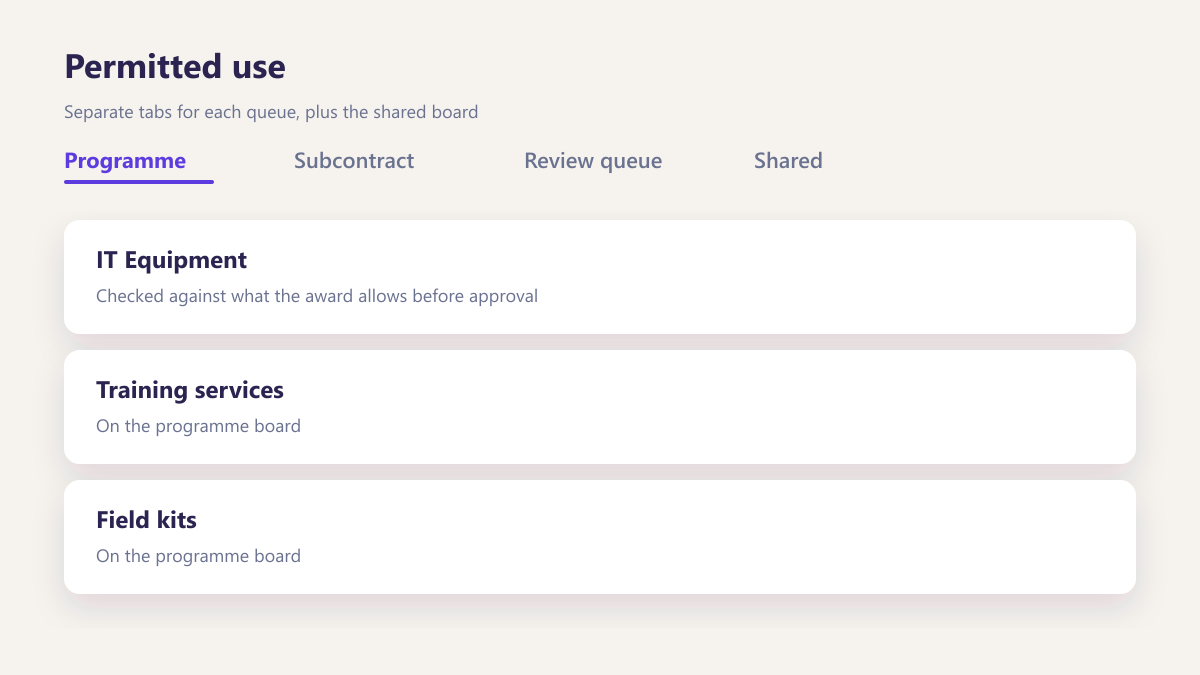
Permitted use
Checked against what the award allows before approval.
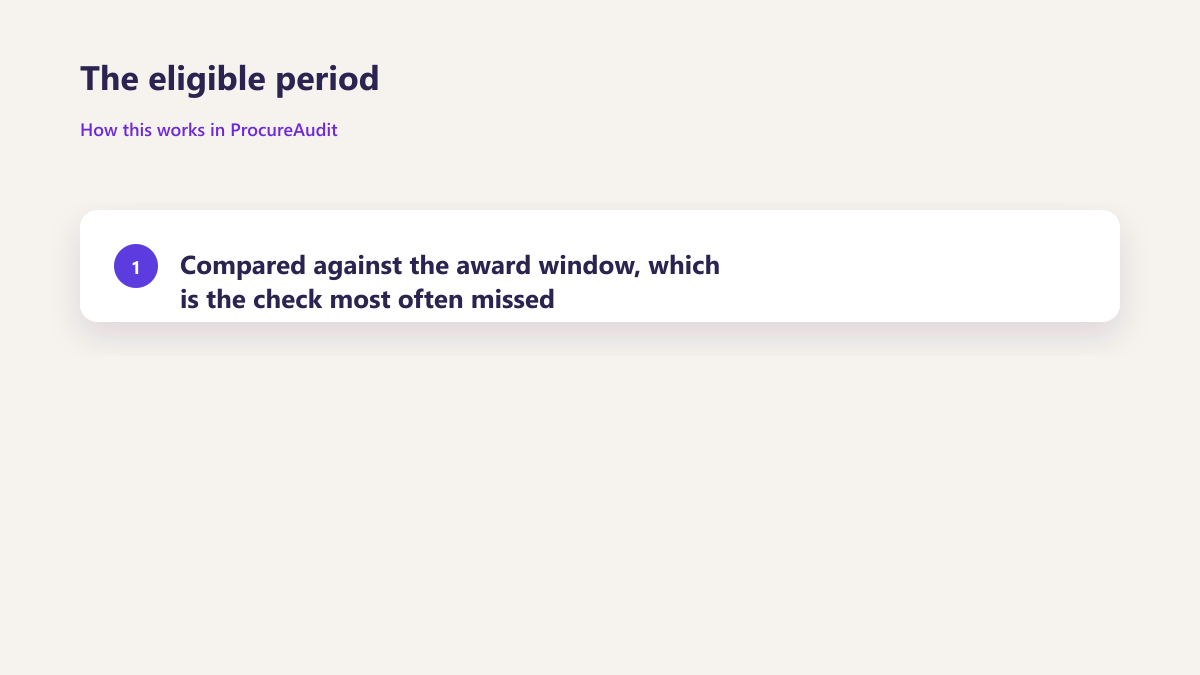
The eligible period
Compared against the award window, which is the check most often missed.
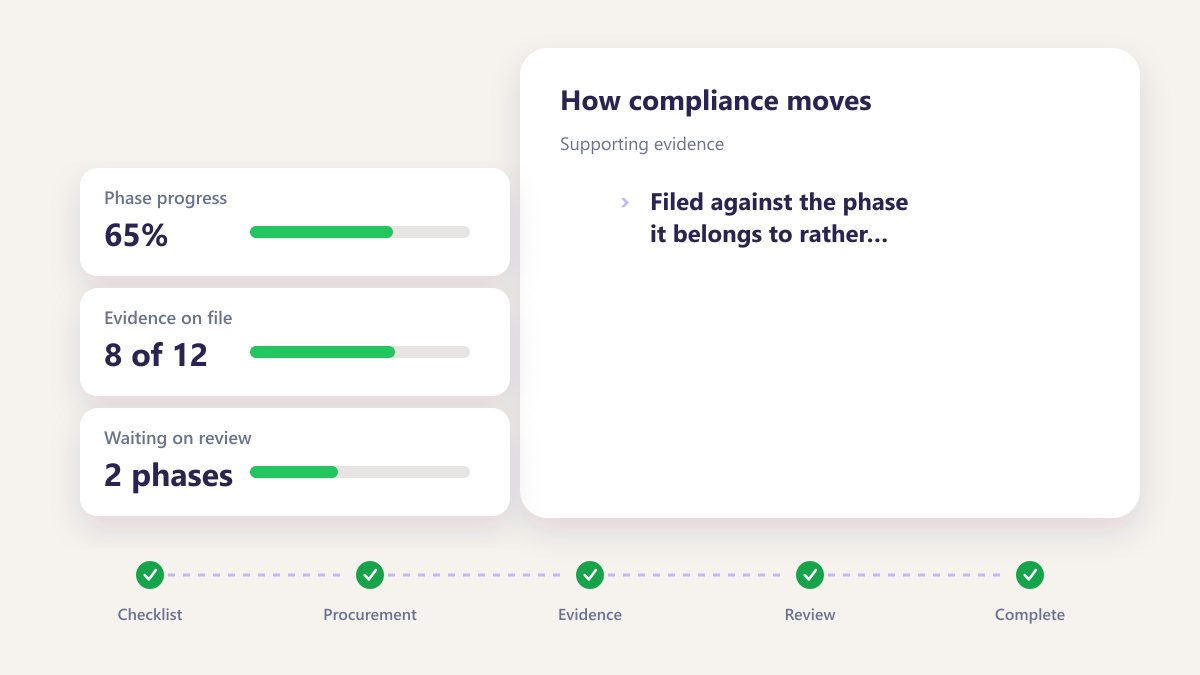
Supporting evidence
Filed against the phase it belongs to rather than a shared drive.
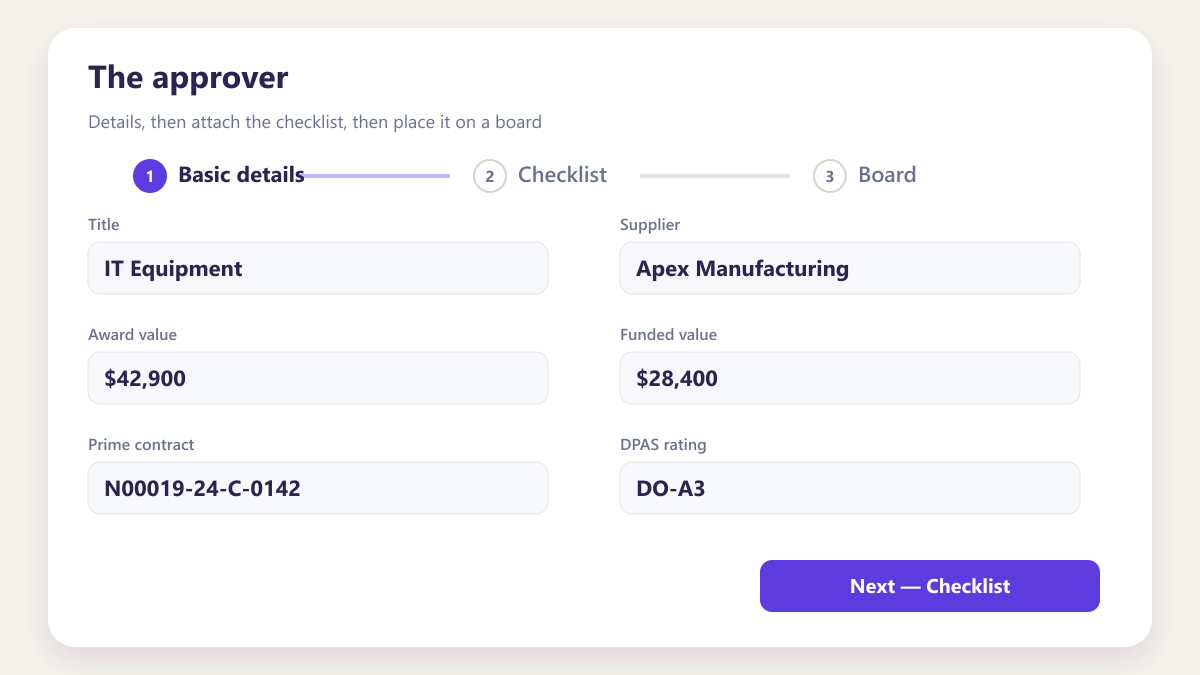
The approver
Named, with the date, so the decision is attributable later.
Questions from research institutions
How are award conditions handled?
Can a purchase be split across awards?
What about spending outside an eligible period?
Who selects the award on a purchase?
How does this help with funder reporting?
Can different awards carry different requirements?
Do researchers have to understand the conditions?
Other sectors and roles worth reading
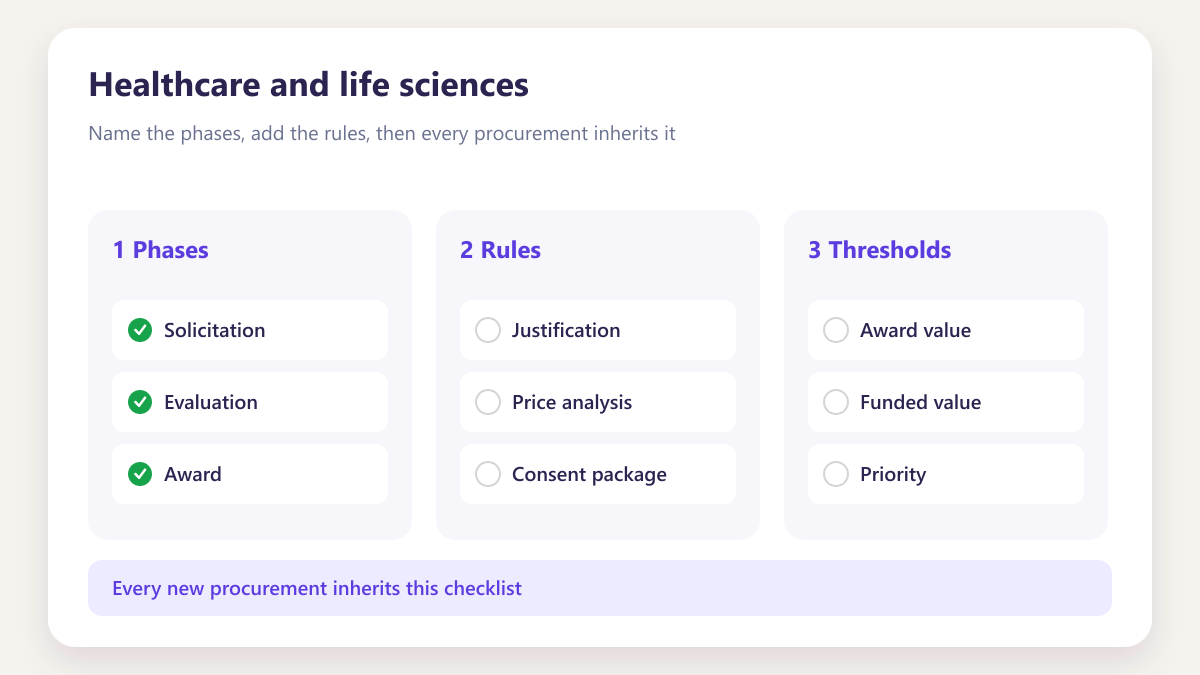
Healthcare and life sciences
Federally funded purchasing where money carries conditions.
Learn more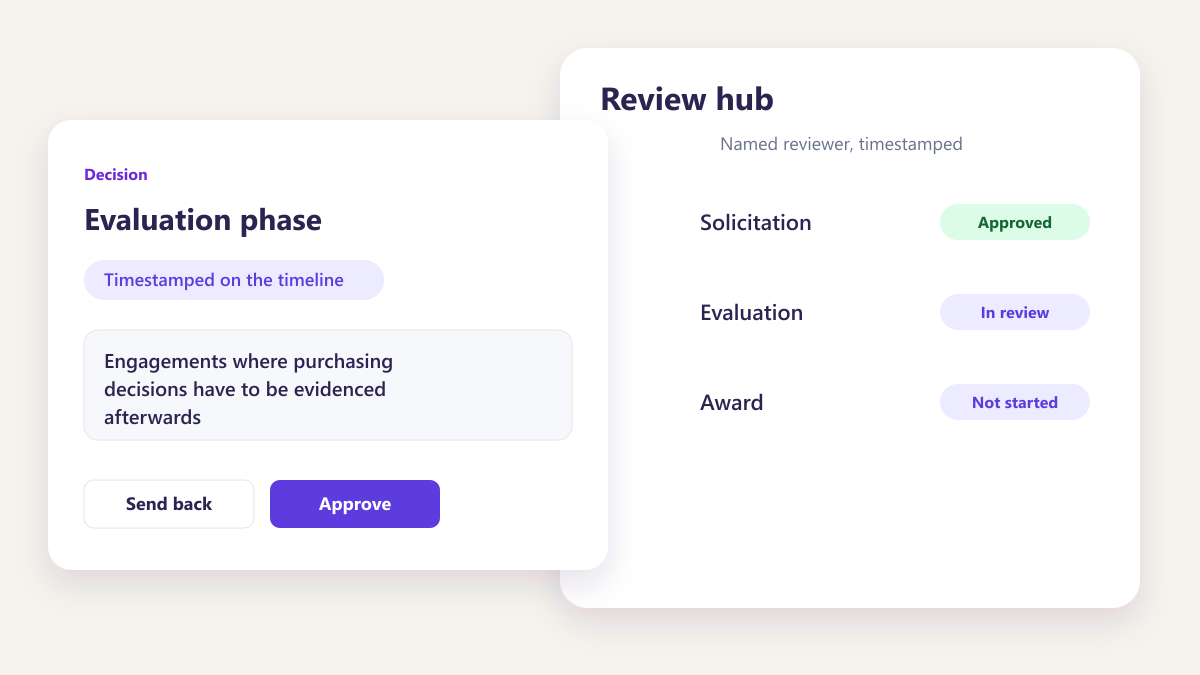
Professional services
Engagements where purchasing decisions have to be evidenced afterwards.
Learn more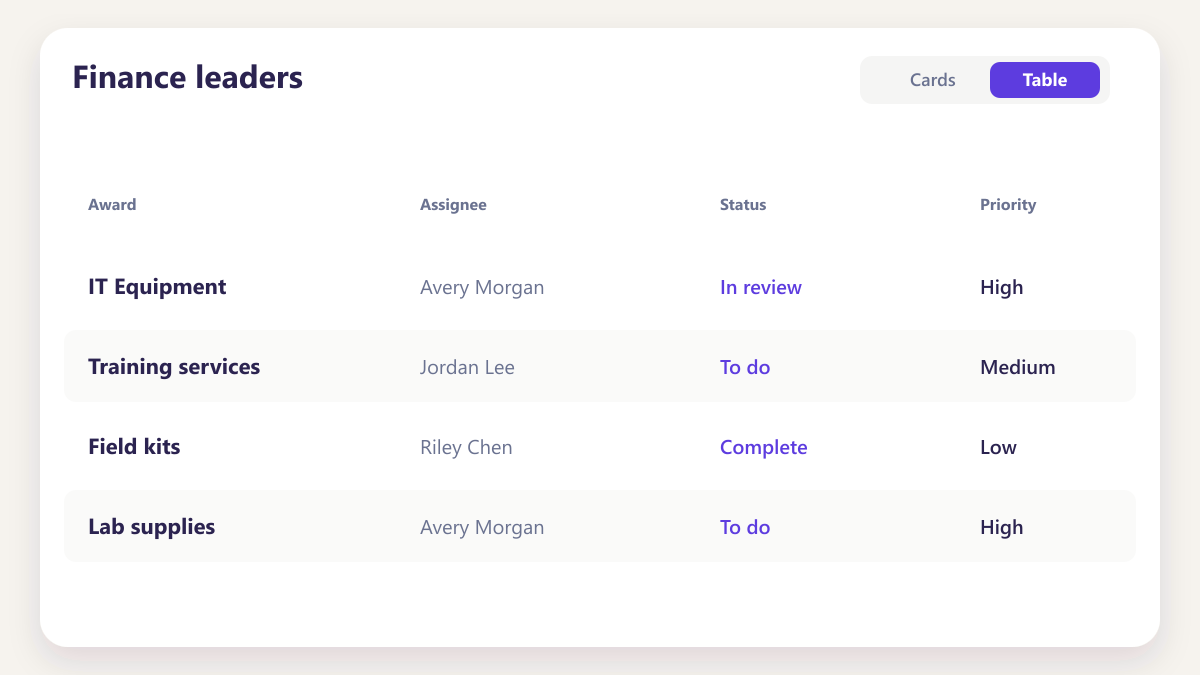
Finance leaders
Award against funded amounts, and what has actually been committed.
Learn moreBring an award with awkward conditions
We will configure the eligibility check on the call and run a purchase through it that should fail.
Book a demo