Home / Solutions / Workspace administrators
RoleA change here affects
every award afterwards
You are usually one or two people. What you configure decides how everybody else works, which makes this the one role where being deliberate matters more than being quick.
Templates, thresholds and access
Almost everything an administrator does falls into one of these, and each behaves differently on purpose.
Templates, thresholds and access
Almost everything an administrator does falls into one of these, and each behaves differently on purpose.
- Phases, rules and reviewers defined per award type
- Applied automatically when an award is created
- Duplicated when you need a variant rather than compromised
A template holds the phases, rules and named reviewers for an award type. It attaches when an award is created, so what you build today shapes every award placed after it and none of the ones placed before.
- Phases, rules and reviewers defined per award type
- Applied automatically when an award is created
- Duplicated when you need a variant rather than compromised
- Existing awards keep the template they were created under
A value rule sits in the template and triggers on the award amount rather than on somebody recognising a purchase as significant, which is what makes it behave the same in December as in March.
- Defined once in the template rather than per award
- Triggered by the award value, not by judgement
- Exceptions recorded as exceptions with a reason
- Changed in one place and applied to awards created afterwards
People are given a role rather than a set of individual permissions, so access is reviewable by role and moves correctly when somebody changes job.
- Access scoped by role rather than assigned per person
- Joiners invited by email and productive the same day
- Leavers removed while their records and activity remain
- Nothing accumulating quietly across a person's career
What usually goes wrong in configuration
None of these appear in the first month. All of them appear by the third year.
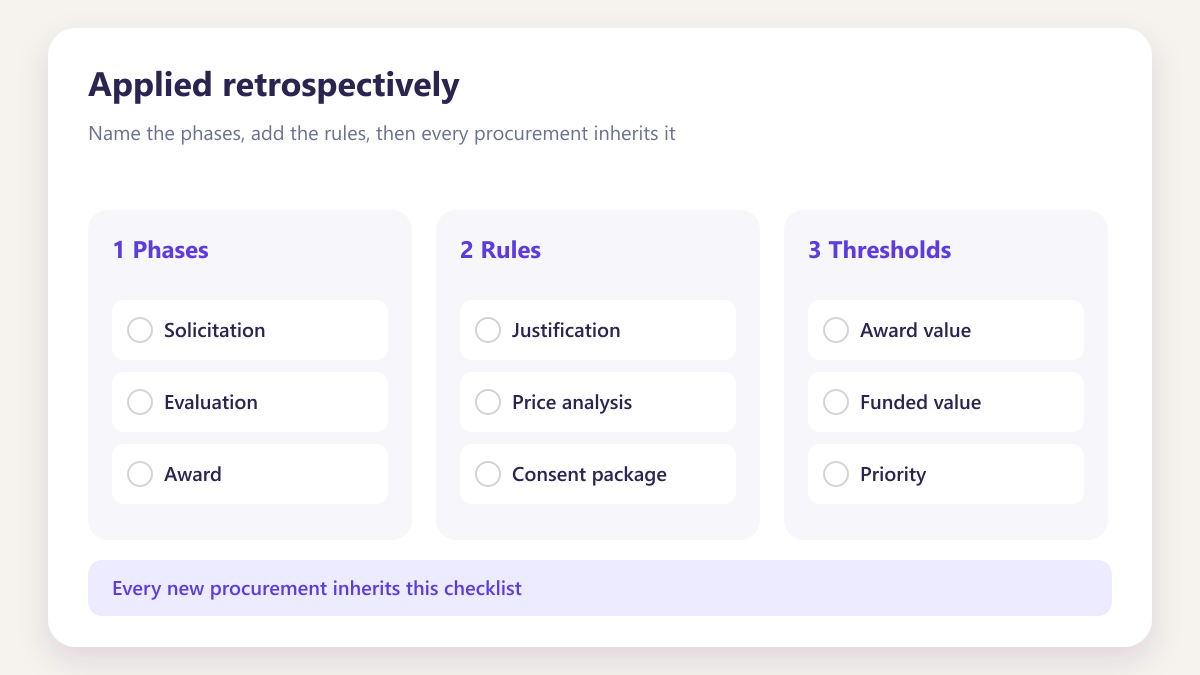
Applied retrospectively
A rule is edited and the change reaches back across existing records, so what a past award required is no longer what it shows.
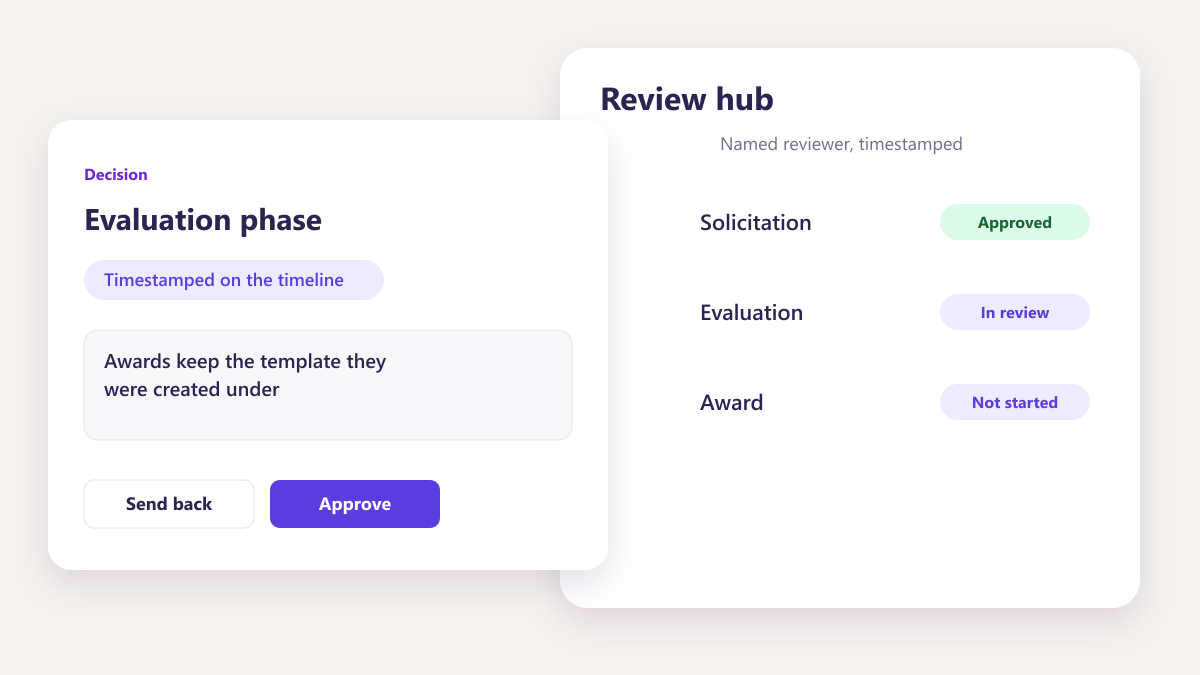
Applied forward only
Awards keep the template they were created under, so a change today cannot alter what a record from two years ago said.
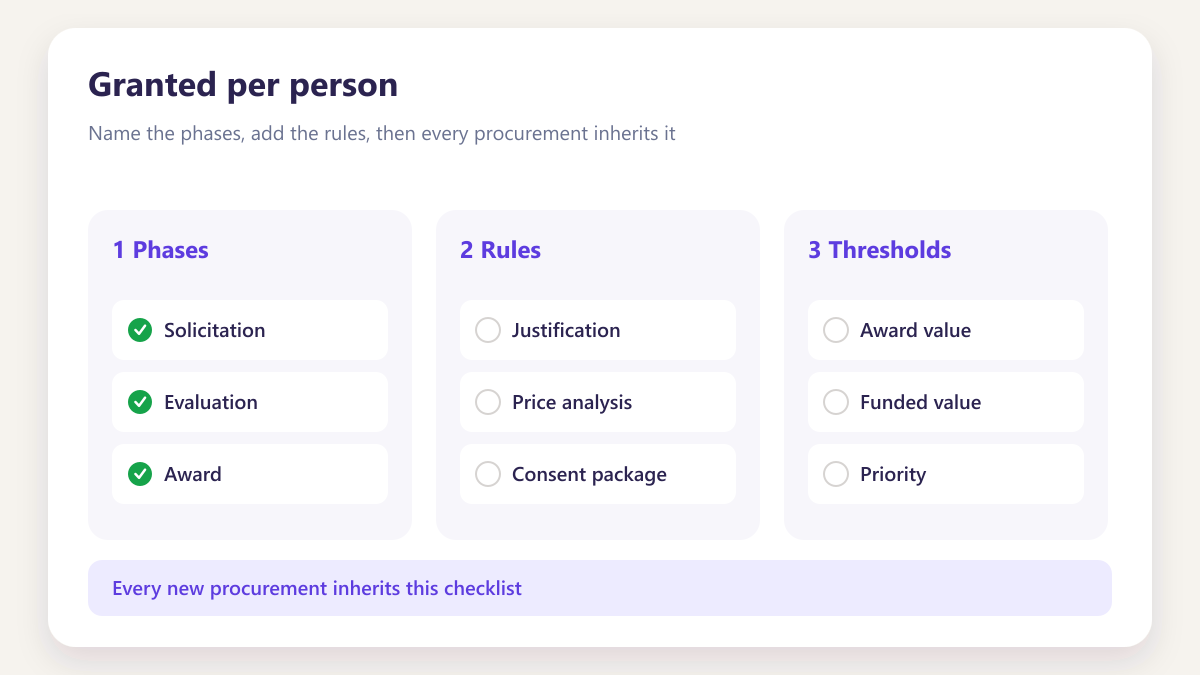
Granted per person
Access is given individually as people ask for it, and after a few years nobody can say why a particular person can see a particular thing.
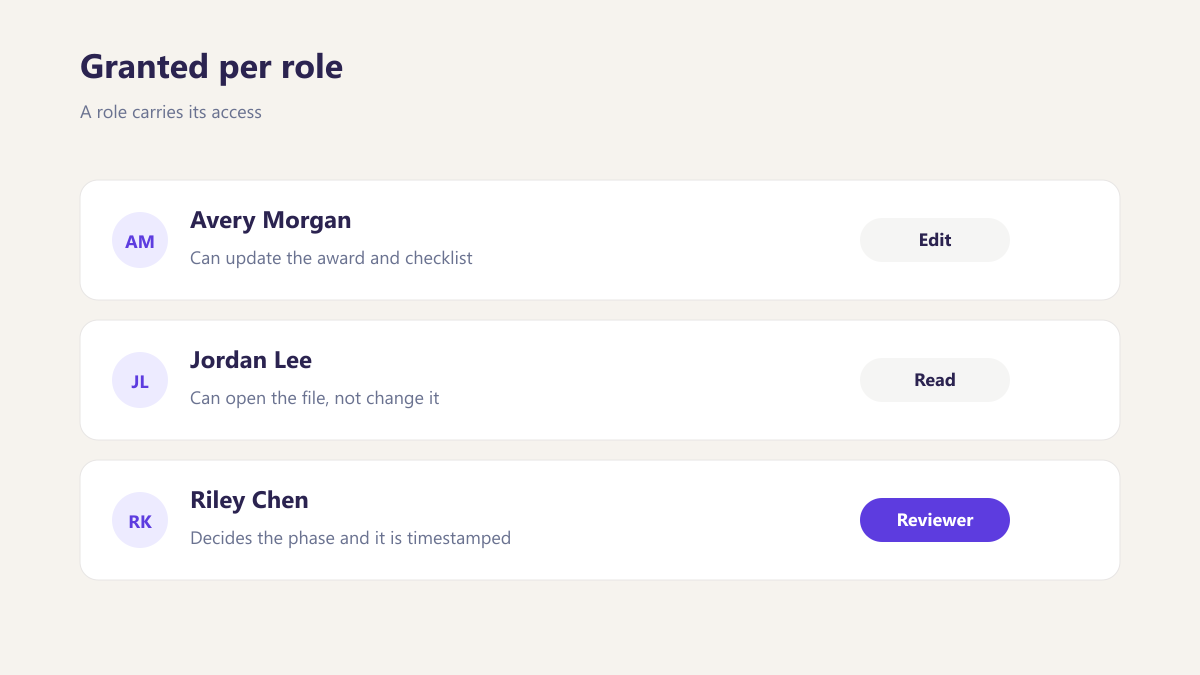
Granted per role
A role carries its access, so reviewing permissions means reviewing a handful of roles rather than every individual.
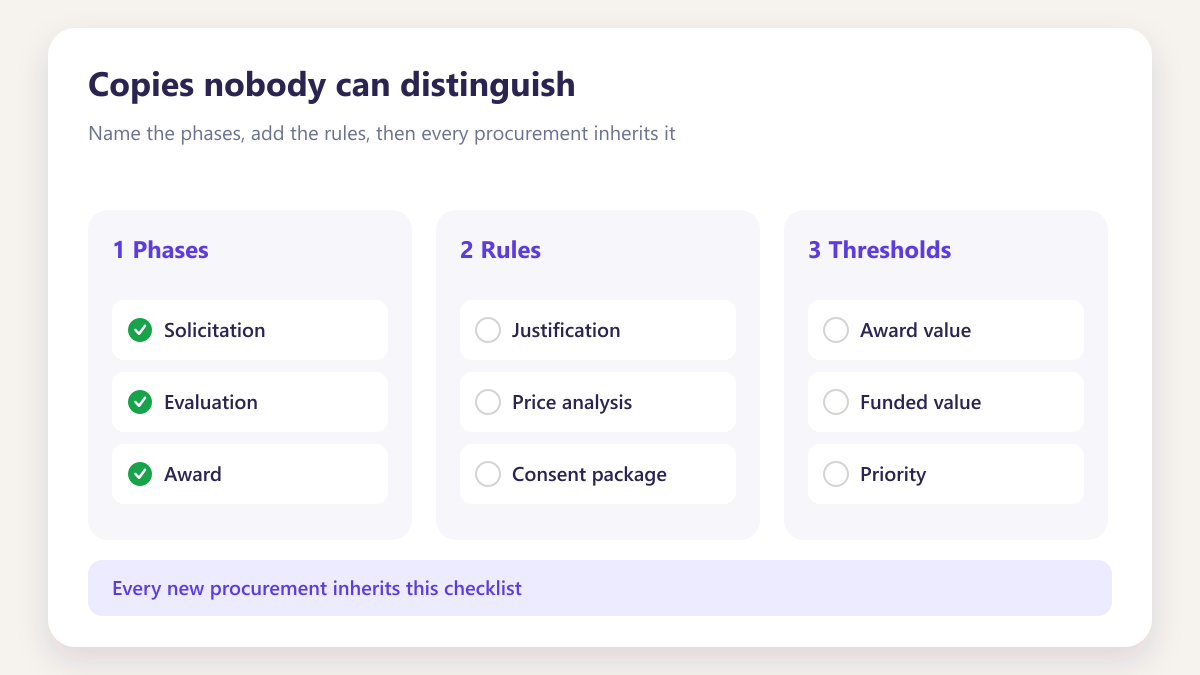
Copies nobody can distinguish
New templates are created for every small variation until there are a dozen with similar names and no owner.
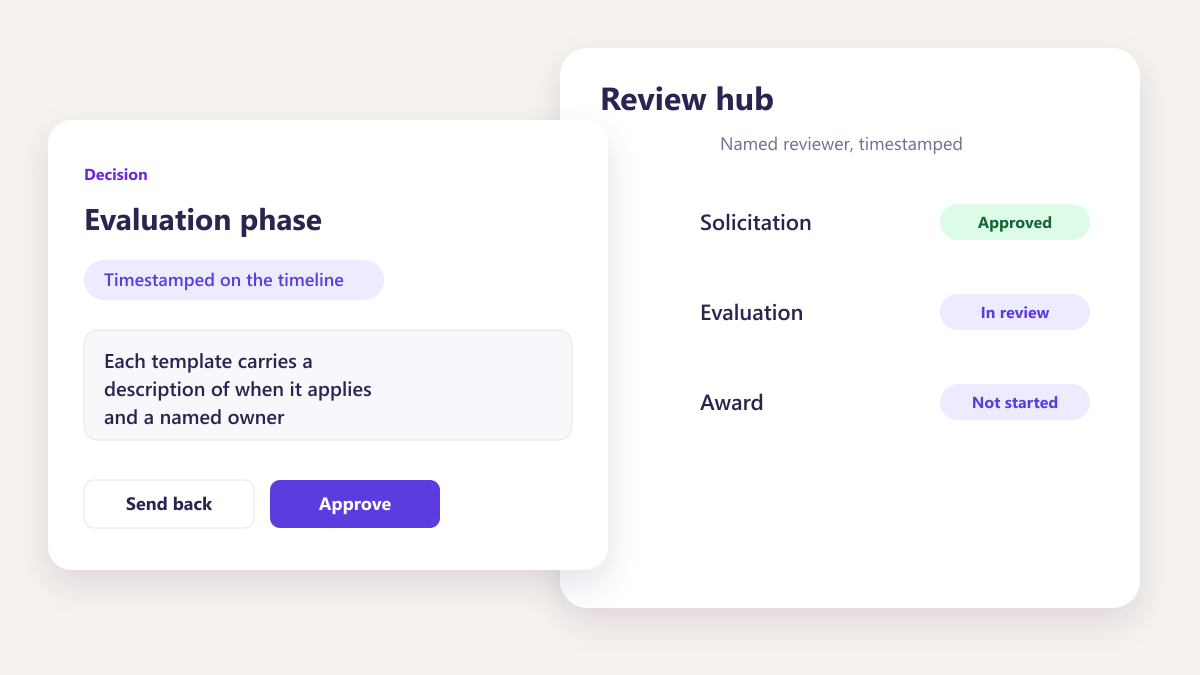
Named, described and owned
Each template carries a description of when it applies and a named owner, so a variant is a deliberate decision rather than an accident.
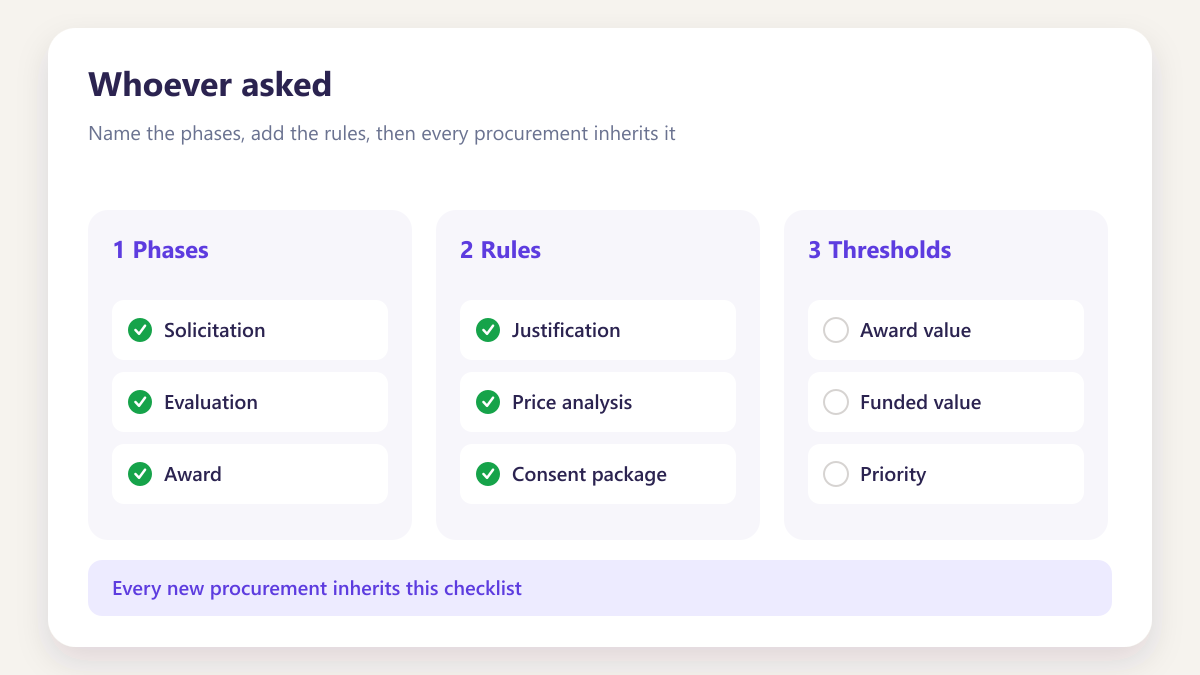
Whoever asked
Administrative rights spread to anybody who needed something changed once, which is how configuration stops being explainable.
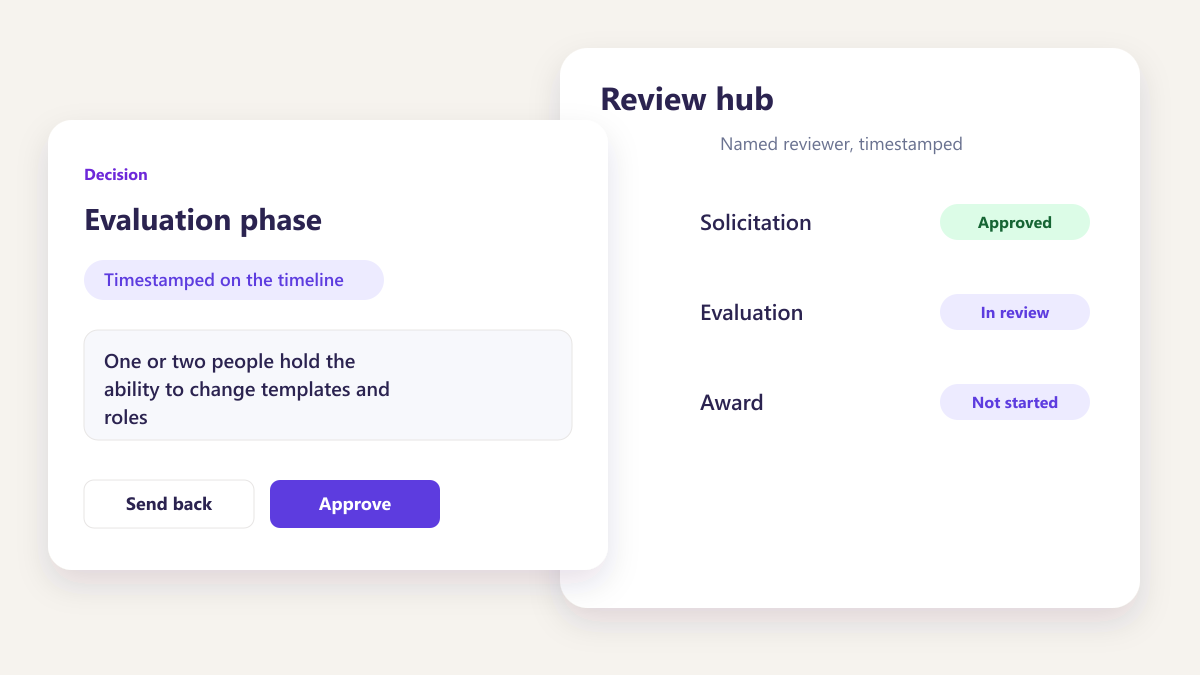
A deliberately small group
One or two people hold the ability to change templates and roles, so configuration stays coherent and somebody can account for it.
Changes that reach every award after them
Changes that reach every award after them
Edited once in the template and applied to awards created afterwards, leaving history intact.
- A rule needs changing
- Somebody changes role
- A threshold no longer fits
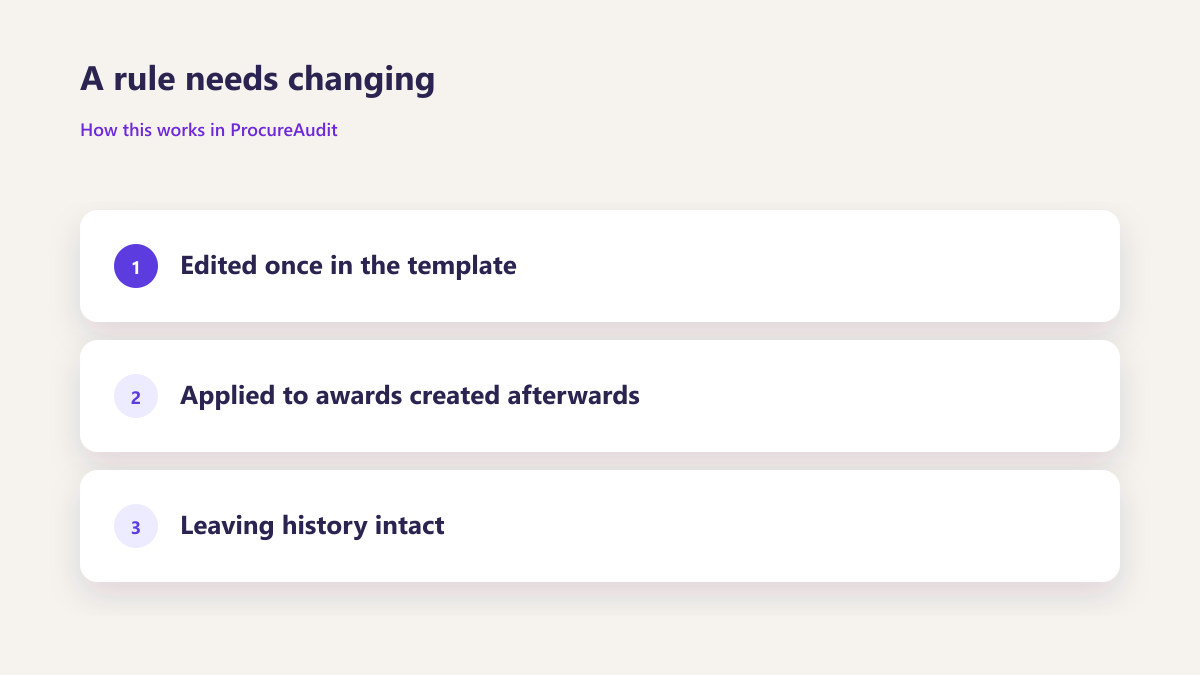
A rule needs changing
Edited once in the template and applied to awards created afterwards, leaving history intact.
Learn more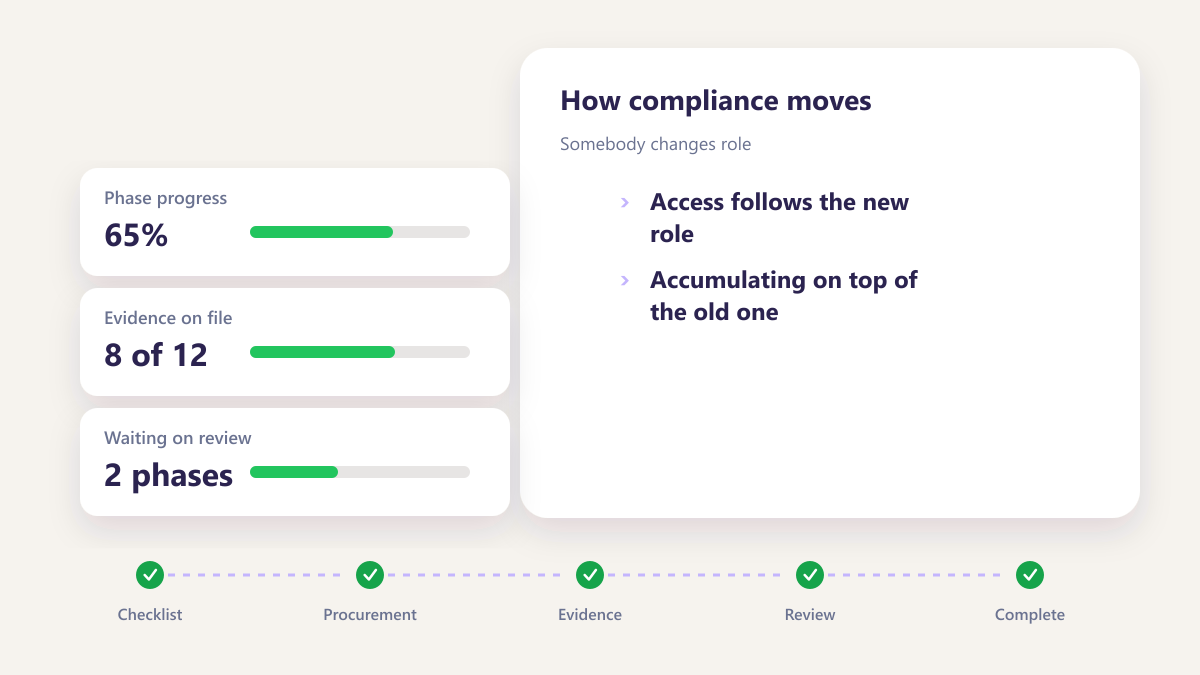
Somebody changes role
Access follows the new role rather than accumulating on top of the old one.
Learn more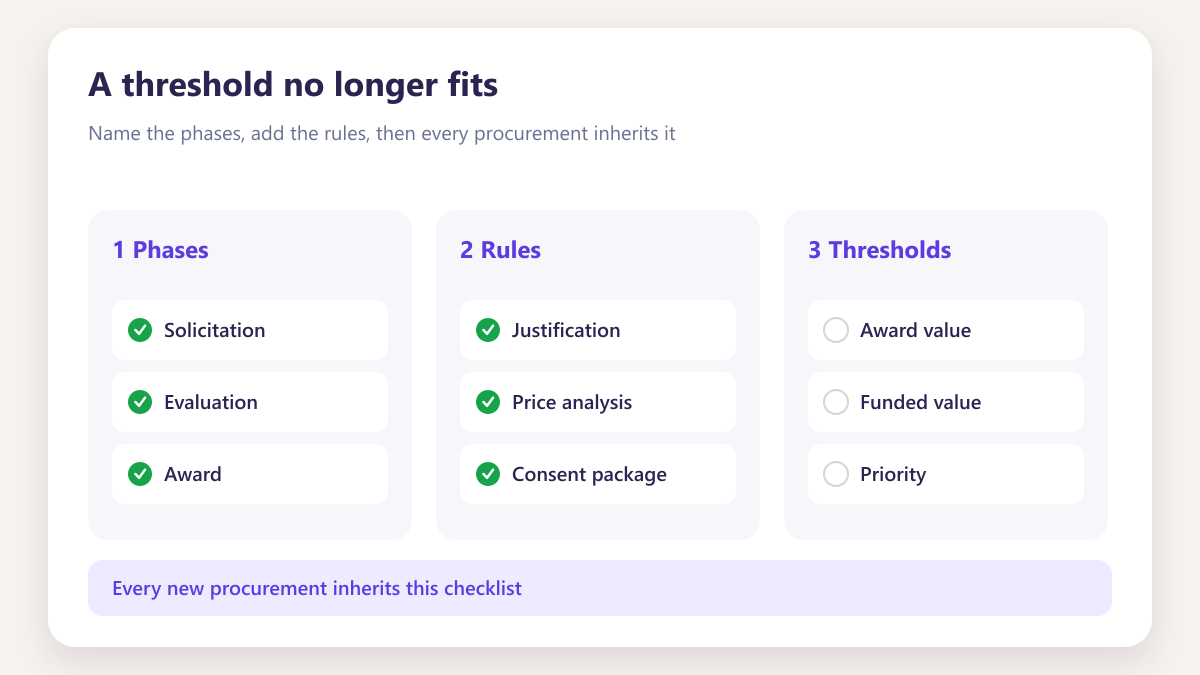
A threshold no longer fits
Changed in one place rather than chased across every open award.
Learn more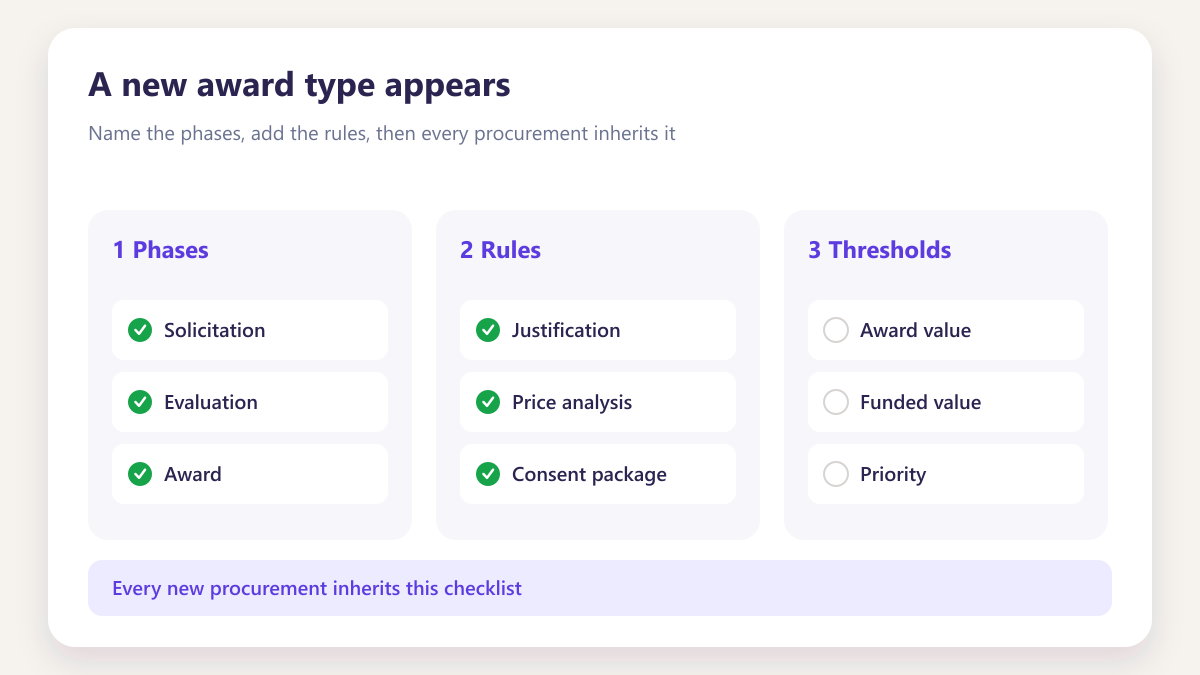
A new award type appears
A template duplicated and adjusted rather than an existing one bent to cover both.
Learn more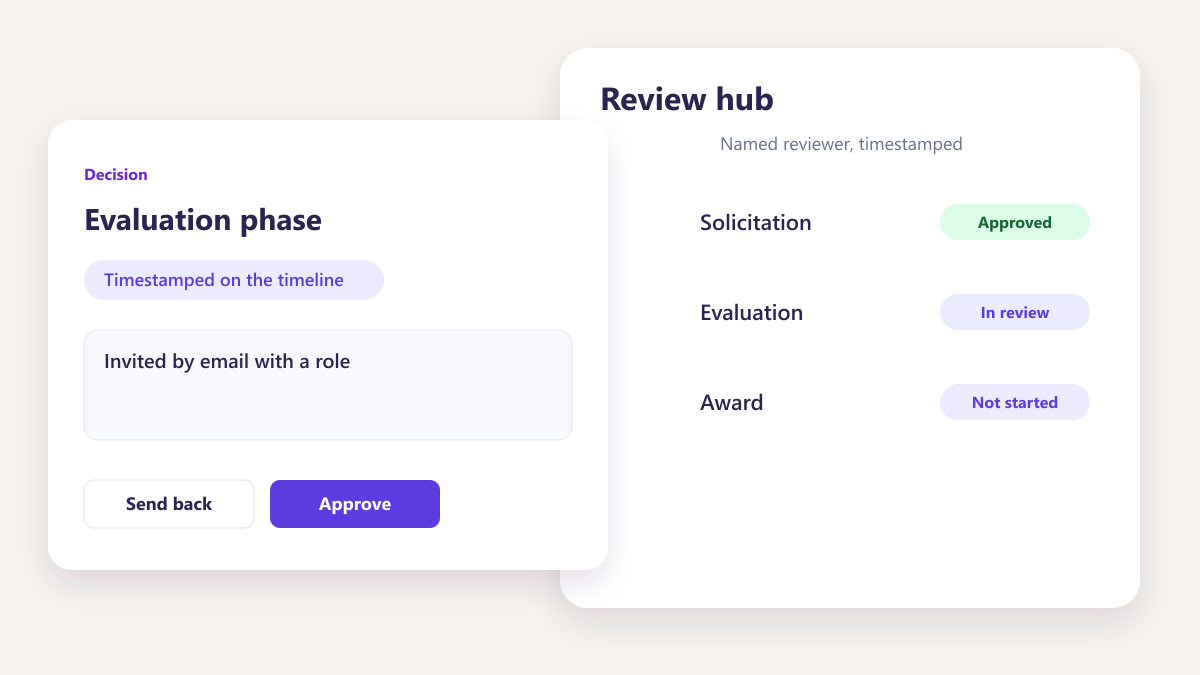
A joiner starts on Monday
Invited by email with a role, productive the same day, with nothing to configure.
Learn more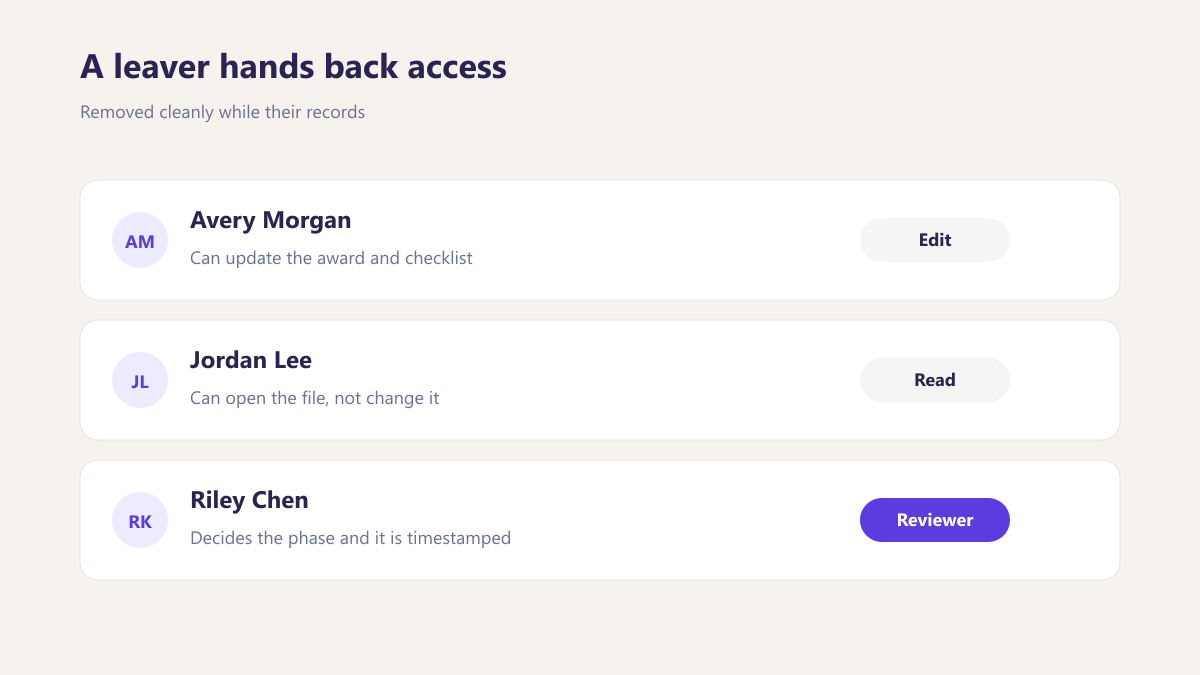
A leaver hands back access
Removed cleanly while their records and activity stay attributed, so history keeps its shape.
Learn moreReach, not seniority
Administrators are not the most senior people in a purchasing function. They are simply the ones whose changes propagate, which is a different kind of responsibility.
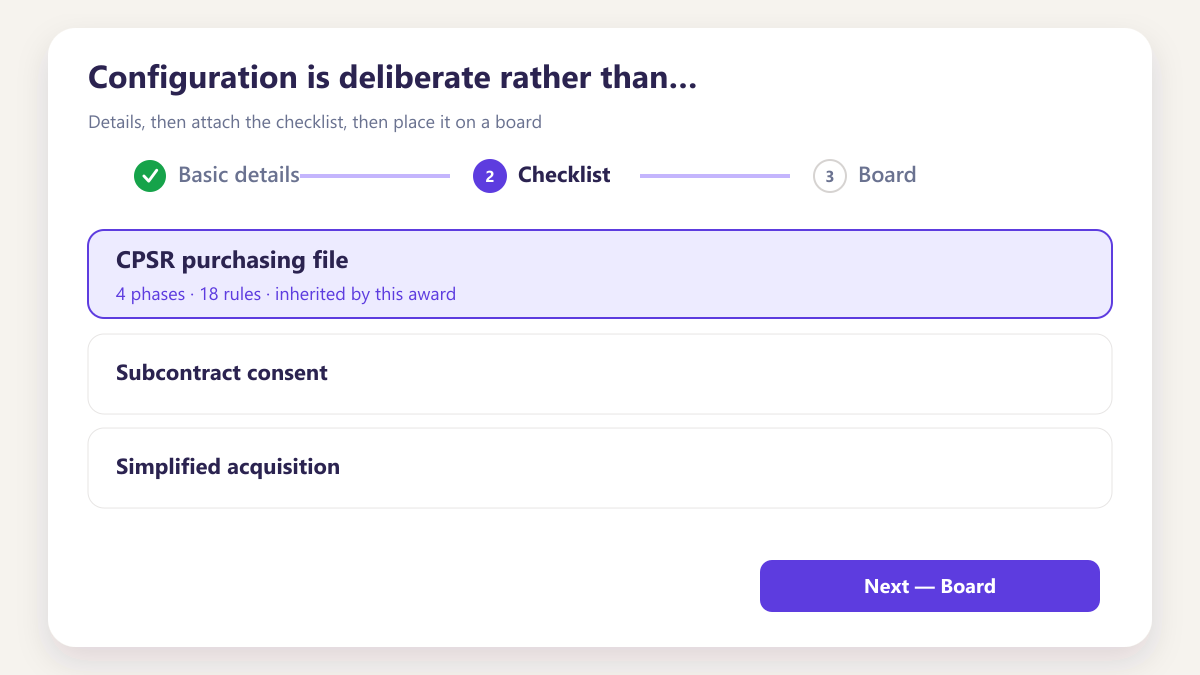
Configuration is deliberate rather than accumulated
A small group making template and threshold changes produces a configuration somebody can still explain in two years. A large group produces one nobody owns.
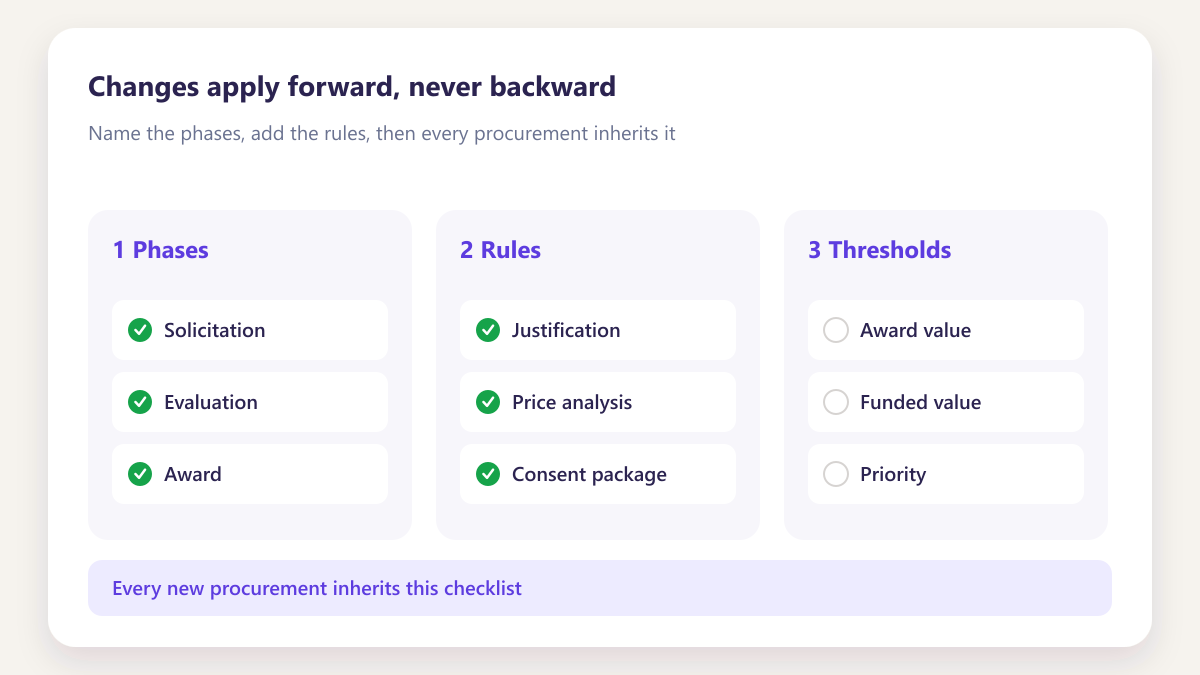
Changes apply forward, never backward
Editing a template changes awards created afterwards and leaves existing records exactly as they were, which is what makes historic files worth producing.
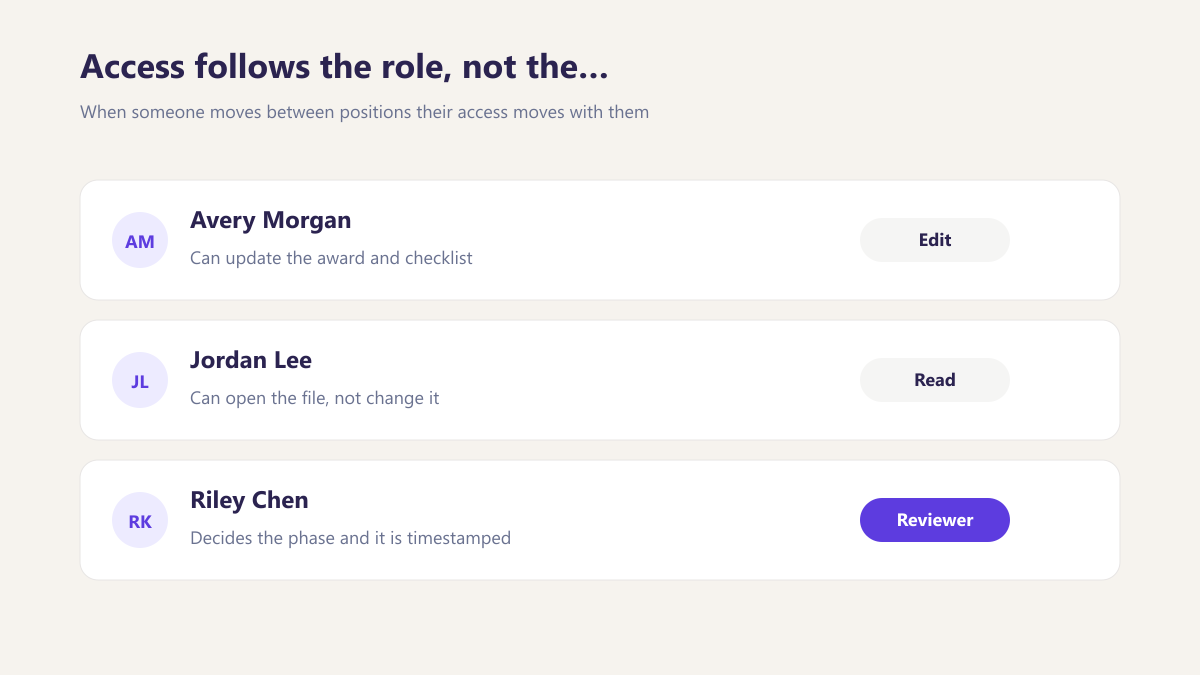
Access follows the role, not the person
When someone moves between positions their access moves with them rather than accumulating, which is the most common way permissions drift over a few years.
Questions from workspace administrators
Does changing a template affect existing awards?
How many administrators should we have?
How is access controlled?
What happens when somebody leaves?
Can we have different templates for different award types?
Do we need technical knowledge to administer this?
How do we stop template sprawl?
Other sectors and roles worth reading
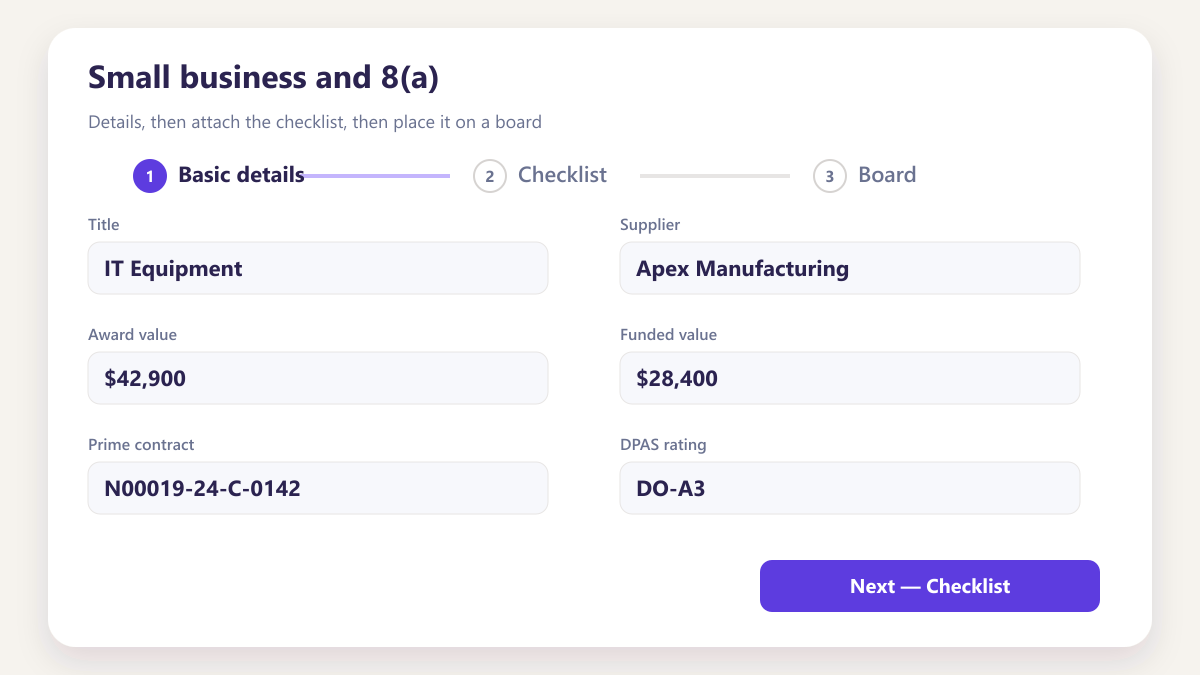
Small business and 8(a)
The same documentation expectations carried by far fewer people.
Learn moreBring your current approval rules
We will build the template on the call and show which awards would route differently under it.
Book a demo