Home / Glossary / Cost Accounting Standards
GlossaryCost Accounting Standards,
in plain English
CAS governs how contractors measure, assign and allocate costs on government work. For years the thresholds pulled in mid sized contractors who had not planned for it. Those figures moved substantially in 2026.
The Cost Accounting Standards are a set of rules governing how government contractors measure, assign and allocate costs. There are nineteen standards, numbered 401 to 420 with 419 reserved. Contracts fall under full coverage, modified coverage or an exemption, and that status is fixed at award. Thresholds changed substantially for contracts entered into after 30 June 2026.
Consistency rather than permission
CAS is often misread as a rule about which costs you may claim. It is really about doing the same thing the same way, and being able to show that you did.
Consistency rather than permission
CAS is often misread as a rule about which costs you may claim. It is really about doing the same thing the same way, and being able to show that you did.
- Nineteen standards, numbered 401 to 420, with 419 reserved
- Full coverage, modified coverage or an exemption, fixed at award
- Disclose your practices, then follow them consistently
| CAS is about | In practice |
|---|---|
| Measurement | How much a given cost is, determined by a consistent method rather than a convenient one. |
| Assignment | Which cost accounting period a cost belongs to, applied the same way each period. |
| Allocation | Which contract or cost objective ultimately bears the cost, on a consistent and disclosed basis. |
| Disclosure | Writing your practices down and then following them, which is where most enforcement pressure actually sits. |
Two levels, decided at award
Coverage is determined per contract on the date of award and does not change afterwards. A modification, however large, does not alter the status of the contract it modifies.
| Full coverage | Modified coverage | |
|---|---|---|
| Standards applied | All nineteen standards | A subset: CAS 401, 402, 405 and 406 |
| What that subset covers | Consistency in estimating and reporting, consistent treatment of costs incurred for the same purpose, accounting for unallowable costs, and the cost accounting period | |
| Disclosure Statement | Generally required | Generally not required at this level |
| Practical burden | Substantial and ongoing | Real but far narrower |
A reprieve from full coverage is not a reprieve from CAS. Modified coverage still carries genuine obligations, and the four standards it applies are the ones most often tested.
Thresholds moved a long way
Sections 1804 and 1806 of the FY2026 National Defense Authorization Act revised the figures for contracts entered into after 30 June 2026. Existing covered contracts do not become exempt retrospectively.
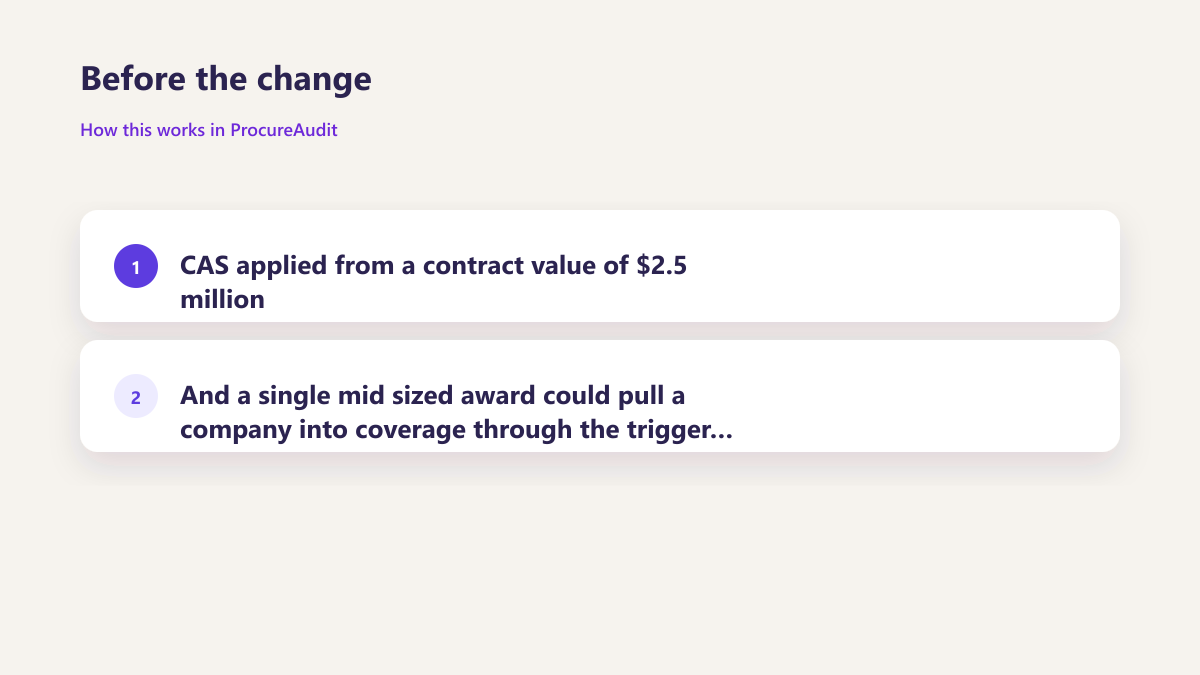
Before the change
CAS applied from a contract value of $2.5 million, and a single mid sized award could pull a company into coverage through the trigger contract mechanism at $7.5 million.
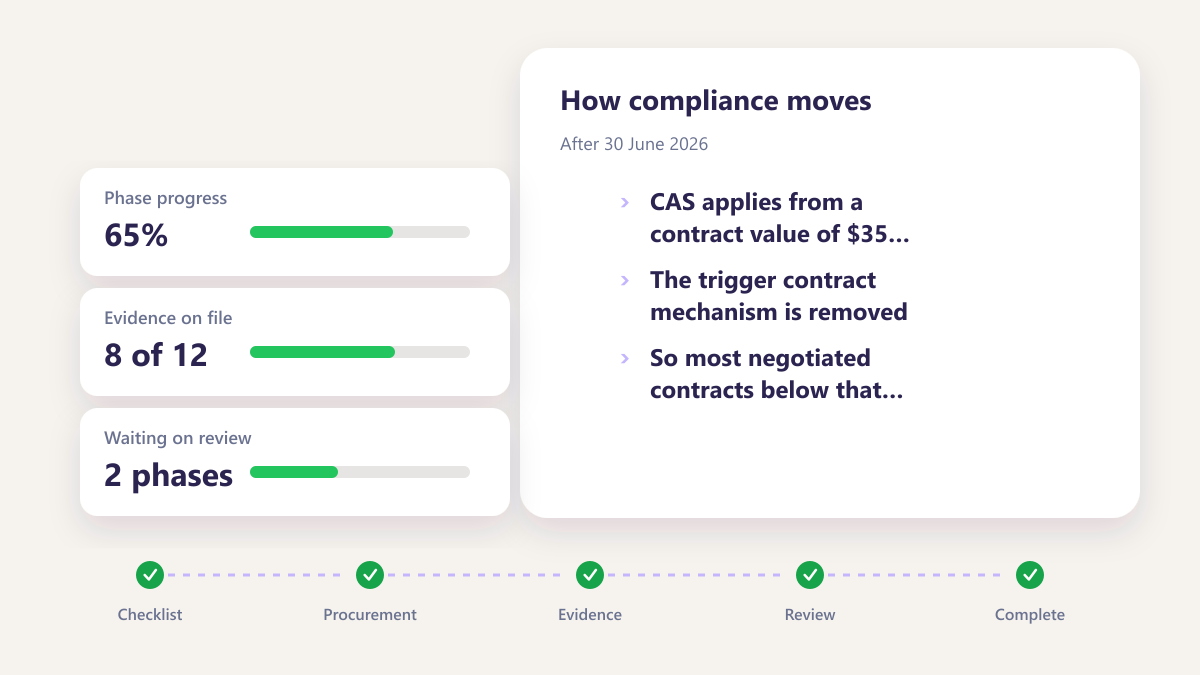
After 30 June 2026
CAS applies from a contract value of $35 million and the trigger contract mechanism is removed, so most negotiated contracts below that figure fall outside coverage.
Before the change
Full coverage attached at $50 million of CAS covered awards in a cost accounting period, which many growing contractors reached sooner than expected.
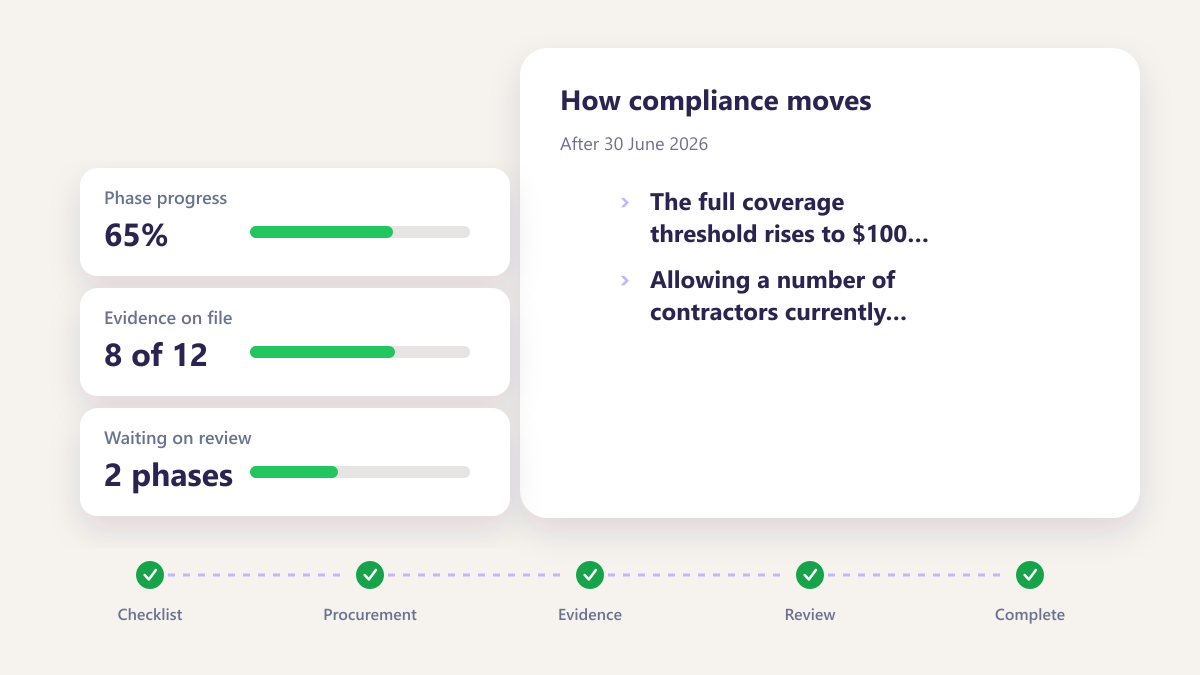
After 30 June 2026
The full coverage threshold rises to $100 million, allowing a number of contractors currently under full coverage to move to modified coverage.
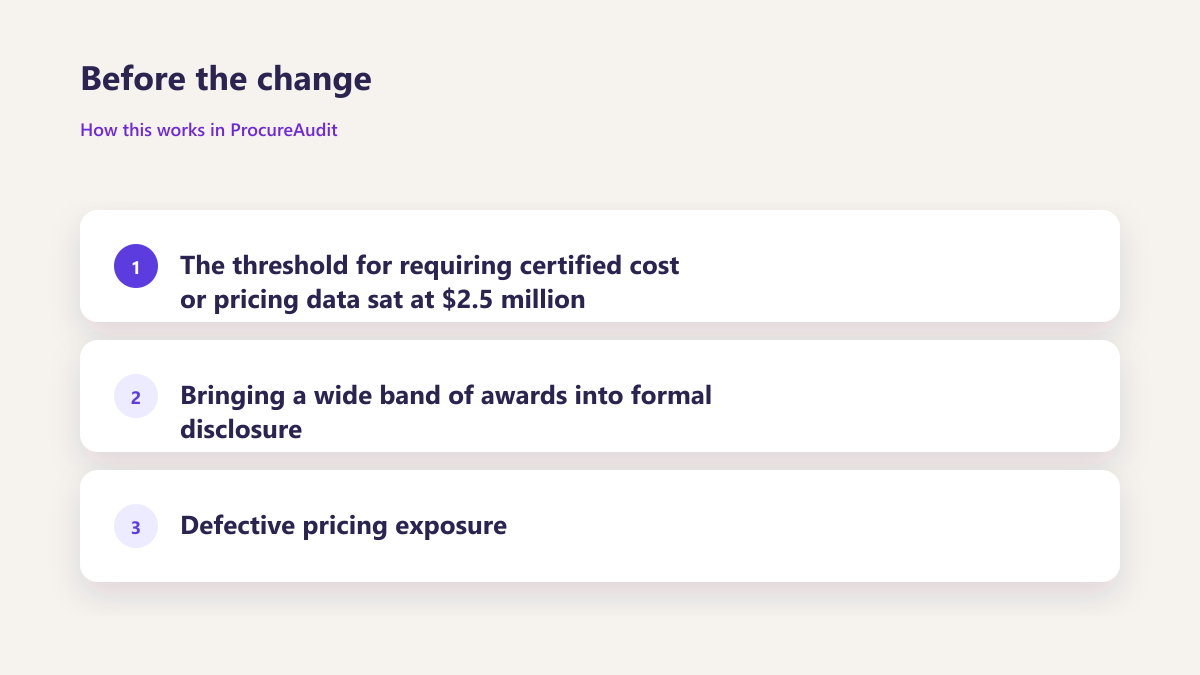
Before the change
The threshold for requiring certified cost or pricing data sat at $2.5 million, bringing a wide band of awards into formal disclosure and defective pricing exposure.
After 30 June 2026
The threshold rises to $10 million for contracts entered into after that date, removing that requirement from awards in the intervening band.
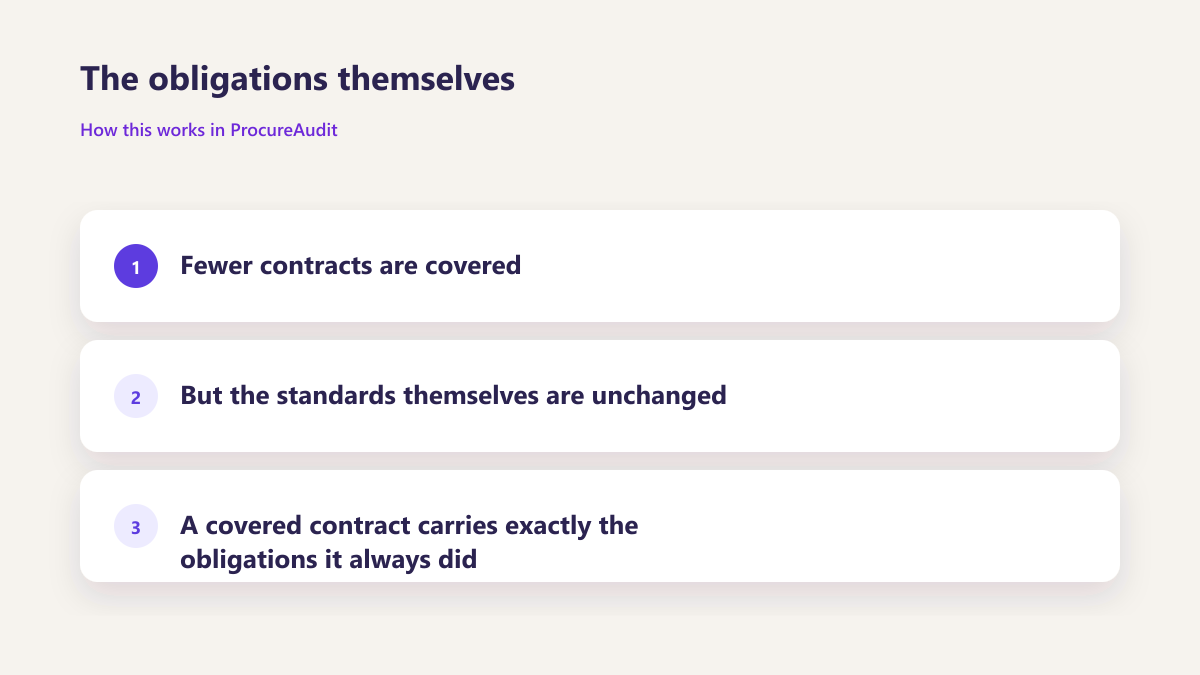
The obligations themselves
Fewer contracts are covered, but the standards themselves are unchanged and a covered contract carries exactly the obligations it always did.
Disclosure and consistency
The core expectation is unchanged: disclose your practices and then follow them consistently. That is what gets tested, whatever the threshold.
Four points that touch the purchase file
Four points that touch the purchase file
The CAS clause requires its substance to be included in negotiated subcontracts above the applicable threshold, so this is a purchasing question and not only an accounting one.
- CAS reaches negotiated subcontracts
- Certified cost or pricing data
- Coverage is fixed at award
CAS reaches negotiated subcontracts
The CAS clause requires its substance to be included in negotiated subcontracts above the applicable threshold, so this is a purchasing question and not only an accounting one.
Learn moreCertified cost or pricing data
Where it is required on a subcontract, the analysis and the certificate belong in the purchase file rather than only in the accounting records.
Learn moreCoverage is fixed at award
Because status is set on the award date, the record of what applied at that moment is what answers the question years later.
Learn moreConsistency is the test
The same expectation runs through purchasing: doing the same thing the same way, and being able to show it across files and across buyers.
Learn moreCommon questions about CAS
What are the Cost Accounting Standards?
What is the difference between full and modified CAS coverage?
Did CAS thresholds change in 2026?
Did the certified cost or pricing data threshold change too?
Do existing contracts become exempt?
Does CAS affect our subcontractors?
Can coverage differ between our own contracts?
Does a purchasing workspace handle CAS for us?
Other explainers and the pages they connect to
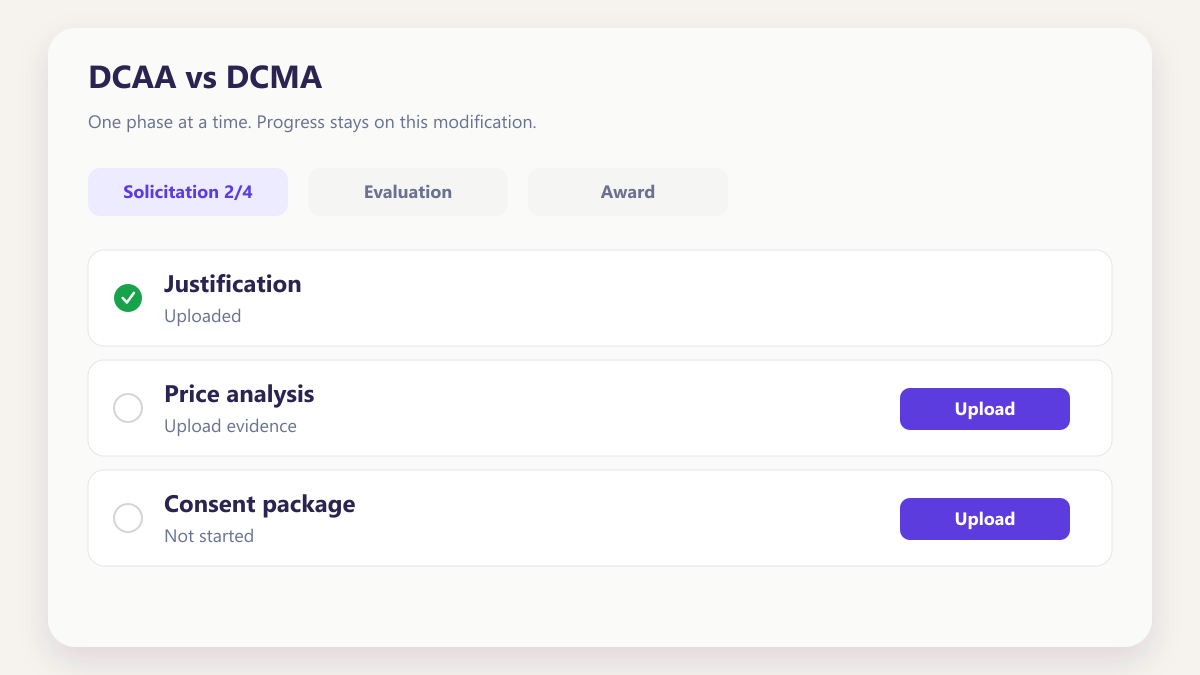
DCAA vs DCMA
Which agency examines your accounting and which reviews your purchasing.
Learn more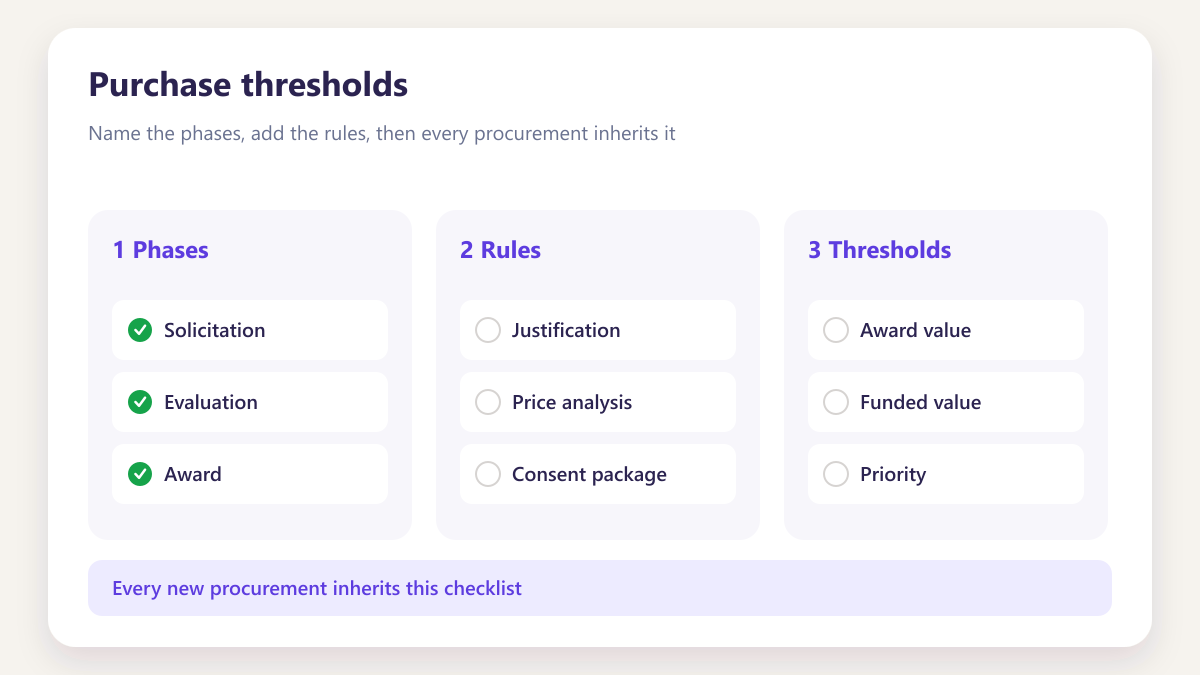
Purchase thresholds
Micro-purchase and simplified acquisition figures and what changes at each.
Learn more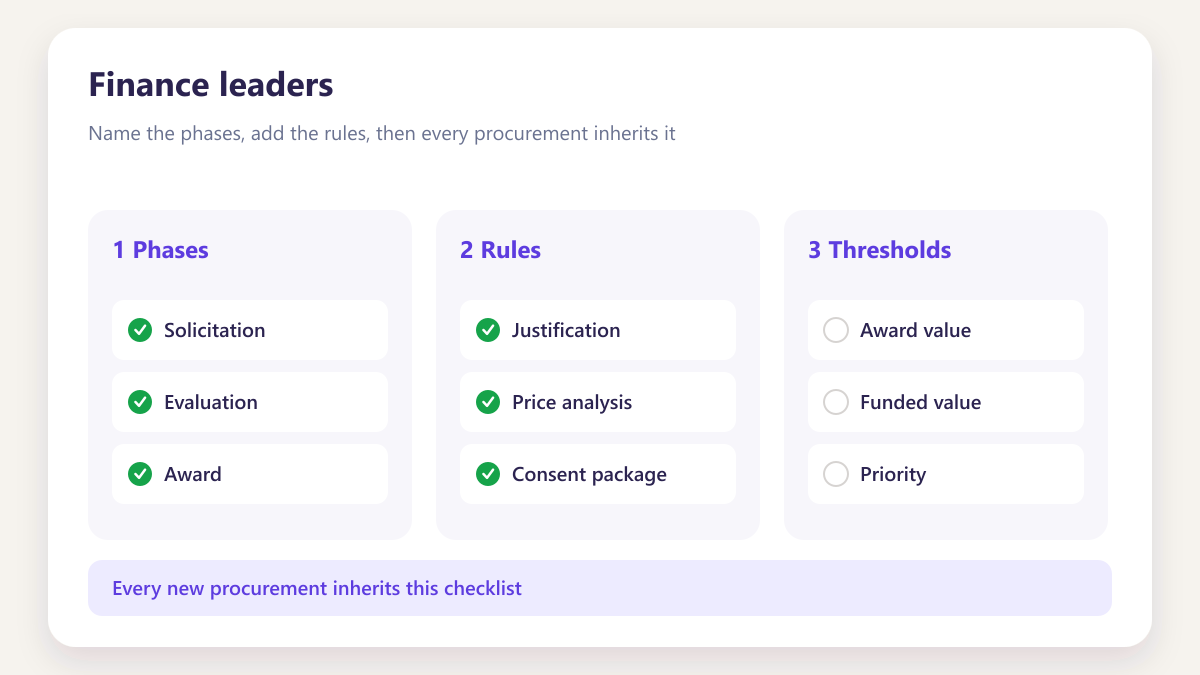
Finance leaders
Award against funded amounts, and what has actually been committed.
Learn moreKeep the evidence where it is asked for
Bring a negotiated subcontract. We will show what the record holds about the analysis, the certificate and the reasoning behind it.
Book a demo