Home / Guides / Price analysis vs cost analysis
GuidePrice analysis or cost analysis,
and when each applies
These are two different techniques answering two different questions. Files routinely claim one and show the other, which is a finding in itself.
Price analysis evaluates a proposed price as a whole, without examining the individual cost elements behind it, usually by comparison against competing quotes, prior prices, published lists or an independent estimate. Cost analysis examines the individual cost elements and the proposed profit. Price analysis is preferred where adequate comparison is available; cost analysis is used where it is not.
Two questions, two techniques
The names are similar enough that they get used interchangeably in conversation, which is how files end up claiming a technique they did not use.
Two questions, two techniques
Price analysis asks whether the total is reasonable against the market. Cost analysis asks whether each element of it is.
- Price analysis compares the total to comparators
- Cost analysis tests each element, plus profit
- Certified data usually points to cost analysis
| Price analysis | Cost analysis | |
|---|---|---|
| The question it answers | Is this total price reasonable compared with other prices? | Are the individual cost elements and profit reasonable? |
| What it examines | The price as a whole | Material, labour, indirect costs, and proposed profit |
| What it needs | Adequate comparators: competing quotes, prior prices, published lists or an independent estimate | Cost data from the supplier, in enough detail to examine the elements |
| When it is used | Preferred wherever adequate comparison is available | Where adequate price comparison is not available, or the value and nature of the award warrant it |
| Typical effort | Lower | Considerably higher |
Four patterns reviewers see repeatedly
None of these are about choosing the wrong technique. They are about the file not showing that any technique was applied.
A price and a conclusion
The file records the price and a statement that it is fair and reasonable, with nothing indicating how that was determined.
Method named and shown
The file states which technique was used, identifies the comparators and shows enough working that a reader can follow the conclusion.
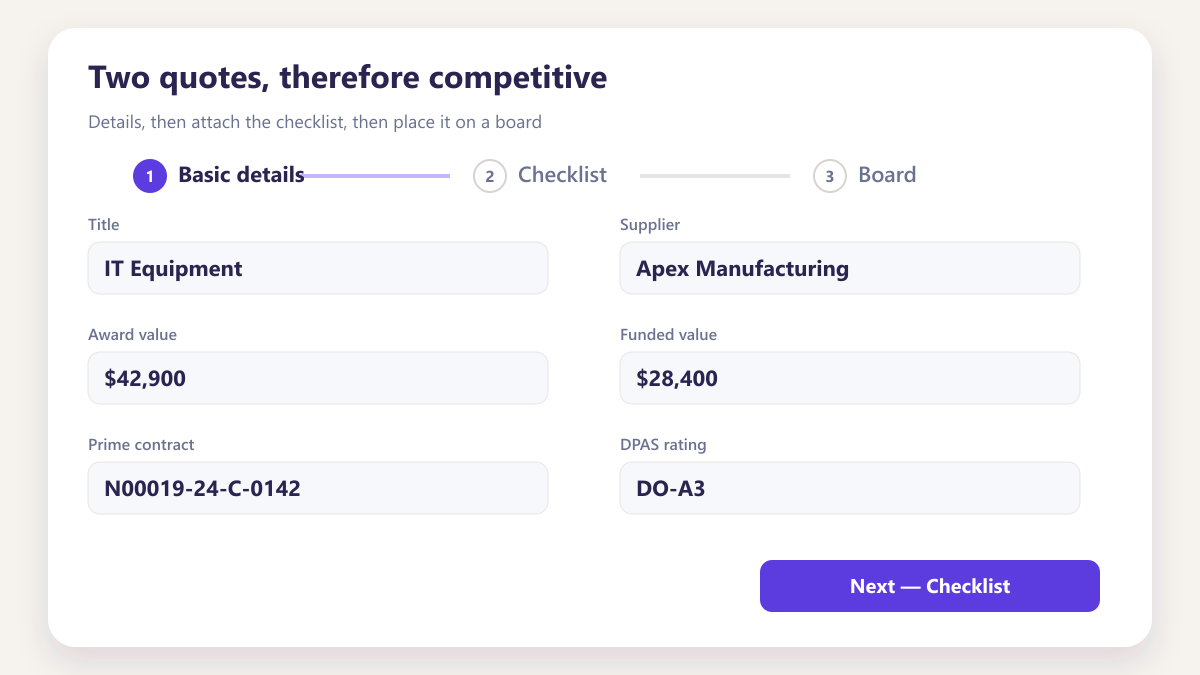
Two quotes, therefore competitive
The file treats the arrival of more than one quotation as sufficient without considering whether the comparison was genuinely meaningful.
Comparability assessed
The quotes are checked for whether they cover the same scope and represent genuine competition before being relied on.
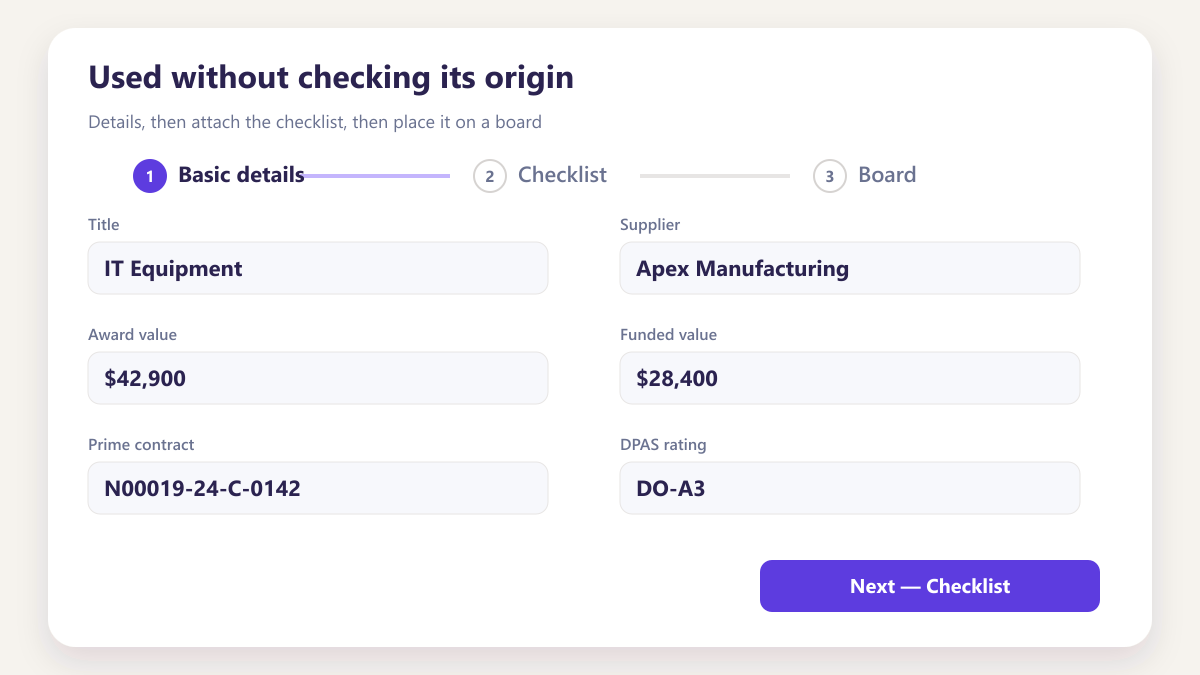
Used without checking its origin
Last year's price is used as the comparator without asking whether that price was itself established on a reasonable basis.
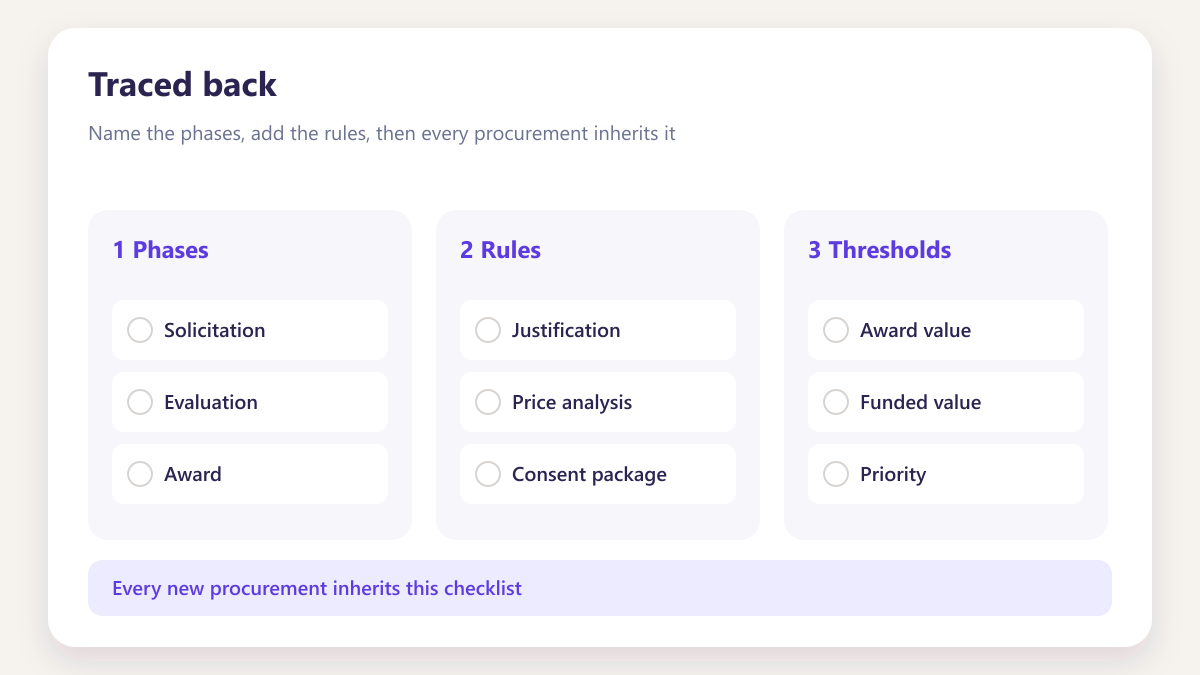
Traced back
The prior price is used only where it was itself reasonably established, which prevents a weak price propagating for years.
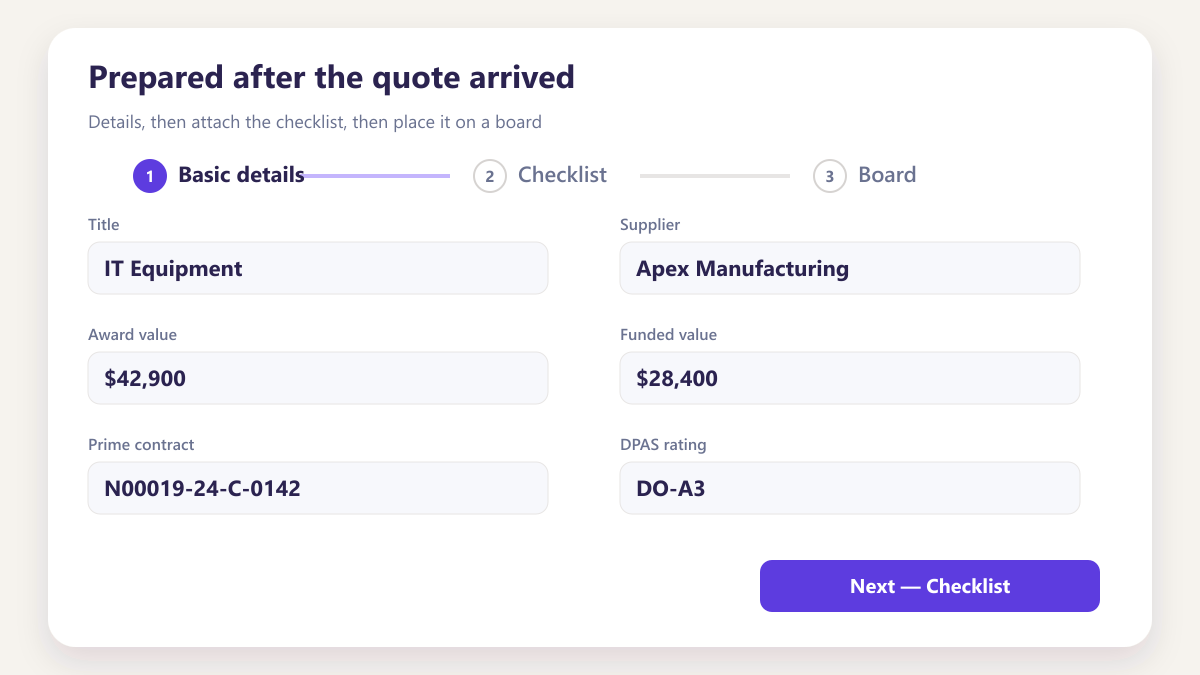
Prepared after the quote arrived
An independent estimate produced once the quotation is known tends to land close to it, and the sequence is usually visible.
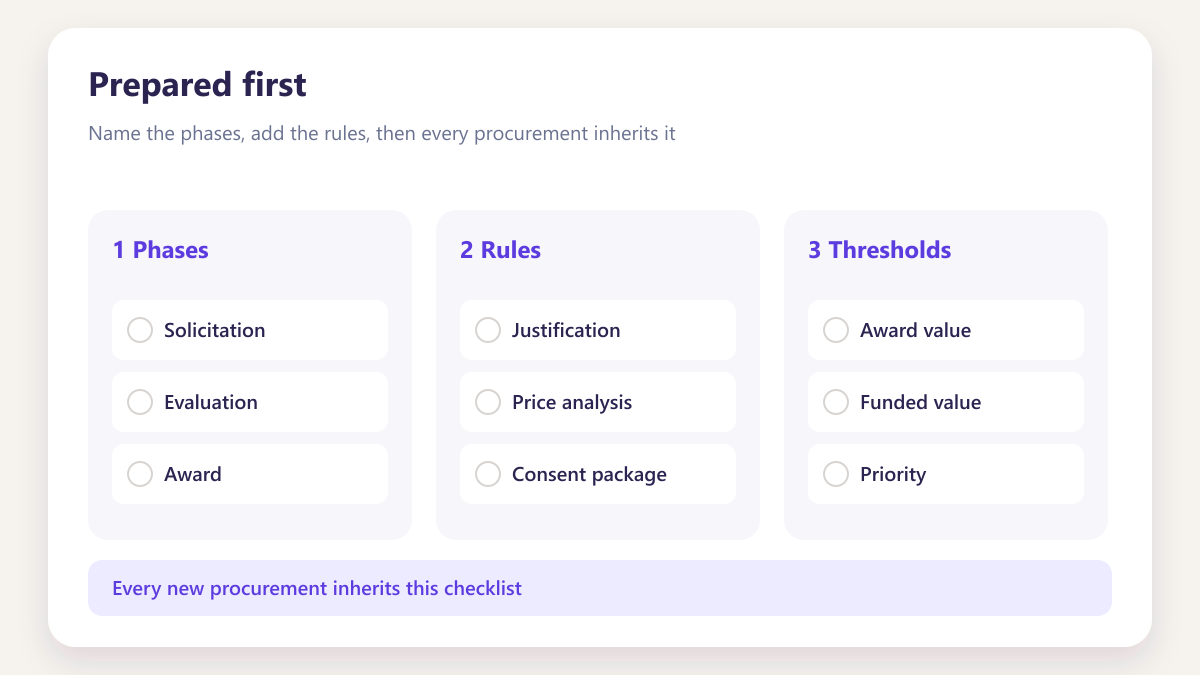
Prepared first
The estimate is made before the quotation is seen, which is the only version that provides genuine independent evidence.
Either way, the same four things
Either way, the same four things
Whichever technique you use, the file needs the same four things for a reviewer to follow the conclusion.
- The technique, named
- The data used, and where it came from
- The working, and the conclusion it supports
| Item | Why it matters |
|---|---|
| Which technique was used | Stating it removes any ambiguity about what the analysis was attempting to establish |
| The comparators or the cost data | The raw material of the analysis, identified specifically rather than referred to in general terms |
| The working | Enough that a reader who was not present can follow how the conclusion was reached |
| The conclusion and who reached it | A named person and a date, so the determination is attributable rather than anonymous |
Four things that help
Name the technique in the file
The cheapest single improvement. A file that says which analysis was performed is already ahead of most.
Learn morePrepare estimates before quotes
An estimate produced after the quotation arrives carries very little independent weight and the sequence shows.
Learn moreCheck comparability, not count
Two quotations for different scopes are not a comparison, and relying on the number alone is a recurring weakness.
Learn moreAttach the working
A conclusion without the analysis behind it is the same gap as no analysis, from a reviewer's point of view.
Learn moreCommon questions about price and cost analysis
What is the difference between price analysis and cost analysis?
When is cost analysis needed?
Are two quotes enough for price analysis?
Can we use last year's price as a comparator?
Does an independent estimate have to be prepared first?
What is the most common finding?
Who should perform the analysis?
Other explainers and the pages they connect to
Sole source justification
Establishing price reasonableness when competition was not obtained.
Learn more
TINA explained
When certified cost or pricing data is required and what changed in 2026.
Learn more
Bring an award and its price file
We will show what a reviewer would look for and whether the working is visible or only the conclusion.
Book a demo