Home / Guides / Sole source justification
GuideSole source justification,
demonstrated rather than asserted
Buying without competition is entirely permissible in the right circumstances. What gets cited is not the decision itself but a file that asserts a conclusion without showing the work behind it.
A sole source justification explains why a purchase was made without competition. A defensible one does more than state a conclusion: it identifies the requirement, records what alternatives were considered and why they were rejected, establishes that the price is reasonable by some means other than competition, and is written at the time by the person who made the decision.
Four elements, and one that is usually missing
Most weak justifications contain the first element and skip straight to the conclusion. The gap is almost always the same one.
Four elements, and one that is usually missing
Most justifications explain why the source is unique. Far fewer show that the market was actually checked.
- Why this source, specifically
- Which alternatives were checked, and how
- How price was tested without competition
| Element | What it means | How often it is missing |
|---|---|---|
| The requirement | What is actually needed, described specifically enough that alternatives can be assessed against it | Rarely missing, though often described so loosely that any supplier would qualify |
| The alternatives considered | Which other suppliers were looked at, and the specific reason each was rejected | This is the element most often absent. A justification naming no alternatives is an assertion |
| Price reasonableness | How the price was tested when competition was not available to test it | Frequently missing entirely, on the assumption that a sole source has no comparator |
| Authorship and timing | Written by the person who made the decision, at the time they made it | Often written afterwards by somebody else, which is usually visible in the text |
The same justification, written two ways
The difference is rarely length. It is whether the file shows the work or only the conclusion.
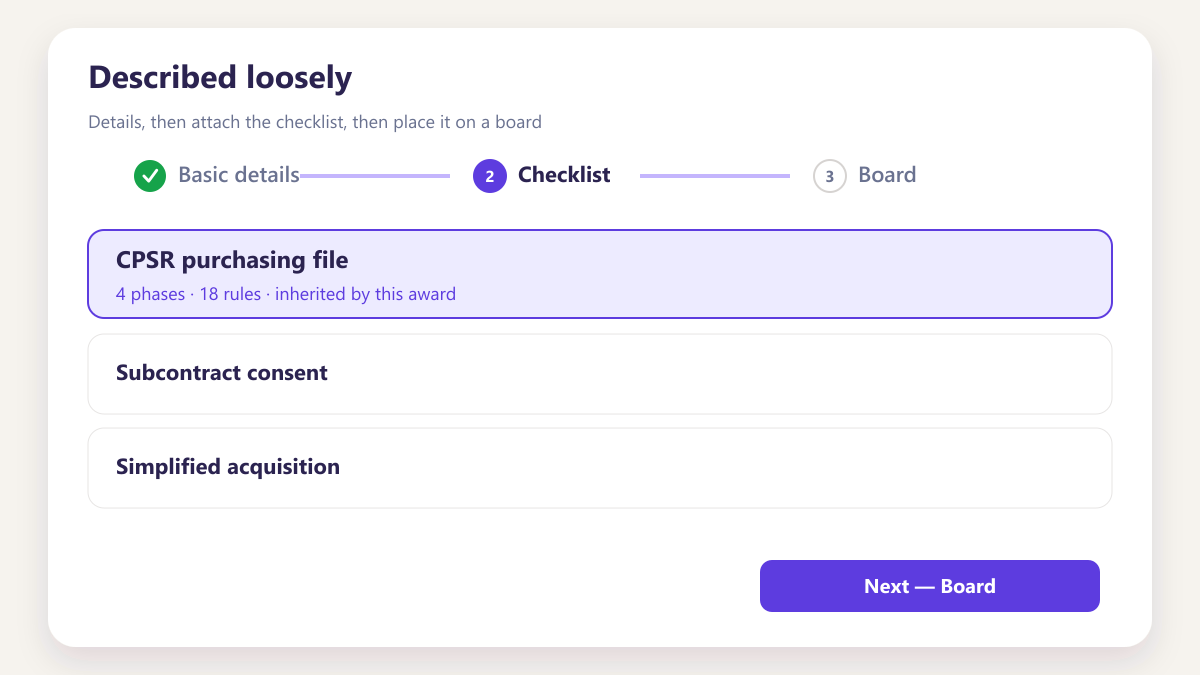
Described loosely
The need is stated in terms broad enough that many suppliers would satisfy it, which undermines the claim that only one could.
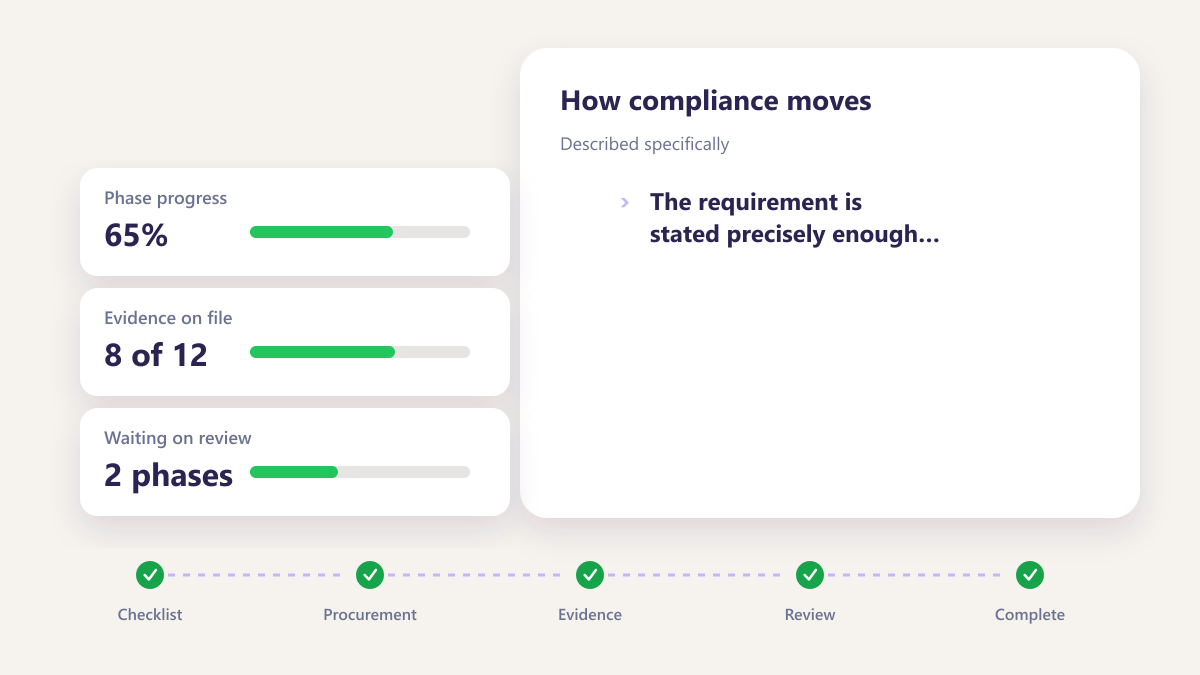
Described specifically
The requirement is stated precisely enough that the reader can see why the alternatives genuinely fail against it.
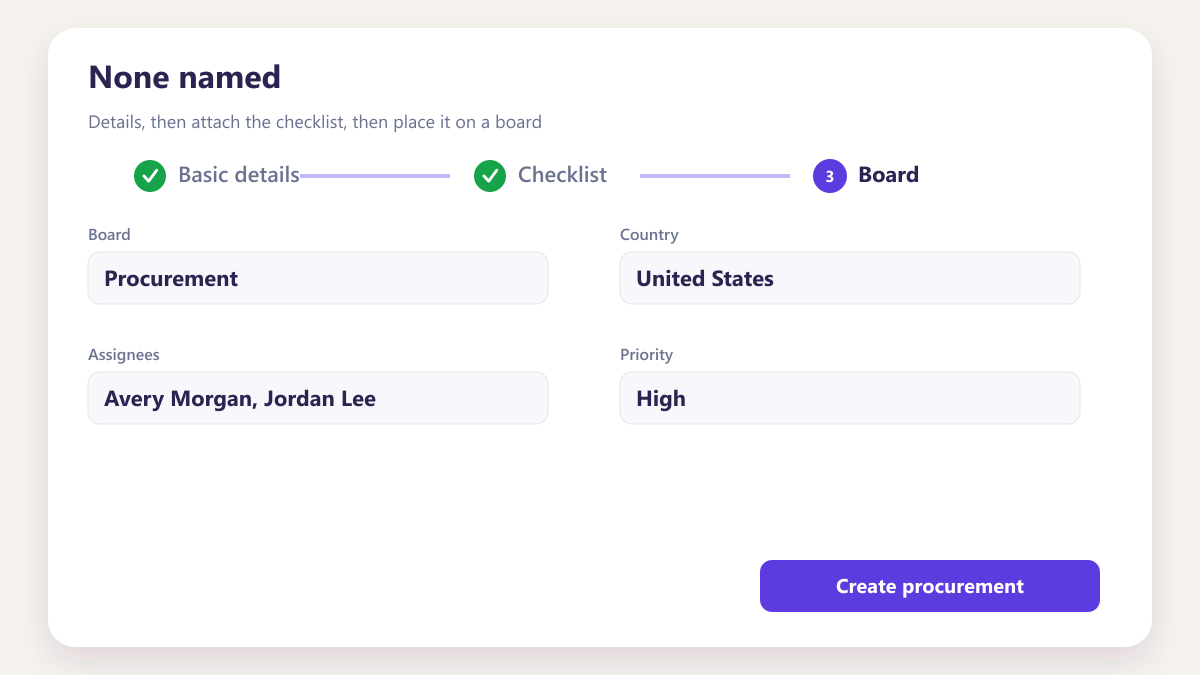
None named
The file states that no other supplier can meet the need without identifying who was considered or why each was ruled out.
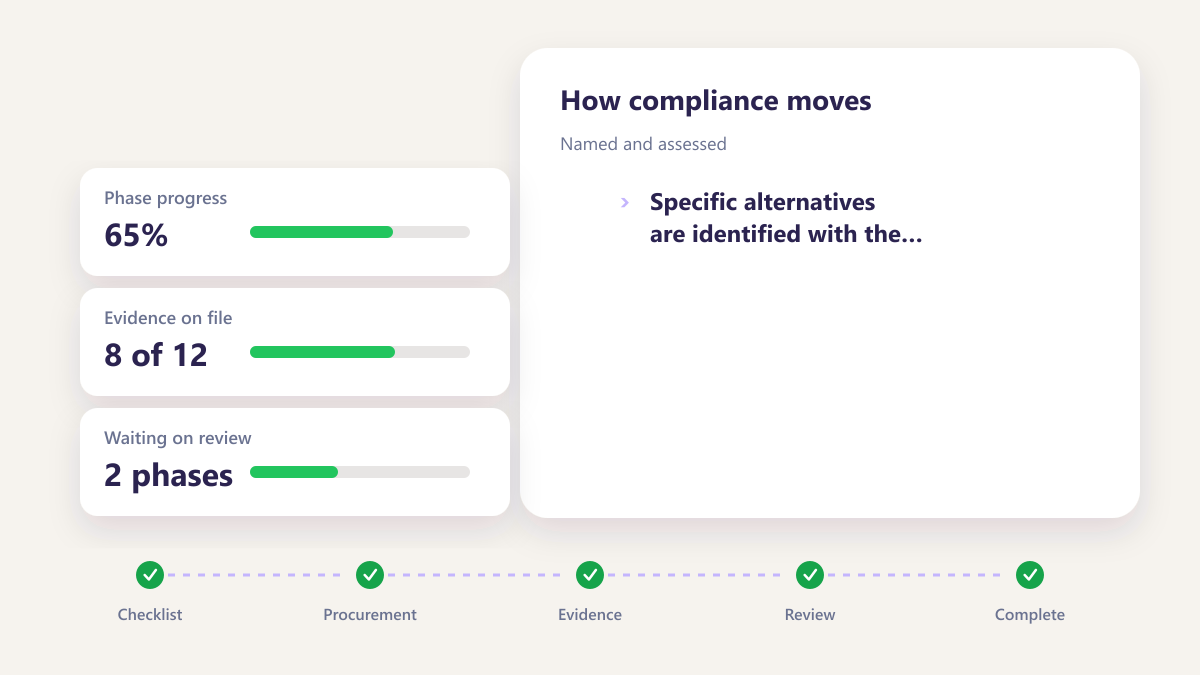
Named and assessed
Specific alternatives are identified with the particular reason each was rejected against the stated requirement.
Untested
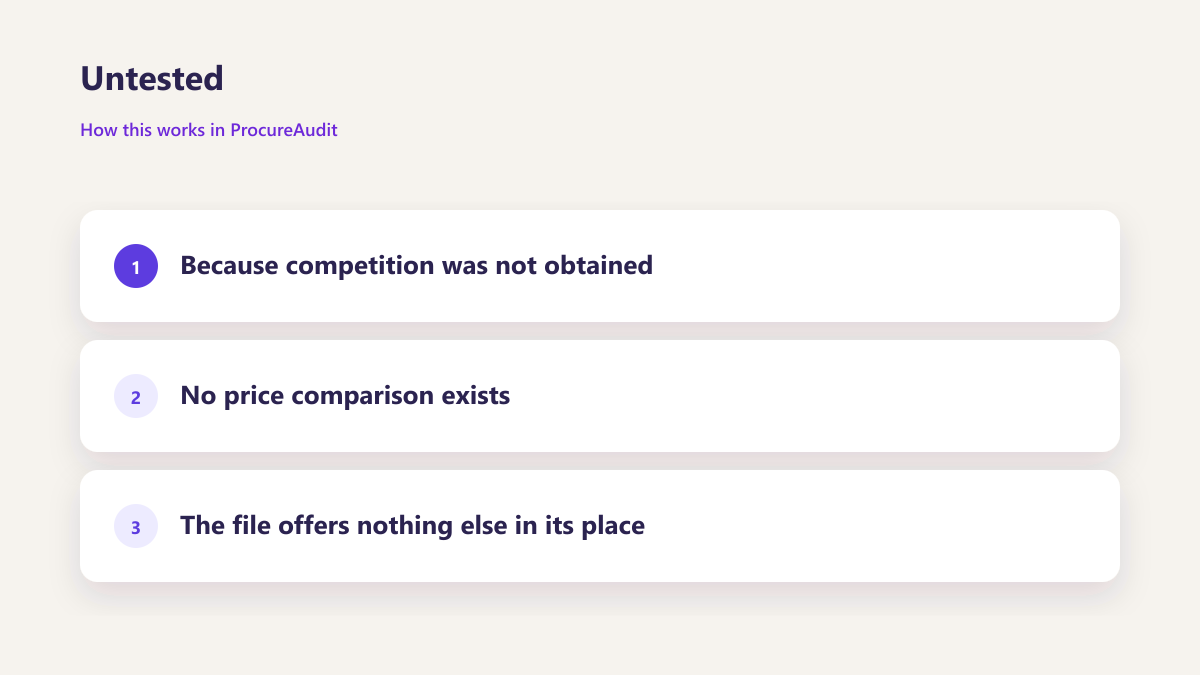
Because competition was not obtained, no price comparison exists and the file offers nothing else in its place.
Tested another way
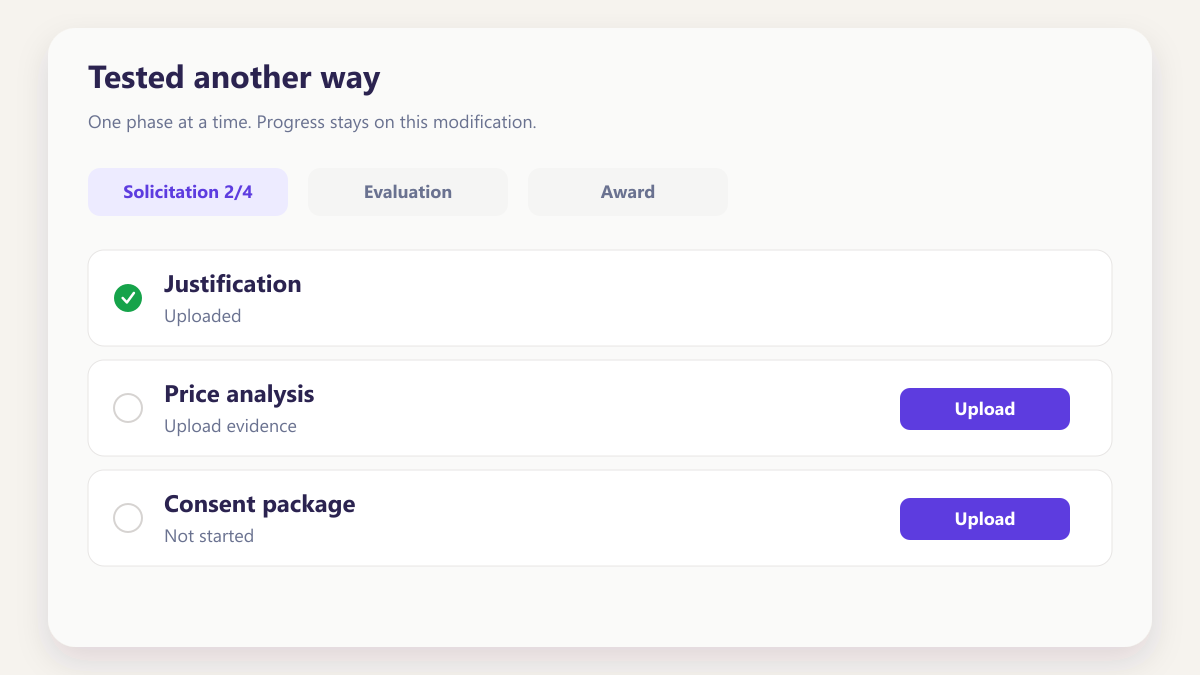
Prior pricing history, a published price, an independent estimate or cost analysis is used to establish reasonableness.
Written afterwards
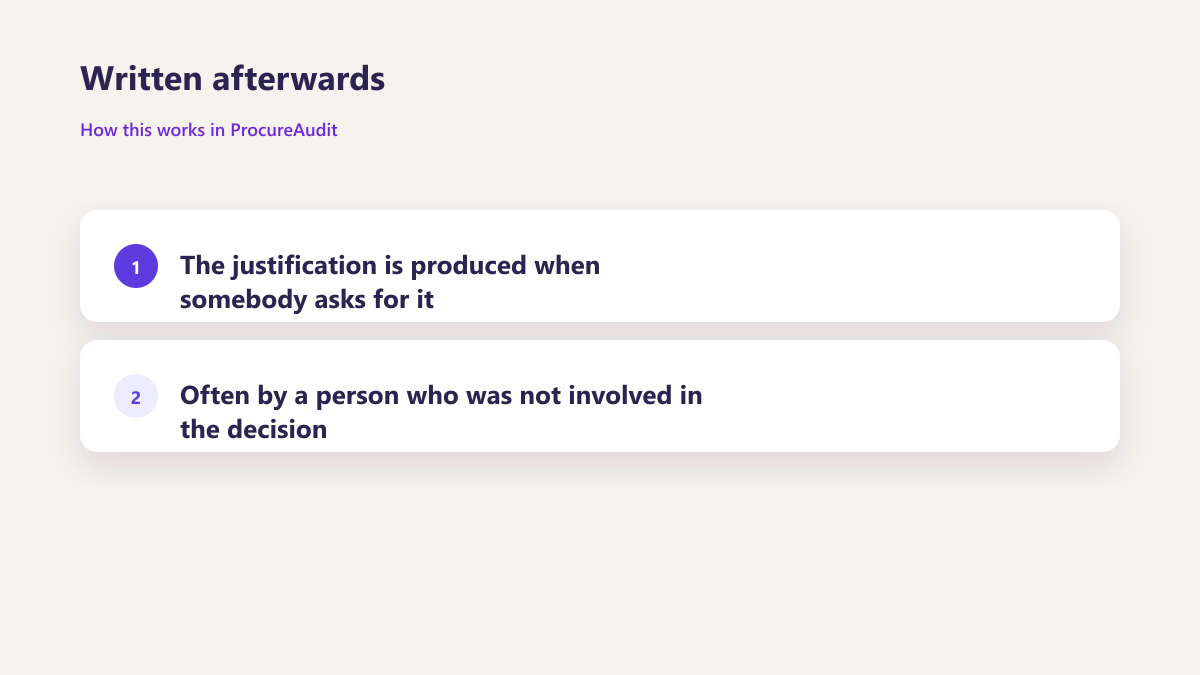
The justification is produced when somebody asks for it, often by a person who was not involved in the decision.
Written at the decision
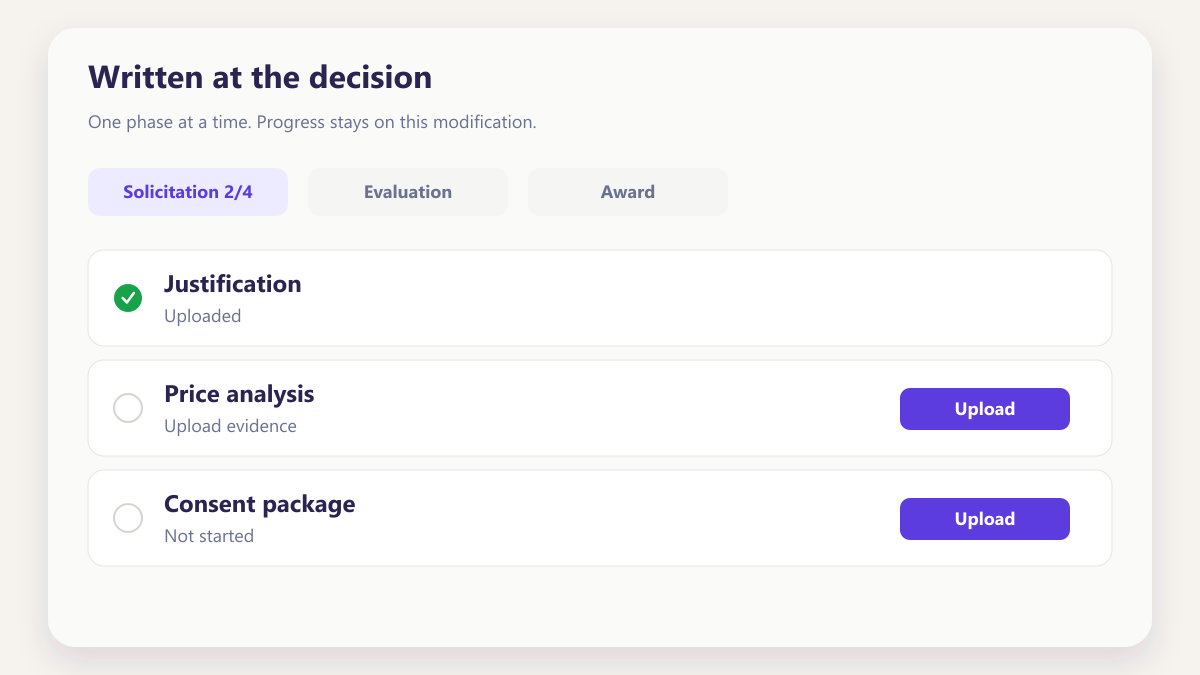
The person deciding records the reasoning as they decide, which is both faster and considerably more convincing.
Four methods that stand up
Four methods that stand up
Without competition, price reasonableness needs another basis. These four hold up when a reviewer looks.
- Prior prices paid for the same item
- Published catalogue or market prices
- An independent estimate, or cost analysis
| Method | When it works |
|---|---|
| Prior pricing history | Where you have bought the same or a comparable item recently and the earlier price was itself established reasonably |
| Published price lists | Where the supplier maintains a catalogue or published pricing that is applied consistently to other customers |
| Independent estimate | Where an internal estimate was prepared before the quotation was received, which is what makes it independent |
| Cost analysis | Where cost data is available and the elements can be examined, typically on higher value or longer term awards |
Whichever method is used, the file should say which one and show the working. Naming the method without the analysis behind it is the same gap in a different place.
Four practical habits
Name the alternatives
The single most common gap. A justification that identifies nobody else is an assertion however confidently it is written.
Learn moreTest the price another way
Absence of competition removes one method of establishing reasonableness. It does not remove the obligation.
Learn moreWrite it at the decision
Contemporaneous reasoning is faster to produce and far more convincing than a reconstruction, and it reads differently.
Learn moreMake it a required phase
If the justification is a phase that must be completed before the award proceeds, it stops depending on individual diligence.
Learn moreCommon questions about sole source justifications
What makes a sole source justification defensible?
What is the most common weakness?
How do we establish price reasonableness without competition?
Does an independent estimate have to come first?
Can a justification be written later?
Is buying without competition allowed?
How can we make this consistent across buyers?
Other explainers and the pages they connect to
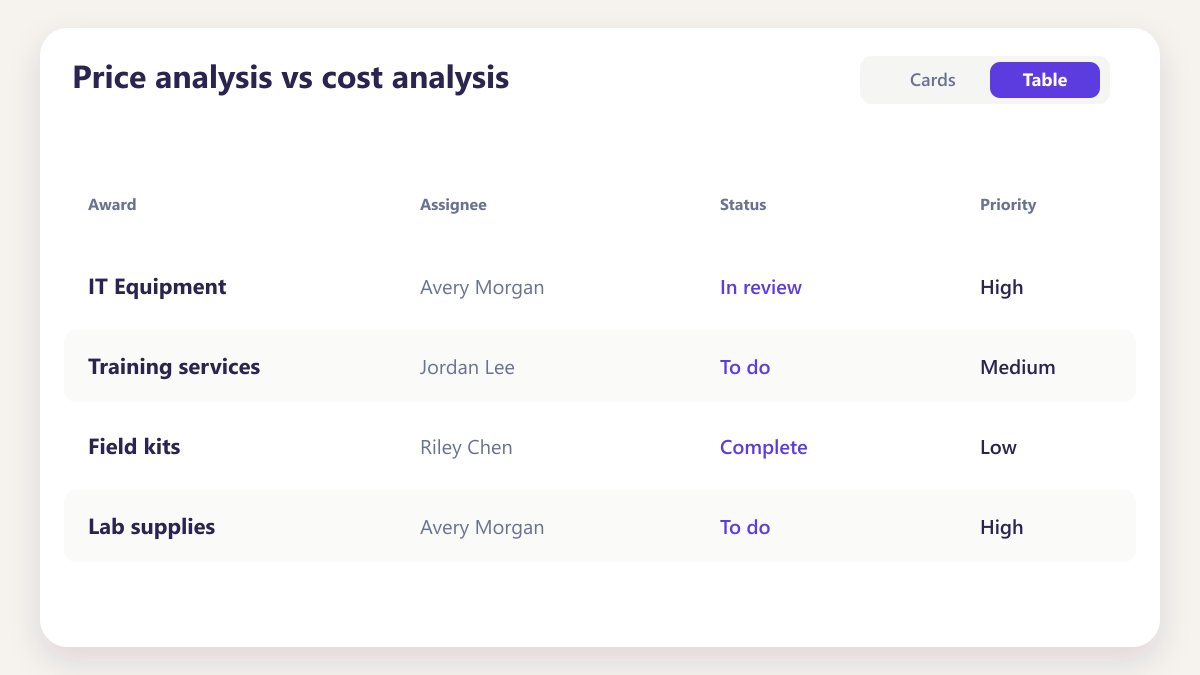
Price analysis vs cost analysis
The two methods, when each applies, and what the file should show.
Learn more
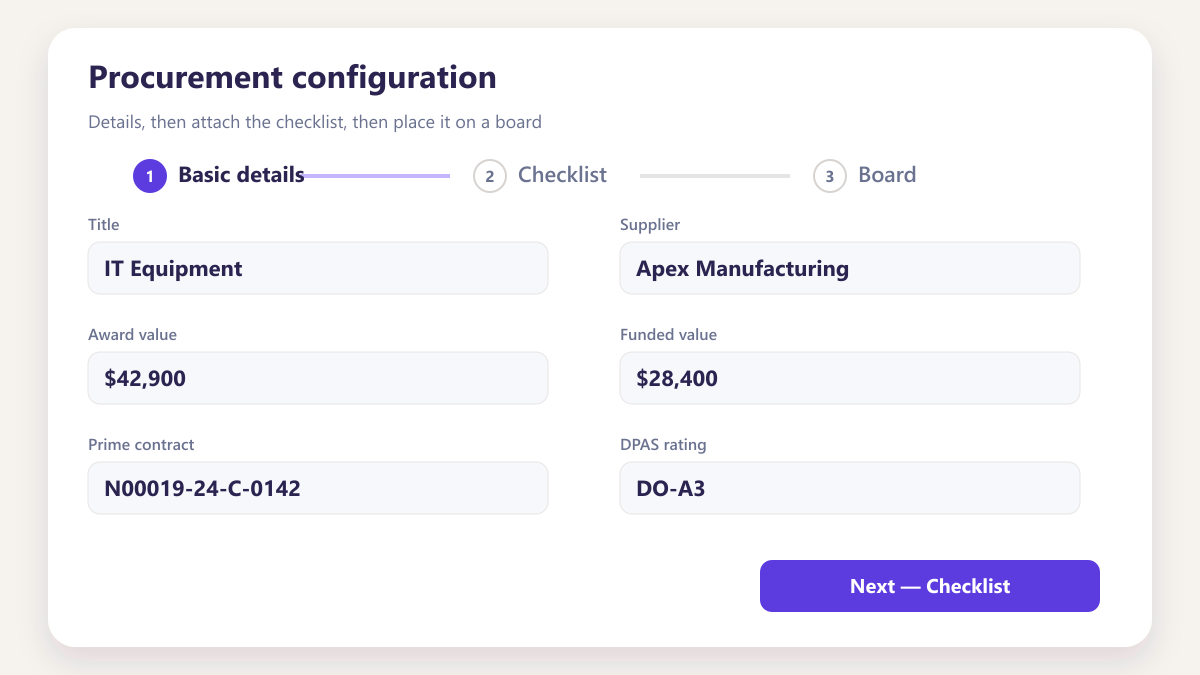
Procurement configuration
Rules and required phases that apply to every award of a type.
Learn moreBring a sole source award
We will read the justification the way a reviewer would and show you where the file supports the conclusion and where it asserts it.
Book a demo